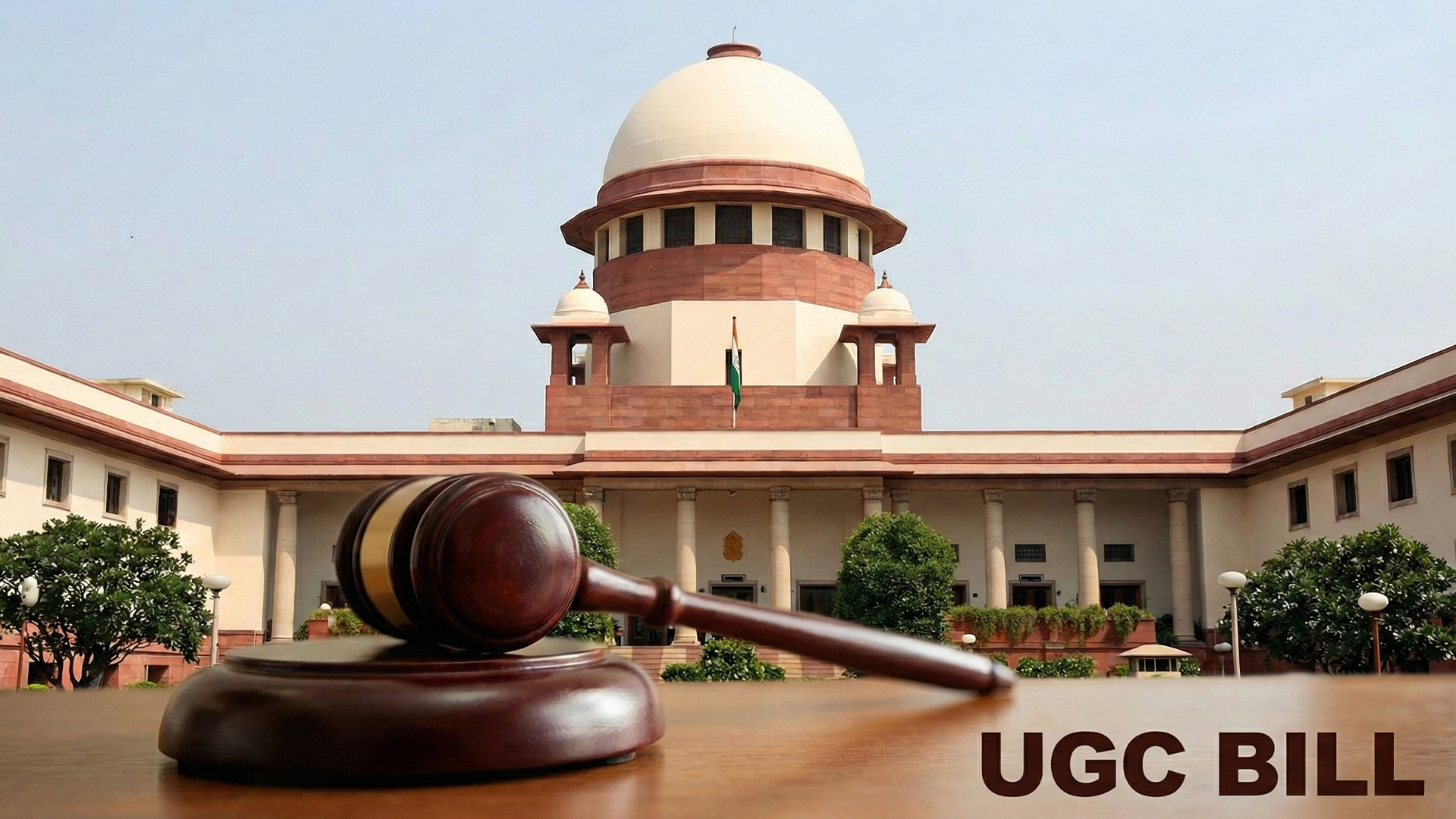
The Supreme Court of India has temporarily stayed the University Grants Commission’s (UGC) Promotion of Equity in Higher Education Institutions Regulations, 2026, citing vague language and the risk of misuse. Until the matter is fully heard, the 2012 UGC anti-discrimination regulations will continue to apply across all universities and colleges.
A bench led by Chief Justice Surya Kant and Justice Joymalya Bagchi heard multiple petitions challenging the 2026 regulations, which were framed to promote equity and curb discrimination on campus. Petitioners argued that the new rules focus primarily on Scheduled Castes (SC), Scheduled Tribes (ST), and Other Backward Classes (OBC), leaving general-category students outside the scope of Equal Opportunity Centres, grievance redressal mechanisms, helplines, and ombudsperson processes. Critics warned that this selective coverage could violate Articles 14 and 15 of the Constitution, which guarantee equality and non-discrimination.
The court observed that certain provisions were prima facie vague and potentially open to abuse, cautioning that implementing them without scrutiny could have “serious societal impacts” and may even divide communities. The bench issued notices to the Union of India and the UGC, directing them to respond before the next hearing, scheduled for March 19, 2026.
The Supreme Court’s decision comes amid widespread protests and public debates across several states, where students, faculty, and civil society groups expressed concerns about the equity regulations, demanding clarity and inclusive protection.
With the stay in place, the 2012 regulations remain the operative framework, ensuring that anti-discrimination measures continue without interruption. Legal experts say the interim order provides time for the judiciary to examine constitutional validity, ensure broader inclusivity, and prevent potential misuse of the 2026 rules.
Also Read: Ajit Pawar’s funeral with state honours