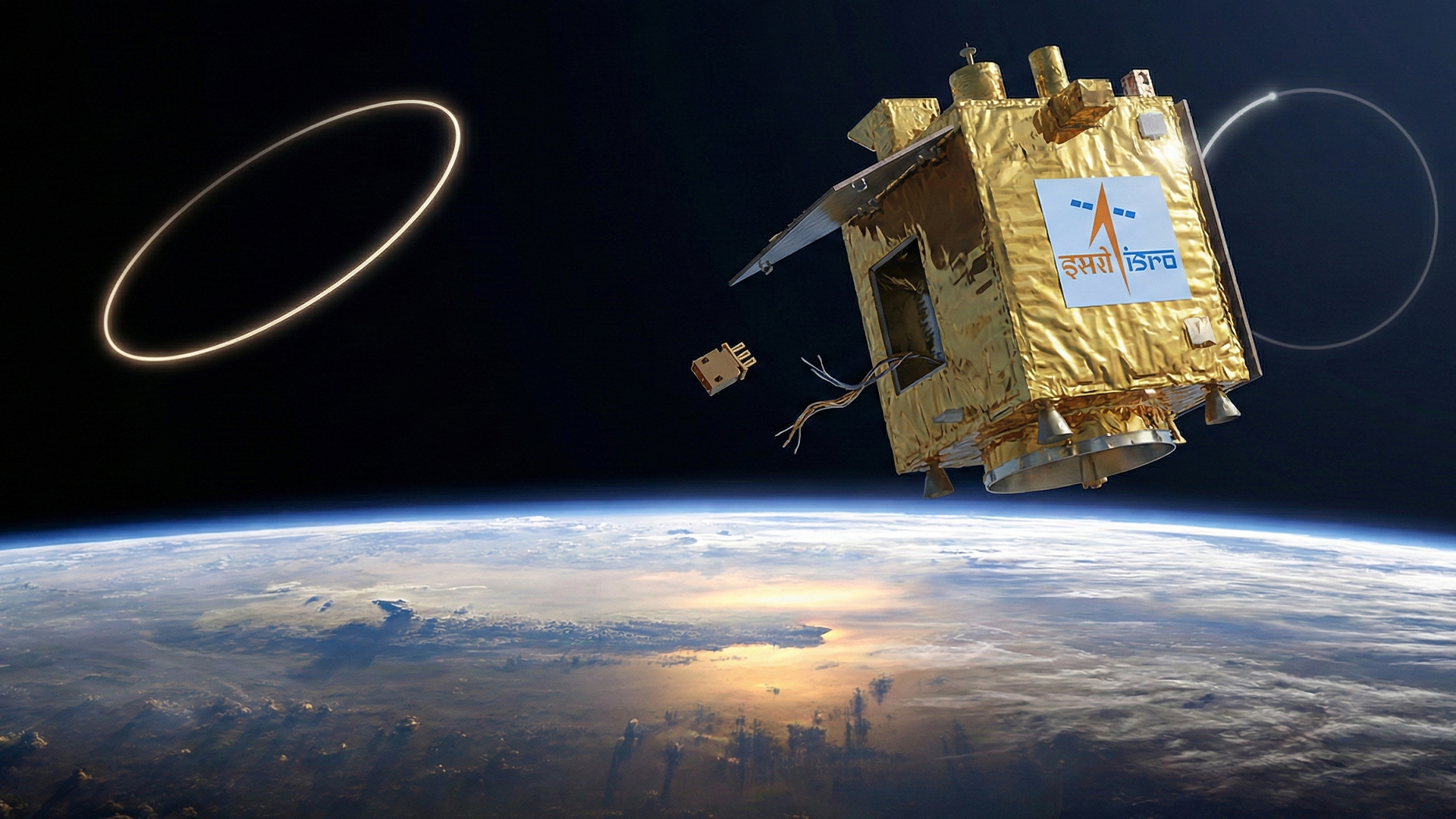
India’s latest navigation satellite, NVS‑02, failed to reach its intended orbit due to a tiny electrical glitch, the Indian Space Research Organisation (ISRO) revealed this week. The satellite, launched on an LVM3 rocket, was supposed to strengthen India’s navigation system but couldn’t complete a critical orbital manoeuvre.
Investigators found that a small broken circuit in the satellite’s onboard system stopped key commands from reaching the propulsion unit. Without this, the satellite couldn’t perform the orbit‑raising burn required to reach its operational position. Though the rocket performed perfectly and delivered the satellite into space, the mission could not succeed.
ISRO described the issue as “minor but mission-critical,” highlighting how even a tiny component can decide the fate of an entire space mission. The satellite is now stuck in a lower orbit and cannot carry out its navigation functions.
The space agency stressed that lessons from the failure will be used to improve design and testing for future missions. “We are examining every step of the mission to make sure a similar problem doesn’t happen again,” an ISRO official said.
Experts noted that space missions demand extreme precision, and even the smallest anomaly can have big consequences. While the setback is disappointing, ISRO’s quick identification of the problem is seen as a sign of the agency’s growing experience and transparency in mission management.
ISRO is already working on upcoming launches and continues to refine satellite engineering, testing, and quality controls to ensure future missions succeed.
Also Read: BMC presents ₹80,952 cr budget for 2026–27