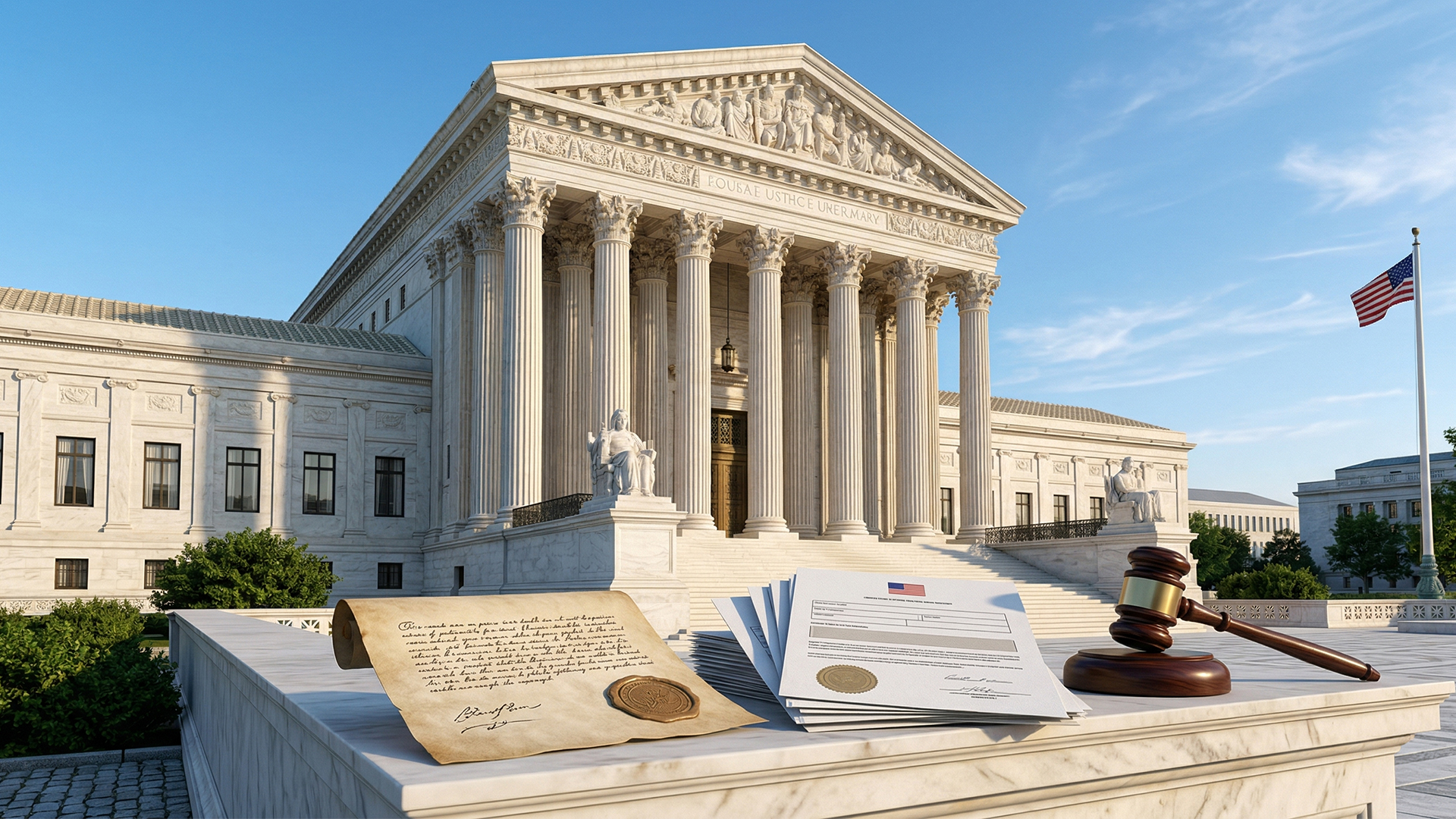
The US Supreme Court is examining a major legal challenge that could redefine who qualifies for citizenship in the country. At the centre of the case is an effort to restrict birthright citizenship, a principle that has granted automatic citizenship to most people born in the United States for more than a century.
The dispute stems from a policy introduced by former President Donald Trump, which aims to deny citizenship to children born in the US to non-citizen parents, including undocumented migrants and those on temporary visas. The proposal challenges the widely accepted interpretation of the 14th Amendment, which states that anyone born on US soil is a citizen.
During the hearing, several justices appeared unconvinced by the arguments supporting the policy. They raised concerns about whether the Constitution allows such a significant change through executive action and questioned the interpretation of the phrase “subject to the jurisdiction thereof.” The court also examined the broader consequences of altering a long-established legal principle.
Lower courts have already blocked the policy, ruling that it goes against constitutional protections and established legal precedent. Opponents argue that ending birthright citizenship could leave many children born in the US without a clear legal status, creating long-term social and legal challenges.
The case has sparked national debate, drawing attention from legal experts, policymakers, and the public. Demonstrations took place outside the Supreme Court as supporters of birthright citizenship called for the preservation of what they see as a fundamental right.
Also Read: Trump says Iran war near end