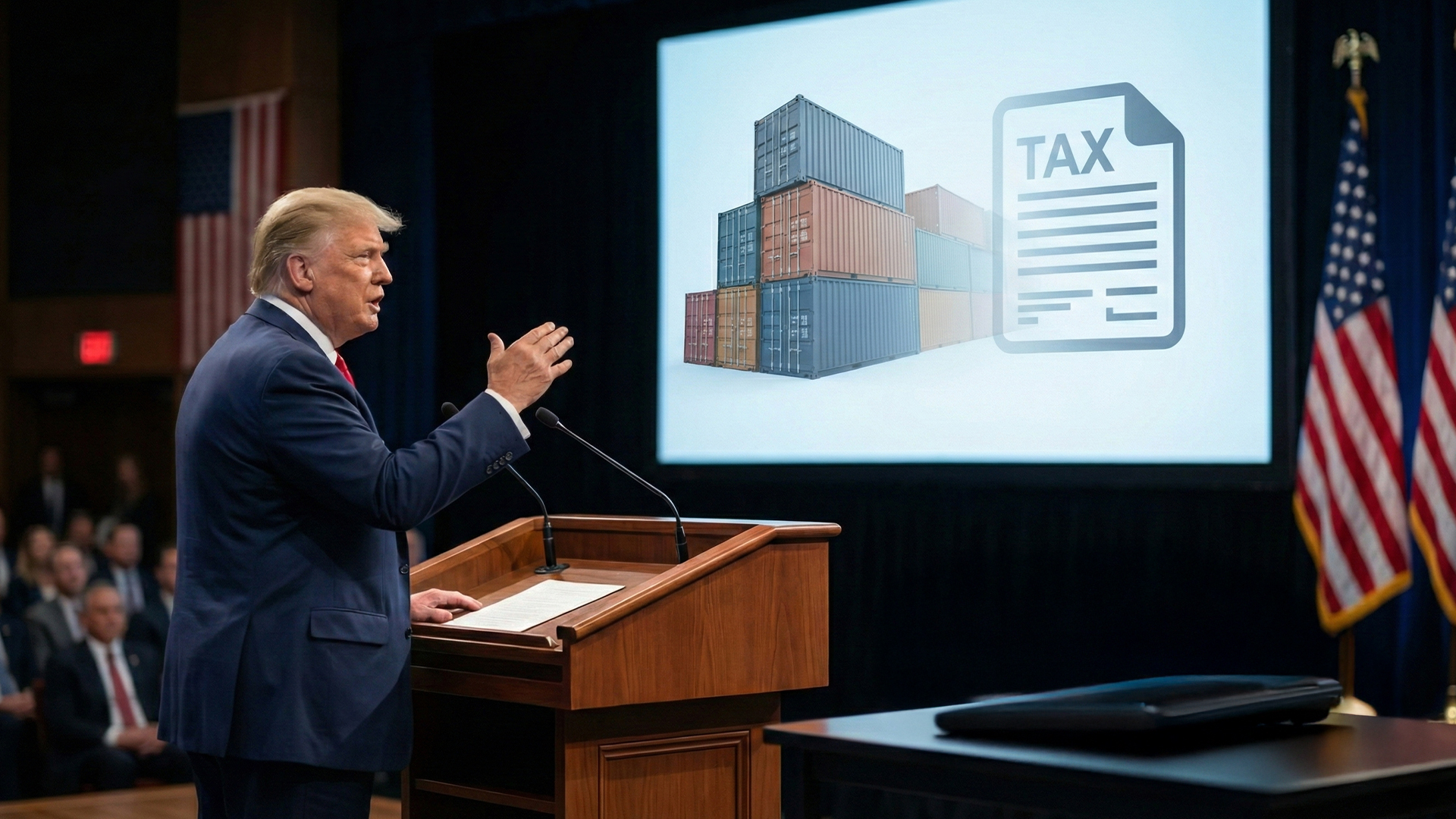
US President Donald Trump said he plans to replace federal income tax with tariffs on imported goods, claiming the move would reduce the financial burden on American families and workers. Speaking in a State of the Union–style address, Trump framed the policy as a way to fund government programs without directly taxing citizens’ paychecks, while also protecting domestic industries from foreign competition.
“Tariffs will replace income tax and will take the burden off Americans,” Trump said, presenting the proposal as both a revenue and economic protection strategy. He argued that the tariff system would generate sufficient government revenue while discouraging imports that hurt local manufacturing.
Trump also criticised a recent US Supreme Court decision that blocked parts of his tariff plan, calling the ruling “unfortunate” and warning that it limits the executive branch’s ability to enforce trade measures. He urged Congress to revise trade laws to provide clearer authority for implementing tariffs, highlighting the role of trade in national economic security.
The proposal has drawn mixed reactions. Supporters say it would shift tax responsibility away from workers, encourage domestic production, and boost American industries. Critics, however, caution that replacing income tax with tariffs could increase consumer prices, spark trade retaliation, and create uncertainty in global markets. Economists note that government revenue depends heavily on income tax, and tariffs alone may not sustain spending levels.
While the plan remains largely conceptual, the speech signals that tariffs and taxation will remain major topics in US policy discussions. The administration appears poised to pursue further legislation and executive measures to expand trade authority and reshape revenue collection in the coming months.