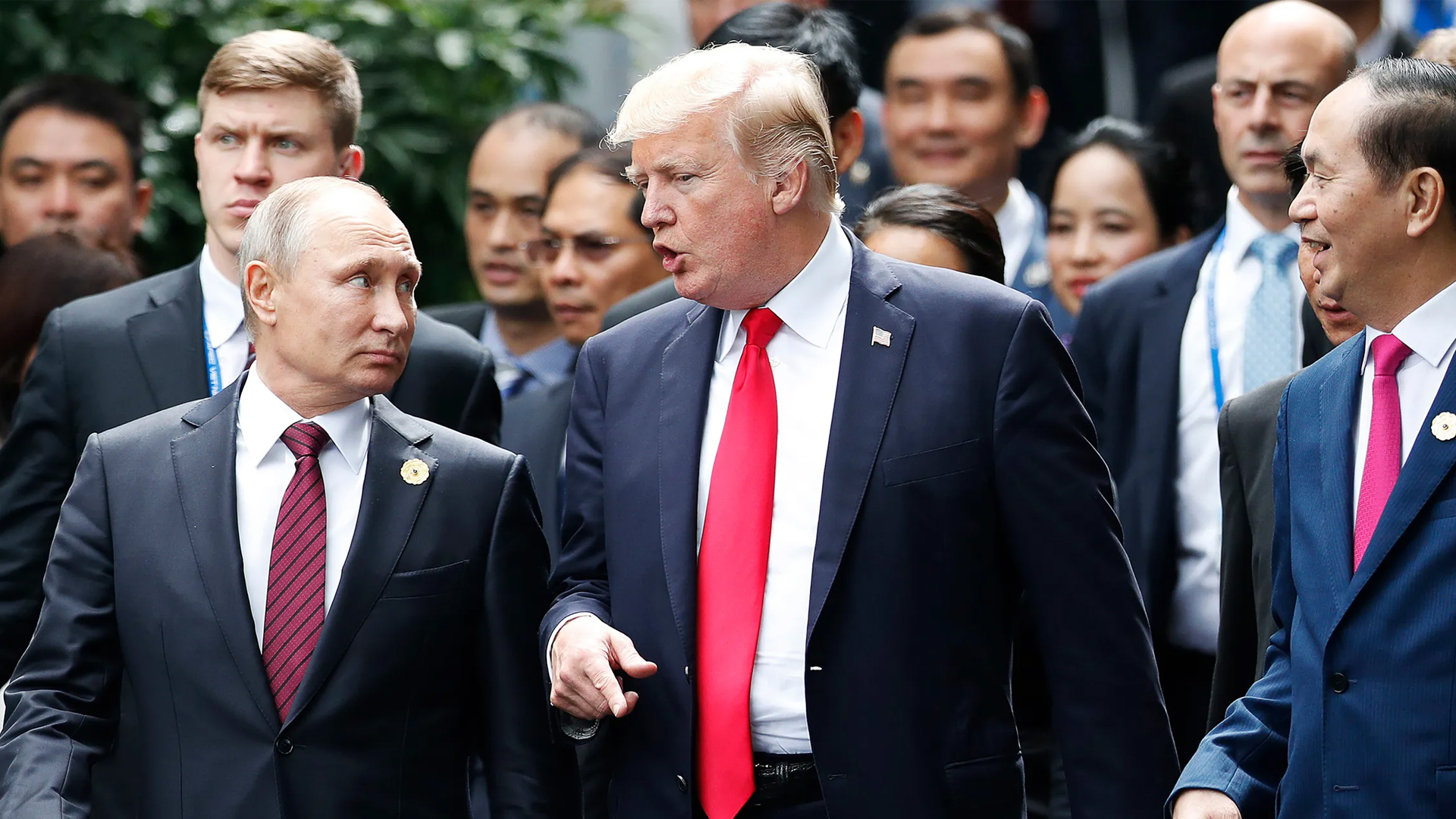
President Donald Trump announced on August 13, 2025, that if his scheduled meeting with President Vladimir Putin in Anchorage on Friday (August 15) goes well, he will seek an immediate follow-up summit with both Putin and Ukrainian President Volodymyr Zelenskyy present. Trump said, “If the first one goes okay, we’ll have a quick second one,” but warned that the second meeting could be off the table if Putin appears insincere.
Despite Trump’s outreach, Zelenskyy was not invited to the Alaska meeting, fueling fears that any Russia–U.S. deal might exclude Ukraine and impose unfavorable terms. Critics warn this could legitimize Russian gains or pressure Kyiv into territorial concessions.
European and Ukrainian pressure for ceasefire and no land swaps
In the lead-up to the summit, Zelenskyy joined a virtual roundtable with European leaders—others included German Chancellor Friedrich Merz, French President Emmanuel Macron, UK PM Keir Starmer, NATO and EU chiefs—to press Trump to ensure any negotiations begin with a ceasefire and include Ukraine at the center. Macron emphasized Trump’s commitment that “territories belonging to Ukraine cannot be negotiated” without Kyiv’s consent.
Ukraine signaled openness to a phased ceasefire, including an initial aerial truce, but cautioned that Vladimir Putin was unlikely to follow through. Zelenskyy also questioned Putin’s sincerity, saying, “I have told my colleagues… that Mr Putin definitely does not want peace.”
Trump threatens “very severe consequences” amid lack of sanctions follow-through
Trump, who previously imposed—and then softened—sanction threats on Russia’s trading partners, reiterated on August 13 that Russia would face “very severe consequences” if it refused to agree to a ceasefire during the Alaska talks. However, he declined to specify the form these consequences would take, leaving uncertainty about their seriousness or implementation.
The diplomatic stand-off comes amidst intensified Russian military operations in eastern Ukraine. On August 12, Russian forces advanced about 110 sq km in a single day—the largest such gain since May 2024—according to analysis of battlefield data. This push, especially near the coal-mining town of Dobropillia, raised the stakes for Ukraine. In response, Ukrainian authorities have evacuated civilians and urgently reinforced the front lines.
With the Alaska summit scheduled for August 15, 2025, Trump aims to begin with a bilateral “listening exercise” with Putin—before prompting a possible trilateral meeting involving Kyiv. European and Ukrainian allies stress that peace negotiations should start with a ceasefire and exclude any forced territorial concessions to Russia. Meanwhile, the surging Russian offensive underscores the urgency and peril of sidelined diplomacy.
All eyes will now turn to Friday’s Anchorage summit: will Trump secure a credible ceasefire framework, and will Ukraine’s voice finally be central to any peace initiative—or will the diplomatic momentum falter?