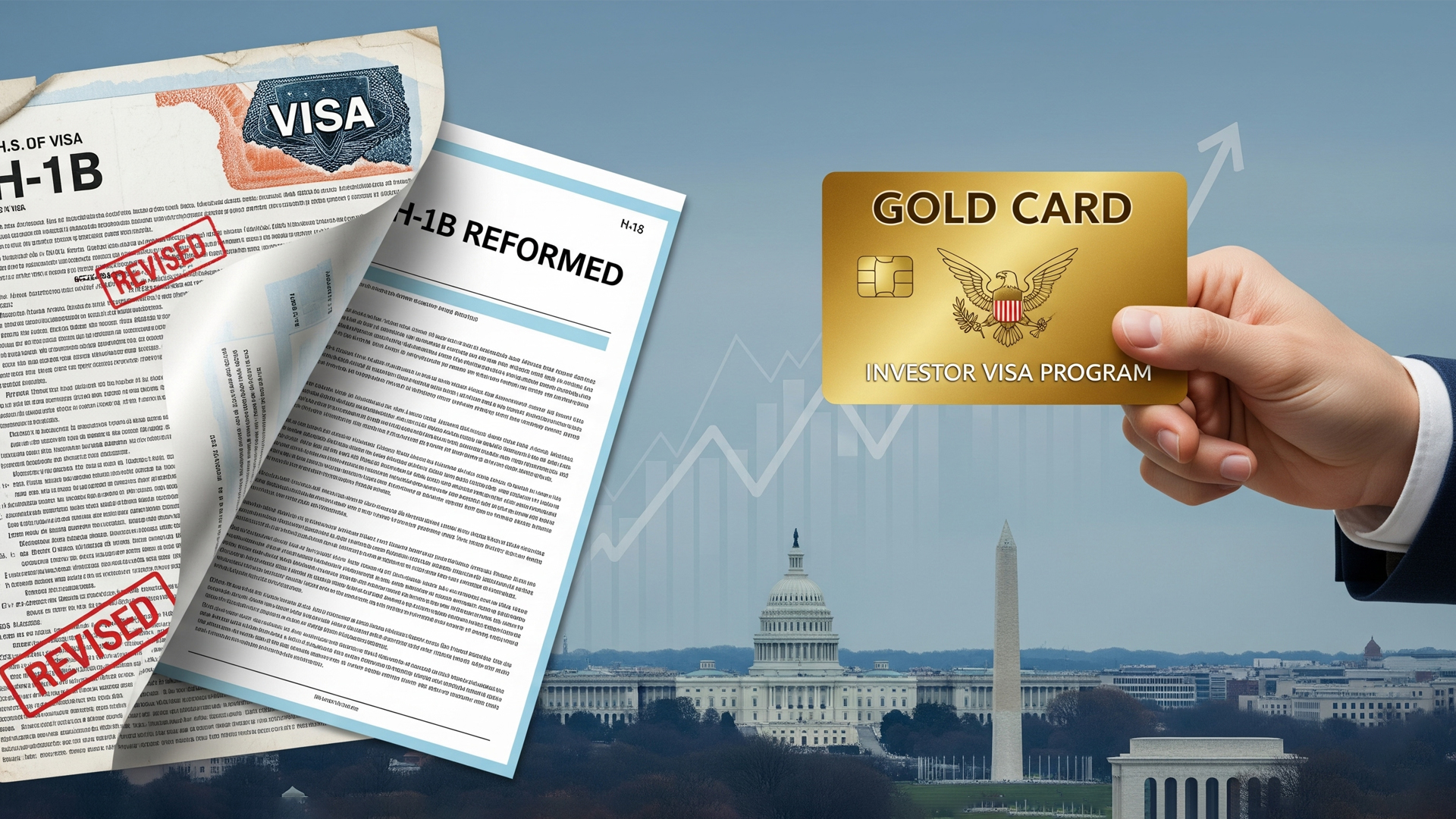
In a dramatic shift in U.S. immigration policy, President Donald J. Trump on September 19, 2025, signed a proclamation imposing a fee of $100,000 per year on H-1B visas. The rule applies both to new applicants and to renewals, effectively making the cost of retaining foreign workers significantly higher for American employers. The proclamation will take effect from September 21, 2025, with the Departments of Homeland Security and State required to verify compliance.
Announcing the move in the Oval Office, Trump described the H-1B programme as “one of the most abused visa systems,” arguing that many companies had used it to bring in lower-paid foreign workers to replace Americans. The fee, he said, was designed to ensure that only “extraordinary” individuals—those considered truly indispensable—would now be sponsored by companies. White House officials also projected that the measure could raise more than $100 billion for the U.S. Treasury, which the administration has pledged to use for tax cuts and debt reduction.
The impact on Indian workers is expected to be particularly severe. India has historically accounted for nearly 70 per cent of all H-1B visa beneficiaries, largely in the technology and engineering sectors. For Indian professionals already facing long waits for green cards, the new annual fee could mean employers may no longer find it viable to retain them, potentially forcing many to return home. Industry analysts warn that companies reliant on skilled Indian labour may be forced to rethink their hiring strategies or even shift parts of their operations overseas.
Commerce Secretary Howard Lutnick defended the decision, saying past immigration policy had admitted too many workers at the “bottom quartile” of the wage scale, a situation he described as illogical. The administration’s new approach, he argued, would prioritise only those at the very top of their fields, creating jobs rather than displacing American workers.
Alongside the H-1B fee, Trump also unveiled a new “Gold Card” programme, which offers a fast-track pathway to permanent residency for foreigners of extraordinary ability who are able to contribute at least $1 million to the U.S. Treasury, or $2 million if sponsored by corporations. He described it as a way to keep world-class talent in America while also generating revenue.
Critics, however, questioned both the legality and the economic wisdom of the measure. Immigration experts noted that such sweeping changes through a presidential proclamation could face legal challenges. Technology leaders warned the policy risks deterring global talent from coming to the United States, undermining the country’s innovation ecosystem. For now, uncertainty looms over the future of thousands of Indian workers and the American companies that depend on their expertise.
Also Read: Amazfit Launches Rugged T-Rex 3 Pro Smartwatch with Titanium Build