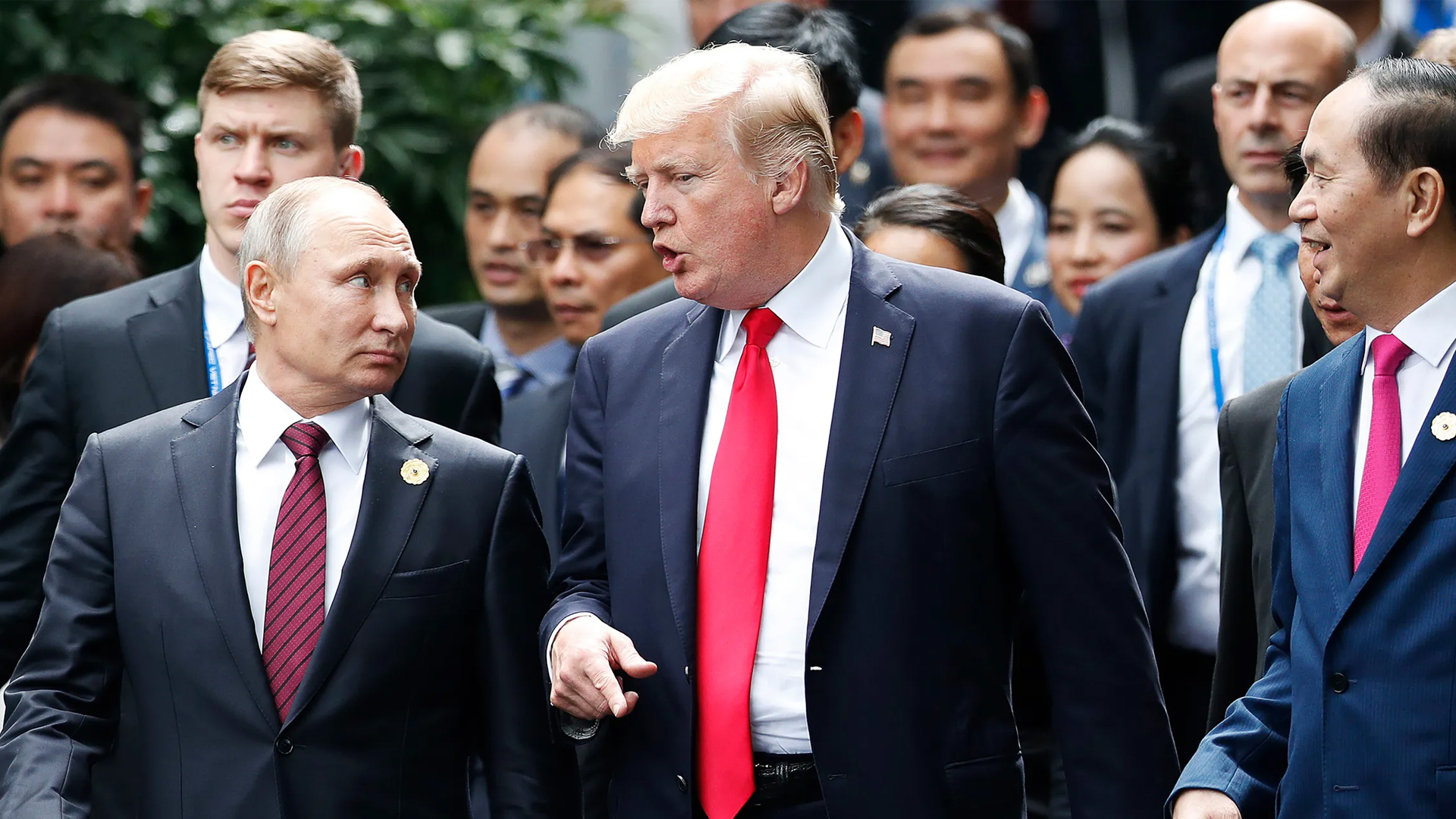
U.S. President Donald Trump has renewed his threat to hit Russia with “massive” sanctions or tariffs within two weeks if there is no tangible movement toward a Ukraine peace deal—an ultimatum he framed one week after his Alaska summit with Vladimir Putin. Trump’s remarks, delivered in Washington on August 22, underscored his irritation at Moscow and followed a Russian strike on a U.S.-owned factory in western Ukraine that injured workers.
Kyiv and Moscow remain far apart on both process and substance. Russia’s foreign minister, Sergei Lavrov, reiterated that “there is no meeting planned” between Putin and Ukrainian President Volodymyr Zelenskyy, saying a leaders’ summit would only be possible once an agenda is agreed—language that echoes Moscow’s long-standing preconditions. Zelenskyy countered that Russia is stalling and “doing everything it could to prevent a meeting.”
On the ground, the conflict remains intense. The Russian strike that angered Trump hit an American-owned electronics plant in Mukachevo, Zakarpattia, this week, sparking a fire and injuring staff. Initial injury tallies have varied as authorities update assessments: some reports cited six wounded, while others noted higher figures into the teens. Regardless of the exact count, the episode highlighted risks to foreign commercial assets amid ongoing attacks on Ukraine’s energy and industrial infrastructure.
Putin, meanwhile, struck an upbeat tone on U.S.–Russia relations. During a visit to a nuclear research center on Friday, he said there was “light at the end of the tunnel” and praised Trump’s leadership, signaling Moscow’s hope for deeper bilateral ties, including potential Arctic and Alaska projects, even as the Ukraine talks stall.
Substantively, Russia’s position remains anchored in territorial demands. Moscow has pushed Kyiv to accept loss of control in parts of eastern and southern regions and floated a freeze of current front lines in other areas it claims, while hinting it could relinquish small pockets elsewhere. Kyiv rejects negotiations “under the barrel of a gun,” although Zelenskyy has softened earlier demands for a lengthy ceasefire as a precondition to leader-level talks. The broader U.S.-led diplomatic effort continues to focus on future security guarantees for Ukraine; Trump has suggested Moscow signaled openness to some Western guarantees, but Russia has publicly cast doubt on any such arrangements discussed without its direct consent.
Against this backdrop, Trump showed reporters a photo from the Alaska red-carpet meeting and mused that Putin “may be coming” to the 2026 FIFA World Cup in North America, hedging that it depends “on what happens.” Russia remains suspended from FIFA and UEFA competitions following its 2022 invasion of Ukraine and did not take part in 2026 qualifying. Any Putin “attendance” would be as an invited dignitary, not as part of a participating team.
Strategically, casualty estimates—already in the hundreds of thousands—continue to climb, with both sides targeting energy infrastructure. Kyiv insists that durable peace requires credible guarantees and the restoration of sovereignty, while Moscow seeks recognition of its claims and a front-line freeze it can portray as a victory. For Washington, the two-week window Trump set is meant to catalyze movement: sanctions or tariffs if Moscow blocks talks, and restraint if negotiations advance. Whether that pressure changes Kremlin calculations remains unclear; Lavrov’s “no meeting planned” line suggests Moscow prefers to hold leverage until terms look more favorable.