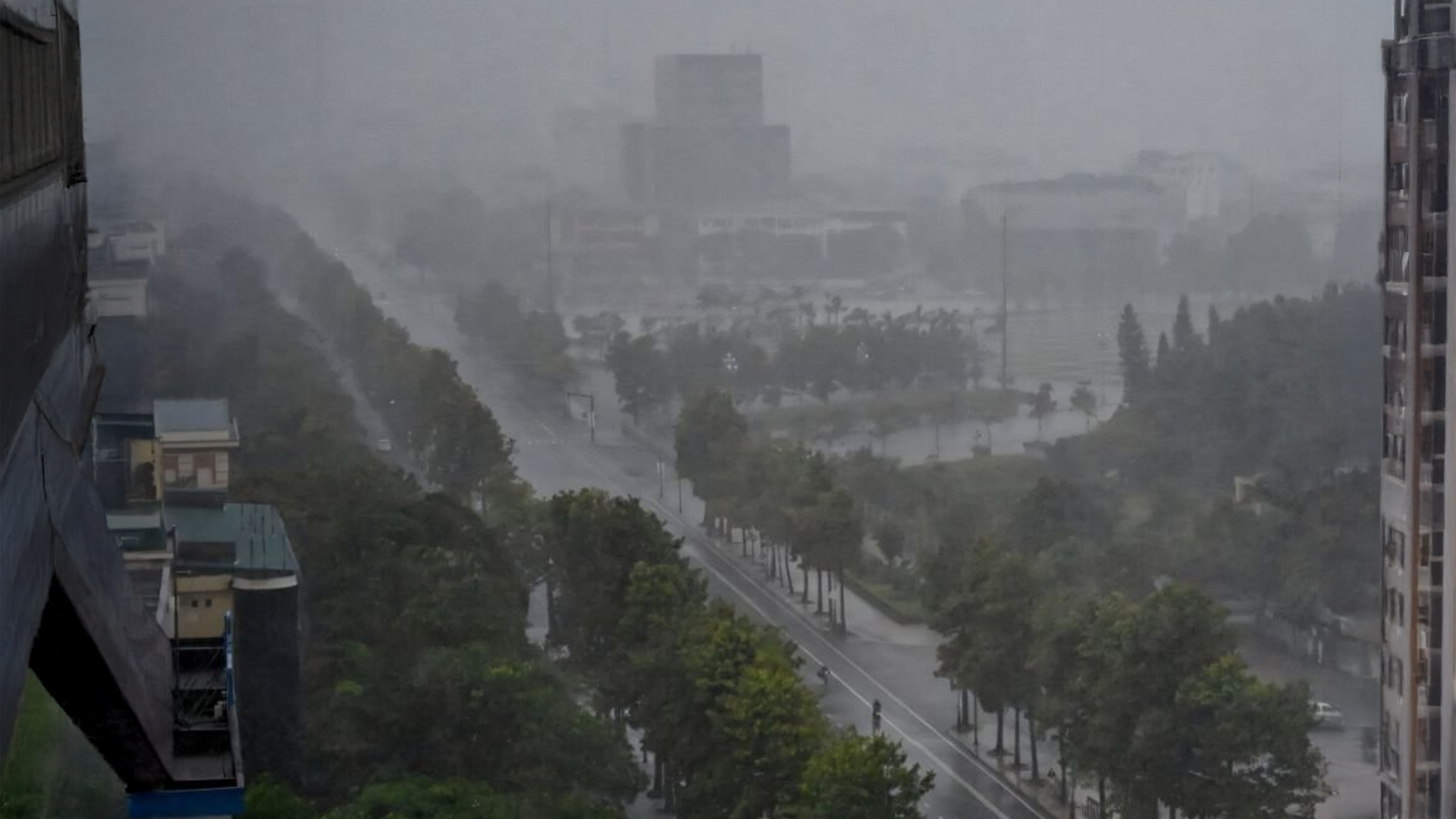
Typhoon Kajiki battered Vietnam’s north-central coast before weakening into a tropical depression over Laos on Tuesday morning, August 26, 2025, killing at least three people and injuring ten. The storm inflicted widespread destruction, damaging nearly 7,000 homes, submerging about 28,800 hectares of rice fields, and felling approximately 18,000 trees. A total of 331 electricity poles were reported downed, causing extensive blackouts across provinces including Thanh Hoa, Nghe An, Ha Tinh, Thai Nguyen, and Phu Tho. Authorities warned of continued torrential rainfall—up to 150 millimeters within six hours—raising the threat of flash floods and landslides in northern Vietnam.
In the capital, Hanoi, streets were heavily flooded during Tuesday morning’s downpour, halting traffic and submerging vehicles up to their roofs. Residential areas were surrounded by floodwaters, while West Lake, the city’s largest, overflowed. Several villages in Bac Ninh province were reported cut off as floodwaters rose.
Authorities had launched massive preemptive evacuations ahead of the storm, moving nearly 600,000 residents from vulnerable coastal areas in provinces like Thanh Hoa, Quang Tri, Hue, and Danang. More than 16,500 soldiers and 107,000 paramilitary personnel were deployed for rescue and relief operations. Two regional airports and numerous schools were closed, while flights were canceled as part of safety measures.
Kajiki had earlier skirted southern China’s Hainan Island, prompting the shutdown of businesses and public transport in Sanya City. The storm’s high winds and heavy rains forced extensive preparations along the Chinese coastline before it moved toward Vietnam.
Beyond Vietnam, the remnants of Kajiki are affecting parts of Southeast Asia, particularly Thailand, where authorities issued warnings of heavy rain, flash floods, landslides, and rough seas. Forecasters expect waves of two to three meters along the Andaman Sea and Gulf coasts, reaching over three meters during intense storms. Residents in foothill and low-lying areas were urged to remain on high alert as emergency crews prepared for potential evacuations.
Experts point to deeper climatic factors at play. A recent study highlights how warming seas are causing tropical cyclones in Southeast Asia to form closer to land, intensify more rapidly, and linger longer—particularly threatening urban areas. The rapid intensification of Kajiki and its wide-reaching impact reinforce concerns about the region’s vulnerability to climate change.
National meteorological agencies predict that although Kajiki has weakened, rainfall will continue across northern regions of Vietnam, with localized accumulations above 200 millimeters in areas like Thanh Hoa, Quang Tri, and the Red River Delta. Coastal monitoring stations recorded dangerously high winds before the storm subsided, prompting local governments to maintain emergency protocols until weather conditions stabilize.
Vietnam’s recovery efforts are now underway, with local officials assessing damage and working to restore power, transportation, and infrastructure services. Reports indicate that beyond the submerged rice paddies, around 2,200 hectares of other crops were also affected, compounding fears of economic losses for farmers. Over one million households have experienced outages, and crews are racing to repair power lines and clear debris.
The scale of destruction comes at a critical time for Vietnam, with National Day events approaching next week to mark the country’s 80th anniversary. Officials face mounting pressure to restore normalcy and ensure public safety as communities grapple with the aftermath of Typhoon Kajiki. Rescue teams remain on standby as forecasts warn of further rainfall and unstable conditions in mountainous areas, where landslide risks remain high.
Also Read: Why Has Supreme Court Ordered SIT Probe Into Allegations Against Vantara?