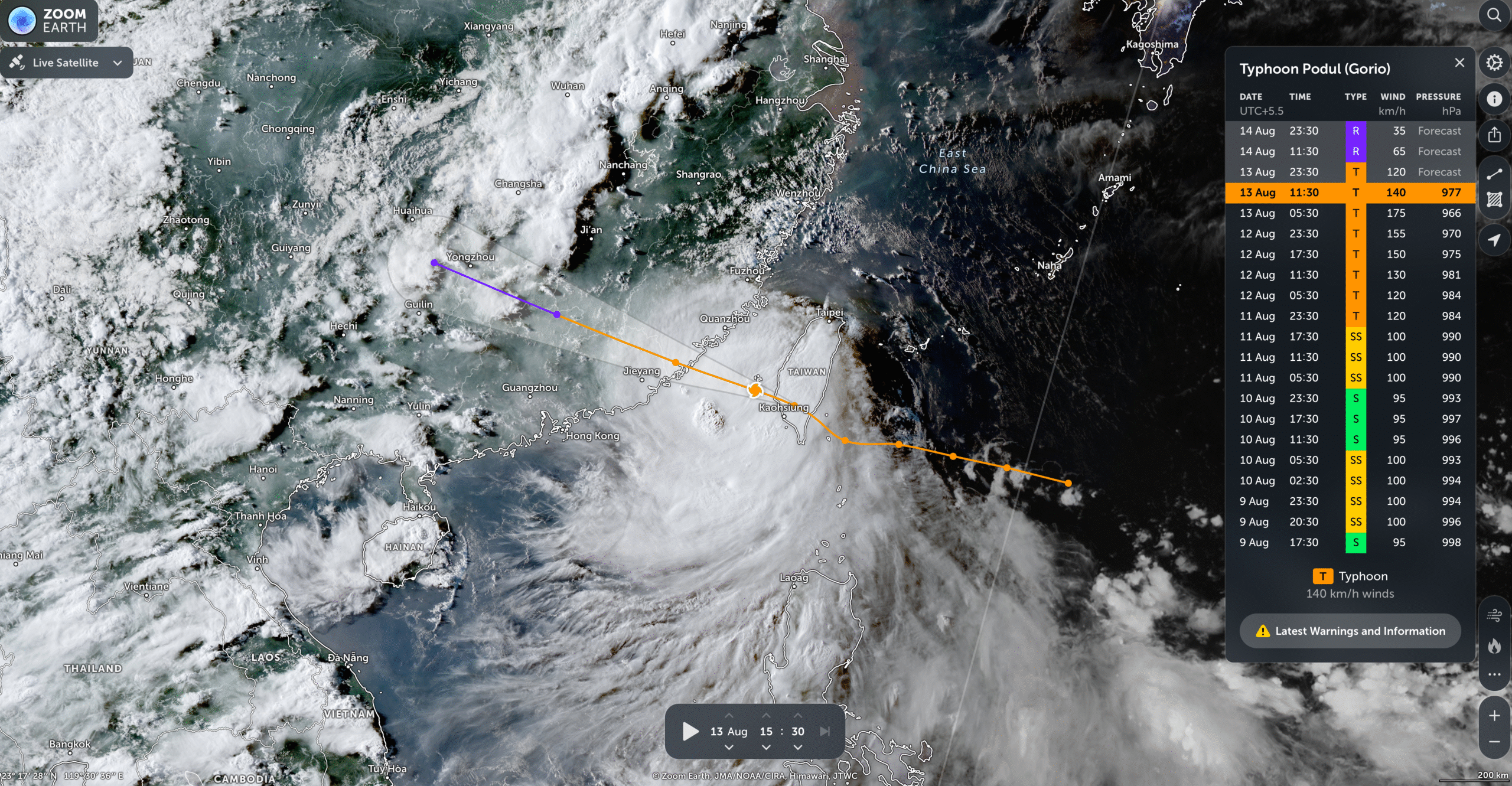
Typhoon Podul struck southeastern Taiwan on Wednesday, August 13, bringing wind gusts of up to 191 kph (118 mph) as it made landfall near Taitung County at around 1 p.m., according to the Central Weather Administration (CWA). The powerful storm forced shutdowns across nine cities and counties, including southern metro areas Kaohsiung and Tainan, prompting evacuations and widespread cancellations of flights, school, and business activities.
Authorities evacuated over 5,500 residents, particularly those still reeling from July’s devastating storm damage. The military stood ready with more than 31,500 personnel prepared to assist in rescue and relief efforts.
Air travel came to a complete halt: all 252 domestic flights and 129–155 international flights were grounded, largely affecting departures from Kaohsiung and Taoyuan airports. Rail services along the west coast were curtailed, southeastern train routes cancelled, ferry crossings suspended, and schools and businesses shuttered across southern regions.
Podul left a trail of destruction: more than 134,500 households lost power, while 33 people were injured and a fisherman remains missing after being swept out to sea during a storm surge. Downed trees, street signs, and flooding were reported in central and southern districts, compounding infrastructure strain.
“Kaohsiung, Tainan and Chiayi will become major rainfall hotspots,” warned CWA Administrator Lu Kuo-chen, noting that mountain regions could receive between 400 to 600 mm (16–24 inches) of rain by Thursday. Several southern mountainous zones have already received over a year’s worth of rainfall in the past month, raising serious concerns about landslides and further flooding.
Taiwan, home to 23 million people, experiences frequent typhoons between July and October. However, climate experts warn that warming oceans and atmosphere are intensifying storms, resulting in heavier rainfall and stronger winds.
Earlier storms, including Typhoon Danas in early July and extreme rains in late July, already inflicted heavy damage, leaving five dead, three missing, and dozens injured while severely disrupting agriculture and power supply. Today’s arrival of Podul threatens to exacerbate these ongoing humanitarian and infrastructure crises.
As Podul moves across the island and heads toward China’s Fujian and Guangdong provinces later this week, emergency crews across Taiwan remain on high alert. Shelters are activated, and transport networks await restoration, even as residents brace for the storm’s full impact and possible aftershocks.
Given the mounting risk of landslides, flash floods, and structural damage, the coming 24–48 hours will be crucial in safeguarding lives and restoring normalcy across the battered southern and central regions of Taiwan.