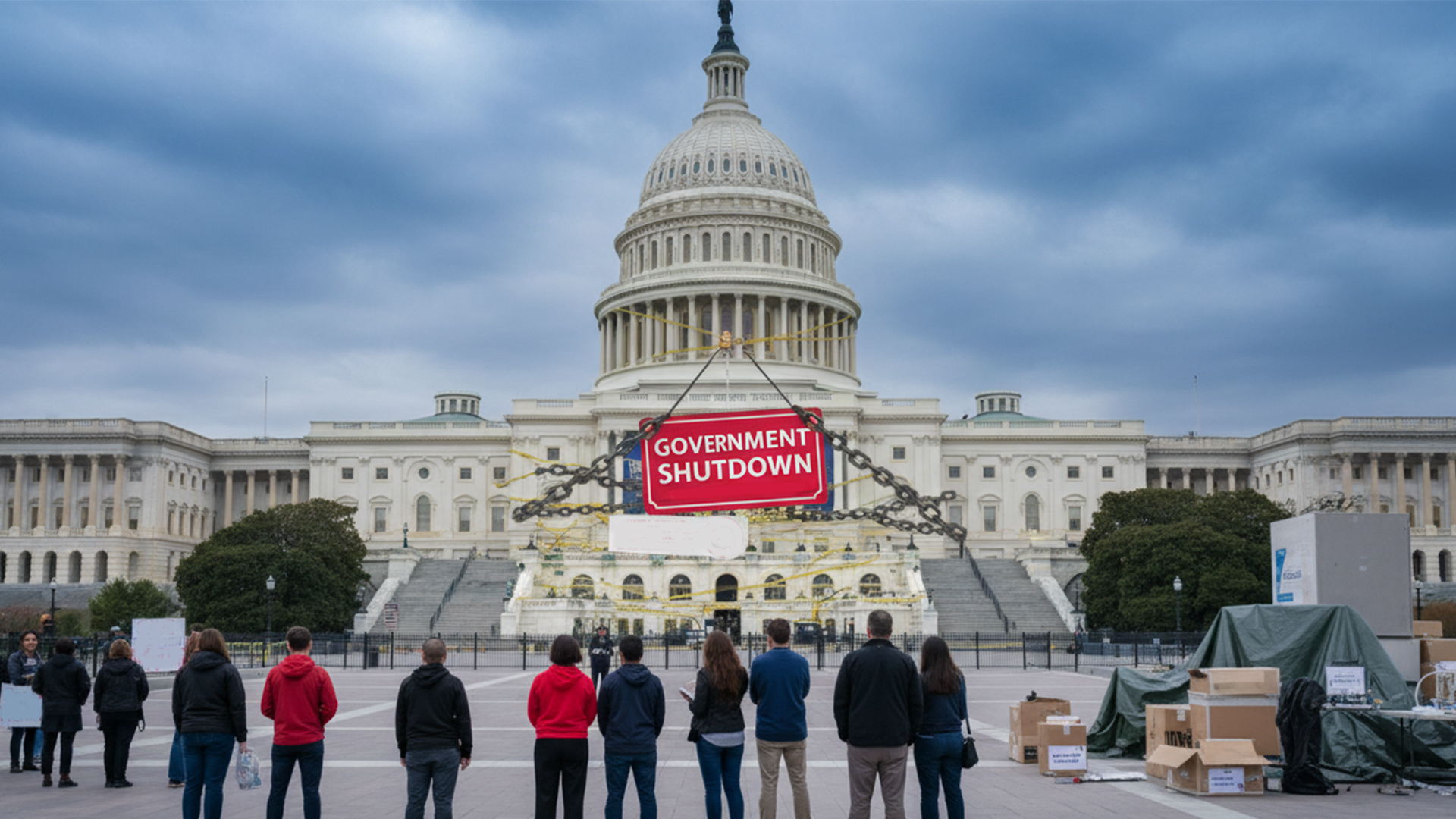
The U.S. federal government officially shut down at 12:01 a.m. Eastern Time on Wednesday, October 1, 2025, after Democrats refused to back a Republican plan to extend funding unless they secured major concessions on healthcare. According to the Washington Post, the House GOP had proposed a continuing resolution (CR) that would maintain current spending levels through mid-November, but Senate Democrats blocked it, demanding the restoration of Affordable Care Act (ACA) premium subsidies, reversal of Medicaid cuts, and preservation of public health funding.
Despite Republicans holding narrow control of both chambers, the effort to push through a short-term measure collapsed late Tuesday. As The Guardian reported, Democrats voted en masse against the GOP bill, accusing Republicans of using the shutdown threat to weaken social protections. Senate Republicans, meanwhile, argued Democrats were obstructing government funding for partisan gain.
The White House had prepared aggressively for this moment. The Associated Press revealed that the Office of Management and Budget instructed agencies to draw up contingency plans not just for furloughs but for potential permanent layoffs, marking a harder stance than in past shutdowns. President Trump publicly suggested that a shutdown could serve as leverage to impose deeper structural reforms.
Democratic leaders denounced the move as political blackmail. Senate Minority Leader Chuck Schumer and House Minority Leader Hakeem Jeffries accused the administration of using federal workers as pawns. As Time noted, Democrats argued that the layoffs threat represented an unprecedented attempt to gut government capacity.
The shutdown’s impact will be wide-ranging. The Congressional Budget Office estimates up to 750,000 federal workers could be furloughed, costing roughly $400 million a day in lost wages.
The Department of Health and Human Services expects 41 % of its staff to be furloughed, meaning the CDC and NIH will suspend most non-essential research. At the Department of Education, 87 % of workers may be furloughed, halting new grants and slowing civil rights investigations.
Air travel will also be affected and over 11,000 Federal Aviation Administration employees could be sidelined, though air traffic controllers and safety inspectors will remain on duty without pay. TSA staff will also continue working under strained conditions.
National parks will stay partly open, but with minimal staff. The administration, many believe, plans to rely on user fees to keep operations running, though services like visitor centers and maintenance may be drastically cut back.
Essential programs funded through mandatory spending—such as Social Security, Medicare, and Medicaid—will continue, but administrative delays are expected. Benefit verification and IRS operations could slow sharply, leaving many citizens in limbo.
Markets are showing early signs of unease. The Wall Street is bracing for reduced consumer confidence and potential dips in growth if the impasse drags on. The political blame game is already intensifying: Republicans accuse Democrats of sabotaging the government, while Democrats insist the GOP is weaponizing the budget process to undermine healthcare protections.
The 2025 shutdown is the first since the 2018–2019 lapse in funding, which became the longest in U.S. history. The Washington Post notes that this episode may prove just as consequential, testing whether either party can afford to back down. Republicans are expected to reintroduce new funding proposals with tweaks, while Democrats are standing firm on demands for ACA subsidies and broader health protections.
For now, federal agencies and millions of Americans brace for disruptions in paychecks, services, and stability as the shutdown enters its first days.
What the Shutdown Means
A government shutdown occurs when Congress fails to pass appropriations bills or continuing resolutions to fund federal agencies. In practice, it forces agencies to suspend all “non-essential” operations. USAFacts explains that while essential services like defense, TSA screening, and some law enforcement continue, hundreds of thousands of employees are furloughed or required to work without pay.
For the public, this means disruptions ranging from delayed passports and halted federal research to close park facilities. According to the Committee for a Responsible Federal Budget, contractors may lose income, while local economies dependent on federal workers take a hit. Some mandatory programs like Social Security remain active, but citizens may face long delays in accessing services.
If the shutdown stretches on, the consequences deepen. As CBS News reports, prolonged lapses erode consumer confidence, stall business activity, and add uncertainty to financial markets. Beyond economics, shutdowns reinforce public distrust in Washington’s ability to govern. In short, the nation pays both immediate and long-term costs until lawmakers reach agreement.
Also Read: PM Modi, World Leaders Welcome Donald Trump’s 20-Point Gaza Peace Plan