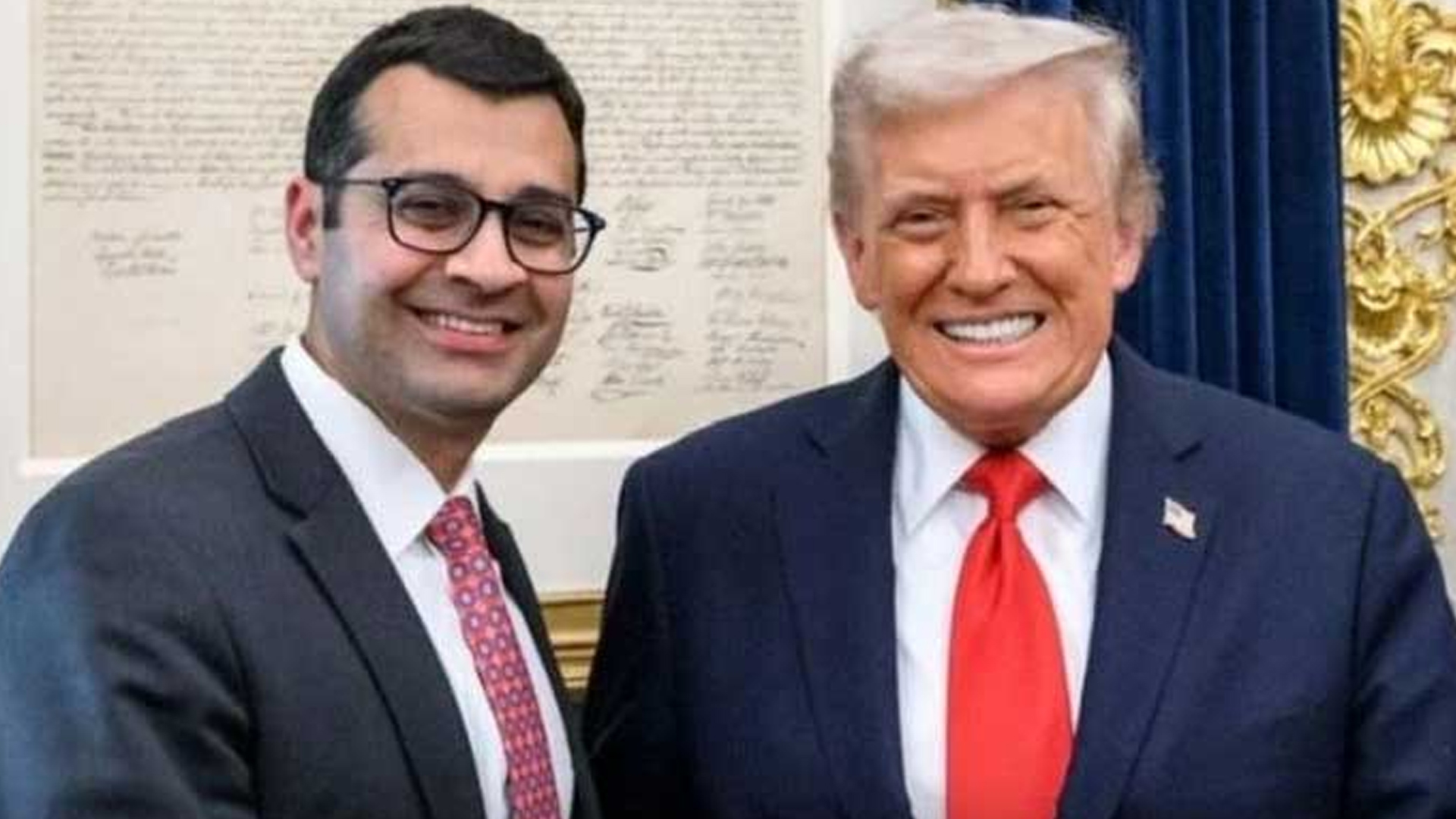
Ranjit “Ricky” Singh Gill, an Indian-origin official serving in the US administration under President Donald Trump, has drawn global attention after being honoured for his role linked to the 2025 India-Pakistan ceasefire. Gill, who is currently Senior Director for South and Central Asia at the US National Security Council (NSC), received the NSC Distinguished Action Award, one of the highest internal recognitions for contributions to US national security.
The award was presented in Washington by US Secretary of State Marco Rubio and cited Gill’s role during heightened tensions between India and Pakistan following Operation Sindoor. US officials have indicated that Gill was part of behind-the-scenes diplomatic efforts aimed at reducing escalation between the two nuclear-armed neighbours.
Gill was born in New Jersey to Punjabi Sikh parents who migrated to the United States from India. Both his parents are doctors. He studied public policy at Princeton University and later earned a law degree from the University of California, Berkeley. Over the years, Gill has built a steady career in US foreign policy, serving in the State Department and earlier on the NSC during Trump’s first term, where he handled Russia and European energy security.
In his current role, Gill oversees US policy relating to India, Pakistan, Afghanistan and Central Asia, a region marked by fragile security dynamics and complex geopolitical interests. He has also been involved in broader strategic initiatives, including discussions on trade, regional connectivity and the India-Middle East-Europe Economic Corridor.
However, Gill’s recognition has triggered debate in India. The Indian government has firmly denied claims that the United States played a mediating role in the ceasefire, maintaining that all decisions were taken bilaterally between India and Pakistan. Several former diplomats and strategic experts have questioned the rationale behind the award, calling it inconsistent with India’s official position.
Criticism has also surfaced on social media, with some users viewing the honour as an attempt by Washington to shape a diplomatic narrative rather than reflect ground realities. Despite the controversy, the award highlights the growing influence of Indian-origin professionals in US policymaking circles and the sensitive nature of diplomacy in South Asia.
Gill himself has not publicly commented on the criticism, but his profile continues to rise amid ongoing geopolitical developments in the region.
Also Read: India becomes world’s 4th largest economy