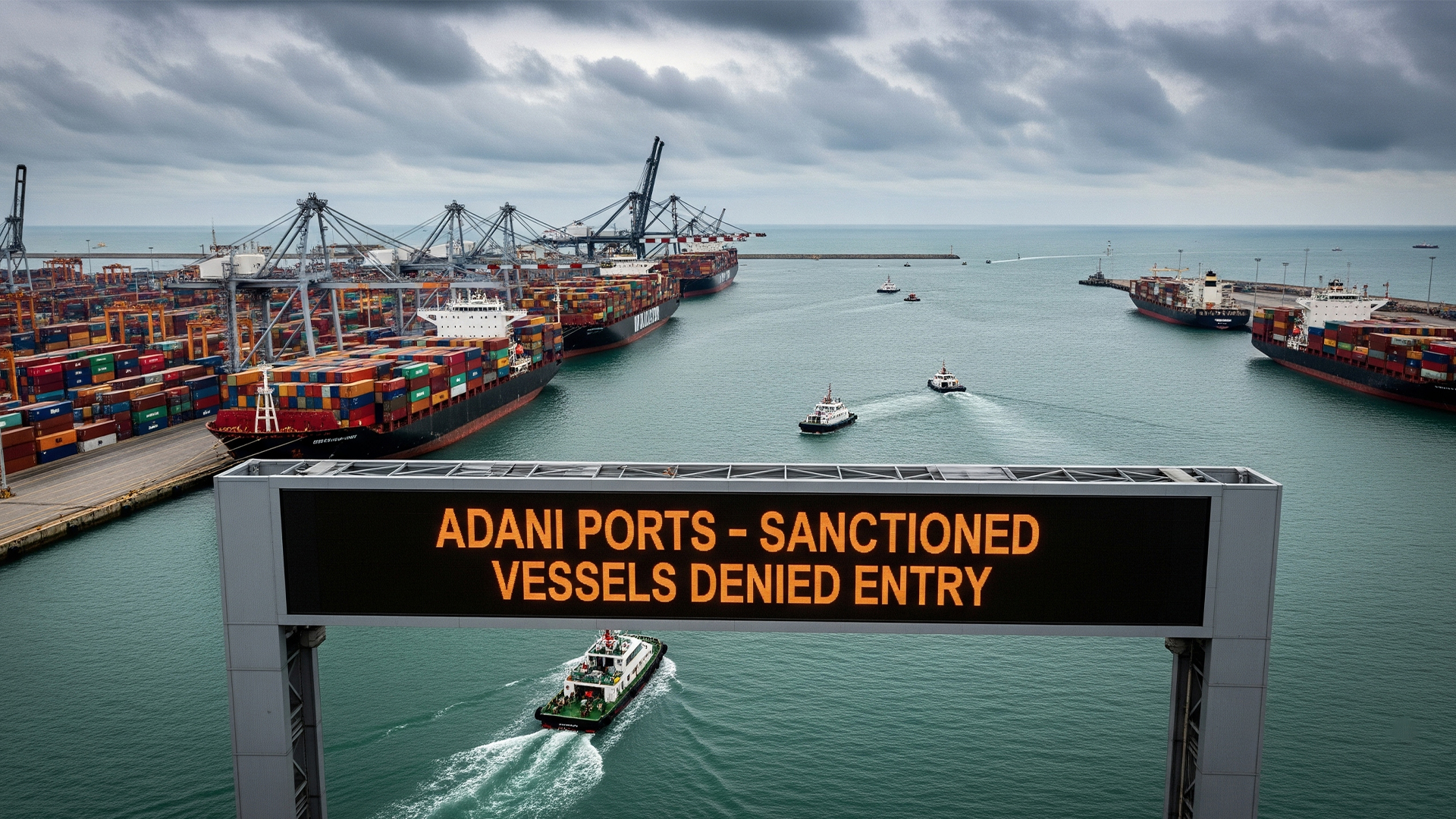
Adani Ports and Logistics, India’s largest private port operator, has announced that vessels sanctioned by the United States, European Union, and United Kingdom will no longer be allowed to dock at any of its 14 ports. The new rule, effective immediately, is aimed at aligning operations with global trade regulations and reducing the risks linked to ships associated with Russian or Iranian oil transport.
Under the new policy, vessel operators must submit written assurance that their ships are not on any sanctions lists at the time of nomination. The move reflects Adani Ports’ effort to ensure compliance with international trade and security norms at a time when geopolitical tensions are influencing global shipping patterns.
The decision comes amid increased scrutiny of vessels linked to Russia and Iran, especially those operating through the so-called “shadow fleet” to move crude oil despite sanctions. Although India is not bound by all Western sanctions, it has been monitoring activities around oil shipments and related transactions.
The new rules could affect several Indian refineries that rely on Adani’s port services for importing crude oil. HPCL-Mittal Energy Ltd, which runs a refinery in Punjab, receives its crude supply through Adani’s Mundra Port. Indian Oil Corporation, the country’s largest refiner, also imports crude through multiple ports, including those operated by Adani. These restrictions could lead to disruptions in supply chains and may push refineries to seek alternative routes or sources.
Adani’s decision reflects a cautious approach to avoid potential penalties while keeping in step with evolving global standards. It also aligns with wider efforts to limit sanctioned trade and improve oversight in the shipping sector.
As trade routes and global energy supplies continue to face uncertainties, this move highlights the challenge faced by port operators in balancing smooth operations with regulatory compliance. It is also likely to influence how shipping companies and energy suppliers adjust to changing rules and trade frameworks in the coming years. The development adds another layer of complexity to India’s efforts to manage energy imports while staying aligned with international trade expectations.
Also Read: Meta and TikTok Win Legal Challenge Against EU Tech Fees, but Won’t Get Money Back