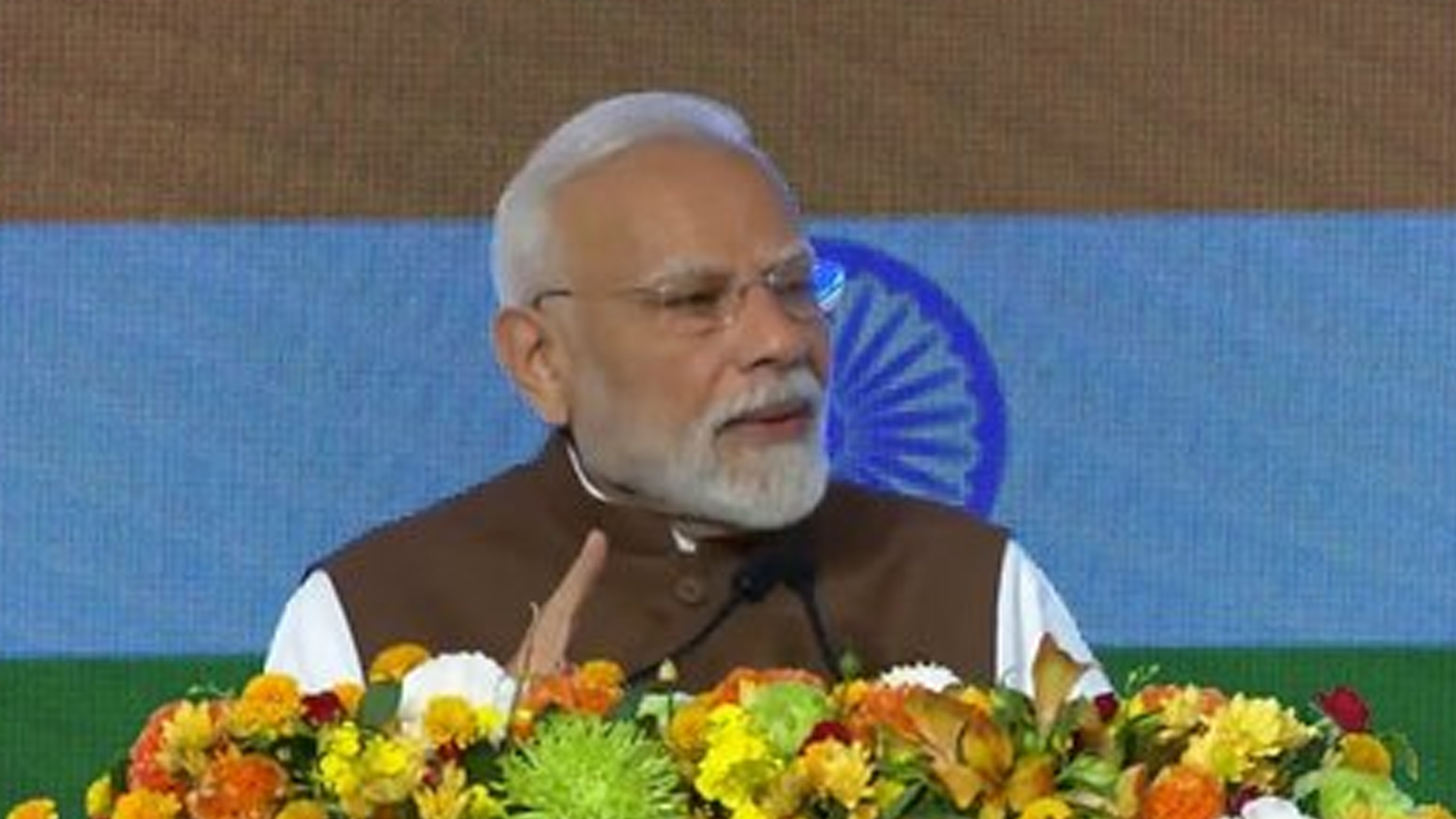
Tokyo: Prime Minister Narendra Modi landed in Tokyo on Friday for a two-day visit to attend the 15th India–Japan Annual Summit and address the India–Japan Joint Economic Forum alongside Japanese Prime Minister Shigeru Ishiba. This marks Modi’s first standalone visit to Japan in nearly seven years, highlighting the deepening strategic significance of the bilateral partnership.
In a powerful opening at the Economic Forum, Modi said, “The world is not just watching but also counting on India.” He urged global investors to see India as more than just an opportunity; it is a focal point of growth. Modi hailed Japan’s vital role in India’s development journey, noting over $40 billion in investments in metro rail, semiconductors, manufacturing, and startups. Calling Japan a “tech powerhouse” and India a “talent powerhouse,” he urged businesses to strengthen collaborations under the theme of “Make in India, Make for the World.”
Modi also underlined the synergy he envisions between the two nations: “Technology of Japan and the talent of India can together lead the tech revolution of this century.” A 2024 survey by the Japan Bank for International Cooperation (JBIC) ranked India as the most attractive medium-term investment destination for Japanese companies, especially in automobiles, electronics, chemicals, and machinery. Modi’s visit is seen as a chance to build on this momentum and push the partnership forward.
Technology and Trade at the Core
On Saturday, Modi and Ishiba are scheduled to visit Tokyo Electron’s semiconductor plant and the Tohoku Shinkansen factory in Sendai. A key outcome could be an agreement to deploy Japanese E-10 coaches on India’s Mumbai–Ahmedabad High-Speed Rail (bullet train) project by 2030, a flagship symbol of the nations’ technology cooperation.
Bilateral trade remains robust, with volumes reaching $22.85 billion in FY 2023–24, though the balance continues to tilt in Japan’s favour. Between April 2024 and January 2025, trade stood at $21 billion. India currently ranks 18th among Japan’s trading partners, while Japan is 17th for India.
The visit also carries a strong strategic dimension. Defence cooperation has expanded since the signing of the Acquisition and Cross-Servicing Agreement (ACSA) in 2020, reinforced by regular “2+2” ministerial dialogues and joint naval exercises.
His visit has placed business, technology, and security at the heart of India–Japan ties, while reaffirming their shared role in the Indo-Pacific. As Modi concludes his Tokyo engagements and proceeds to Tianjin for the SCO Summit, the outcomes of this visit are expected to set the stage for deeper cooperation, fresh opportunities, and new milestones in the India–Japan partnership.
Also Read: PM Modi to Visit China for First Time in Seven Years Amid Efforts to Repair Bilateral Ties