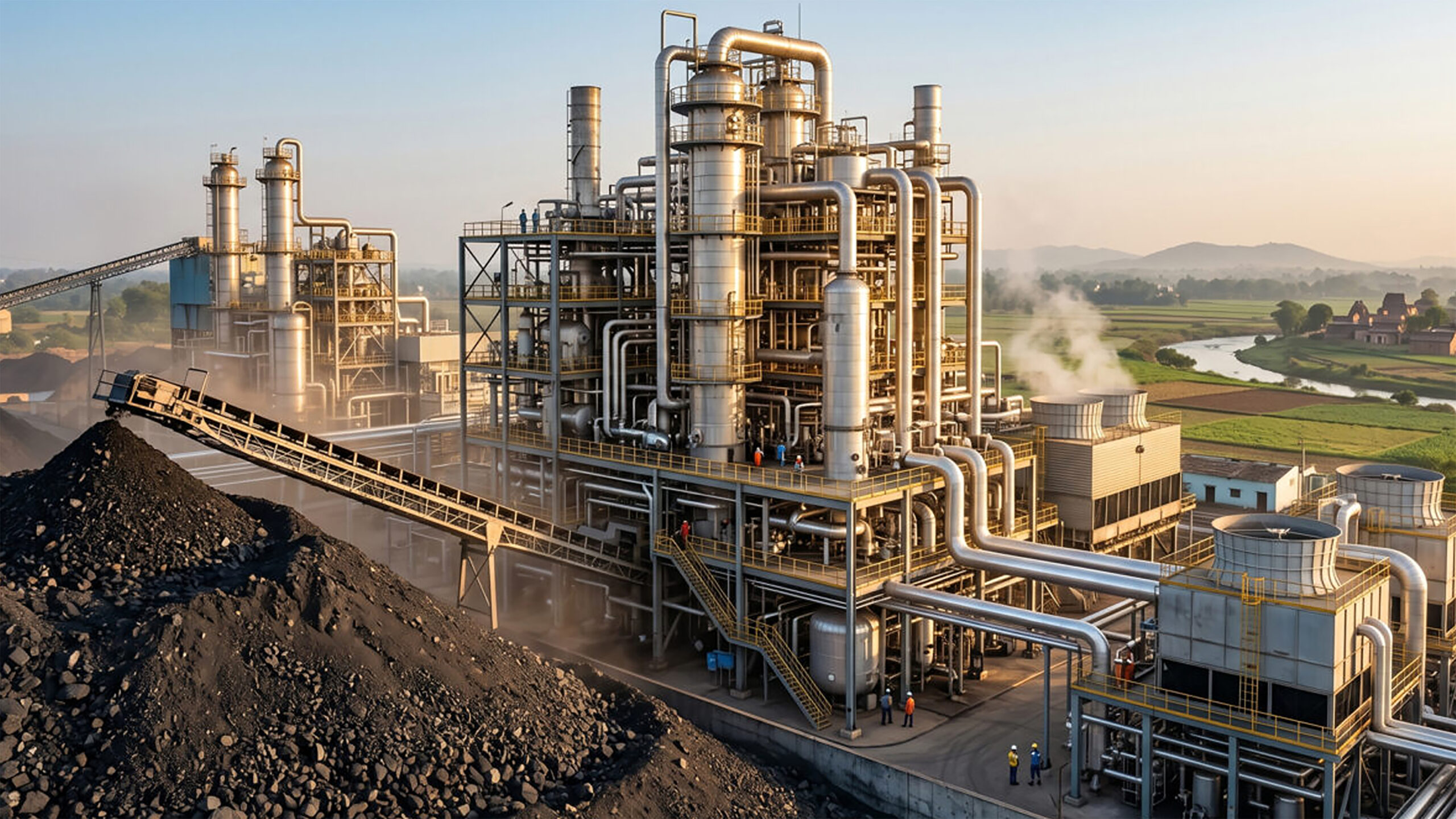
The government is preparing a major ₹37,500 crore policy push to accelerate coal gasification projects, aiming to unlock better value from India’s coal reserves while cutting dependence on imported energy and raw materials.
The proposal is expected to be placed before the Union Cabinet soon. If approved, it will mark one of the largest targeted incentives for coal-based clean energy technologies in recent years.
Coal gasification is a process that converts coal into synthetic gas, which can then be used to produce fuels, fertilisers, and industrial chemicals. Unlike traditional coal burning, this method allows more efficient use of coal while significantly reducing emissions, making it a cleaner alternative within the fossil fuel segment.
A key objective of the plan is to reduce India’s reliance on imports such as liquefied natural gas (LNG) and fertiliser inputs like urea. By using domestic coal more effectively, the government hopes to strengthen energy security and support domestic manufacturing and agriculture-linked industries.
To attract investment, the government is expected to offer substantial financial incentives. Individual projects could receive support of up to around ₹3,000 crore, improving the viability of large-scale gasification plants for both public and private sector companies.
The policy is also part of a broader strategy to transition towards cleaner and more efficient energy use without abruptly moving away from coal, which still forms a major part of India’s energy basket. Officials view coal gasification as a “bridge technology” that can balance energy needs with environmental concerns.
The long-term plan includes significantly expanding coal gasification capacity by 2030. The proposed framework is expected to simplify earlier guidelines, reduce procedural delays, and make it easier for companies to invest and execute projects.