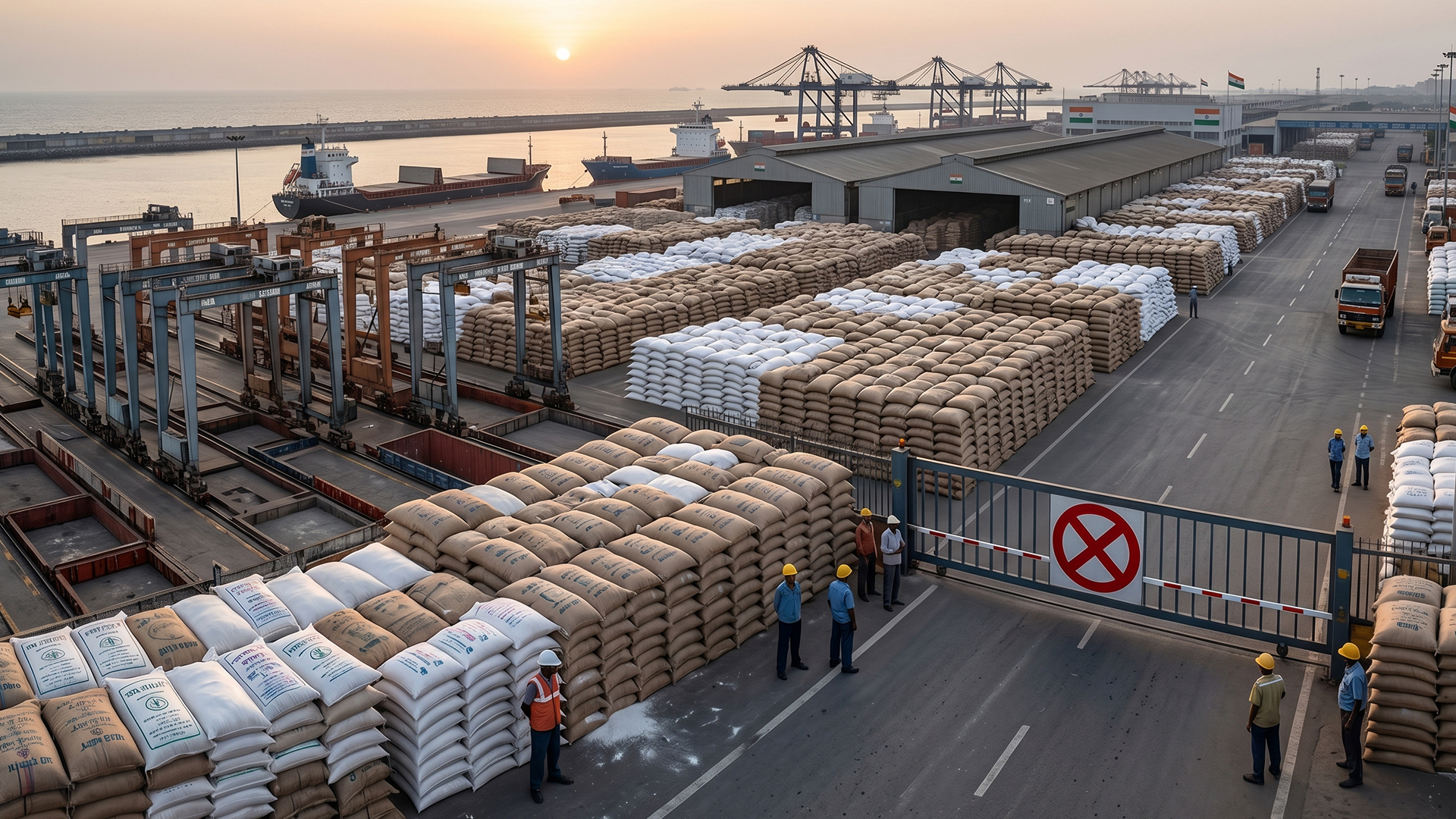
India has imposed a ban on sugar exports with effect until September 30, 2026, in a significant policy intervention aimed at stabilising domestic supply and preventing a rise in local prices.
The Directorate General of Foreign Trade (DGFT) has issued the notification placing raw, white, and refined sugar under the “prohibited export” category. This effectively halts new export contracts from being signed or executed during the restriction period.
The government said the primary objective of the decision is to ensure sufficient availability of sugar in the domestic market. Authorities have been monitoring supply conditions closely amid concerns of tightening output and rising consumption demand within the country.
However, the policy allows limited exemptions. Sugar shipments that are already loaded, cleared by customs, or are part of specific prior approvals may still be permitted under existing trade arrangements. This ensures that previously committed export obligations are not fully disrupted.
India is one of the world’s largest producers and exporters of sugar, and any restriction on exports has a direct impact on both domestic and global markets. The move is expected to improve local availability and help control price fluctuations, particularly during periods of supply stress.
The decision comes against the backdrop of lower sugar production estimates for the current and previous seasons. Industry reports indicate that uneven rainfall patterns and reduced sugarcane yields have impacted overall output. Additionally, a higher share of sugarcane is being diverted towards ethanol production under government blending programmes, reducing the volume available for sugar consumption.
Sugar millers and exporters may face short-term disruptions as existing export commitments could be affected. However, policymakers have indicated that the restriction will remain in place until domestic supply conditions improve or further review is undertaken.
Also Read: Rupee slips to fresh record low at 95.8