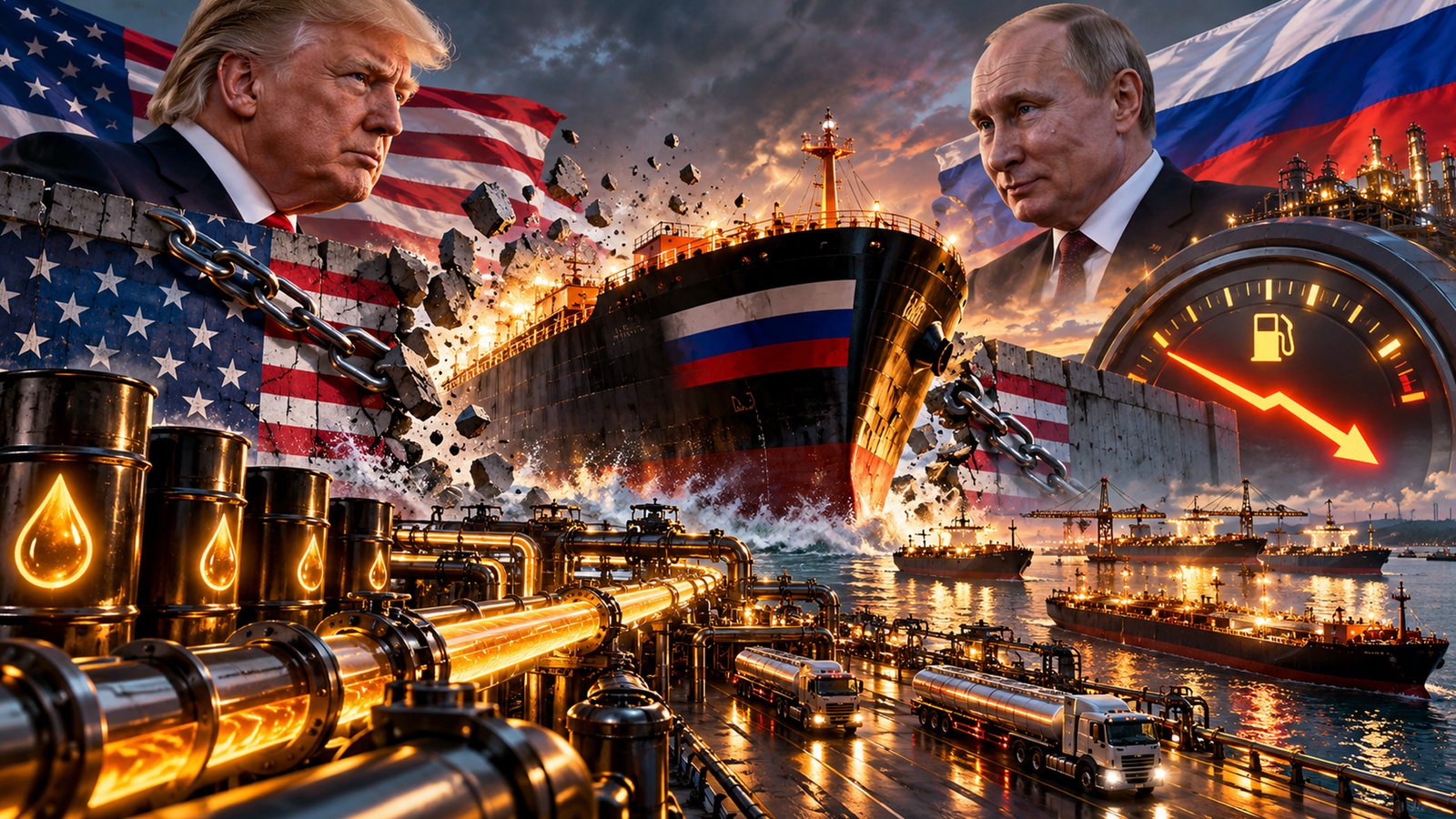
The United States has temporarily eased sanctions on Russian-origin diesel fuel until April 7, 2027, following a telephone conversation between US President Donald Trump and Russian President Vladimir Putin. The decision comes as global fuel prices surge amid supply disruptions, refinery damage and geopolitical tensions, marking a significant shift in Washington’s approach to Russian energy exports.
The US Treasury Department announced the relaxation on Friday, October 9, authorising transactions involving the sale, delivery, unloading and import of Russian diesel, including shipments entering the United States. The temporary authorisation is intended to facilitate additional fuel supplies to American and international markets.
The announcement followed Trump’s statement that Russia had agreed to supply substantial quantities of diesel to help ease pressure on fuel prices. However, the extent to which the additional supplies will reduce prices remains uncertain.
Trump said Russia would immediately supply more than 300,000 tonnes of diesel, followed by another 500,000 tonnes in November and one million tonnes thereafter. He added that Russia could provide an additional three million tonnes, depending on the condition of its refineries.
The proposed shipments could increase the availability of diesel in international markets at a time when refiners and fuel buyers are struggling with supply constraints.
The US President has argued that additional Russian supplies could help bring down diesel prices for American consumers and other markets. The administration is facing mounting pressure to contain fuel costs, which affect transport, agriculture, manufacturing and the wider cost of living.
The US Treasury’s Office of Foreign Assets Control issued a general licence permitting transactions involving Russian-origin diesel until April 7, 2027. The authorisation provides temporary relief from restrictions that would otherwise prohibit these transactions.
However, the licence does not permit debits from accounts held at US financial institutions by the Russian central bank, National Wealth Fund or Ministry of Finance. The relaxation is therefore limited to specified diesel-related transactions rather than a wholesale removal of financial sanctions against Russia.
Diesel prices have risen sharply as geopolitical tensions and disruptions to refining capacity have tightened supplies. Ukraine’s attacks on Russian oil refineries have affected production, while Moscow introduced restrictions on diesel exports to protect domestic availability.
Attacks by Yemen’s Iran-backed Houthi group on facilities in Saudi Arabia have added to concerns about fuel supply chains. Wider instability linked to the conflict involving Iran has also contributed to uncertainty across global energy markets.
Diesel is a critical fuel for freight transport, farming, construction, mining and industrial operations. A sustained increase in prices can raise logistics costs, feed into food inflation and increase expenses for businesses that rely on road transport and heavy machinery.
The United States has consequently been looking for ways to improve fuel availability as households and businesses face higher energy bills.
However, analysts caution that allowing Russian diesel back into the market may not produce a substantial or lasting reduction in prices. Additional shipments could redirect existing supplies rather than significantly increase the total volume of fuel available worldwide.
The decision represents a notable shift in US policy towards Russian energy following Moscow’s invasion of Ukraine in 2022. Washington and its allies have used sanctions and restrictions on Russian energy trade to limit the revenues available to the Kremlin.
The latest move has prompted questions about the consistency of that approach, particularly as the United States continues to support Ukraine.
Ukrainian President Volodymyr Zelenskyy criticised the decision, arguing that easing restrictions could provide Russia with additional revenue to sustain its war effort. Some US lawmakers have also expressed concern that the relaxation could undermine the broader sanctions strategy.
The development comes amid continuing diplomatic efforts to address the Russia-Ukraine conflict. The timing of the agreement has intensified scrutiny of Washington’s energy policy and its implications for relations with Kyiv and European allies.
The immediate impact on fuel prices will depend on whether the announced volumes reach buyers as planned and how quickly they enter the market. Transport costs, refinery capacity, regional demand and disruptions to shipping routes will continue to influence prices.
Even if the additional supplies reach the United States, the effect may vary between regions. Global diesel markets are interconnected, meaning changes in supply can influence prices beyond the countries receiving the fuel directly.
Nevertheless, the temporary sanctions relaxation does not resolve the underlying geopolitical risks or restore refinery capacity damaged by attacks. It also does not guarantee that the full volume announced by Trump will be delivered.
The coming months will show whether the agreement provides meaningful relief to fuel markets or mainly shifts existing supplies between buyers. For now, Washington’s decision highlights the growing tension between using energy sanctions as a foreign policy tool and keeping fuel affordable at home.