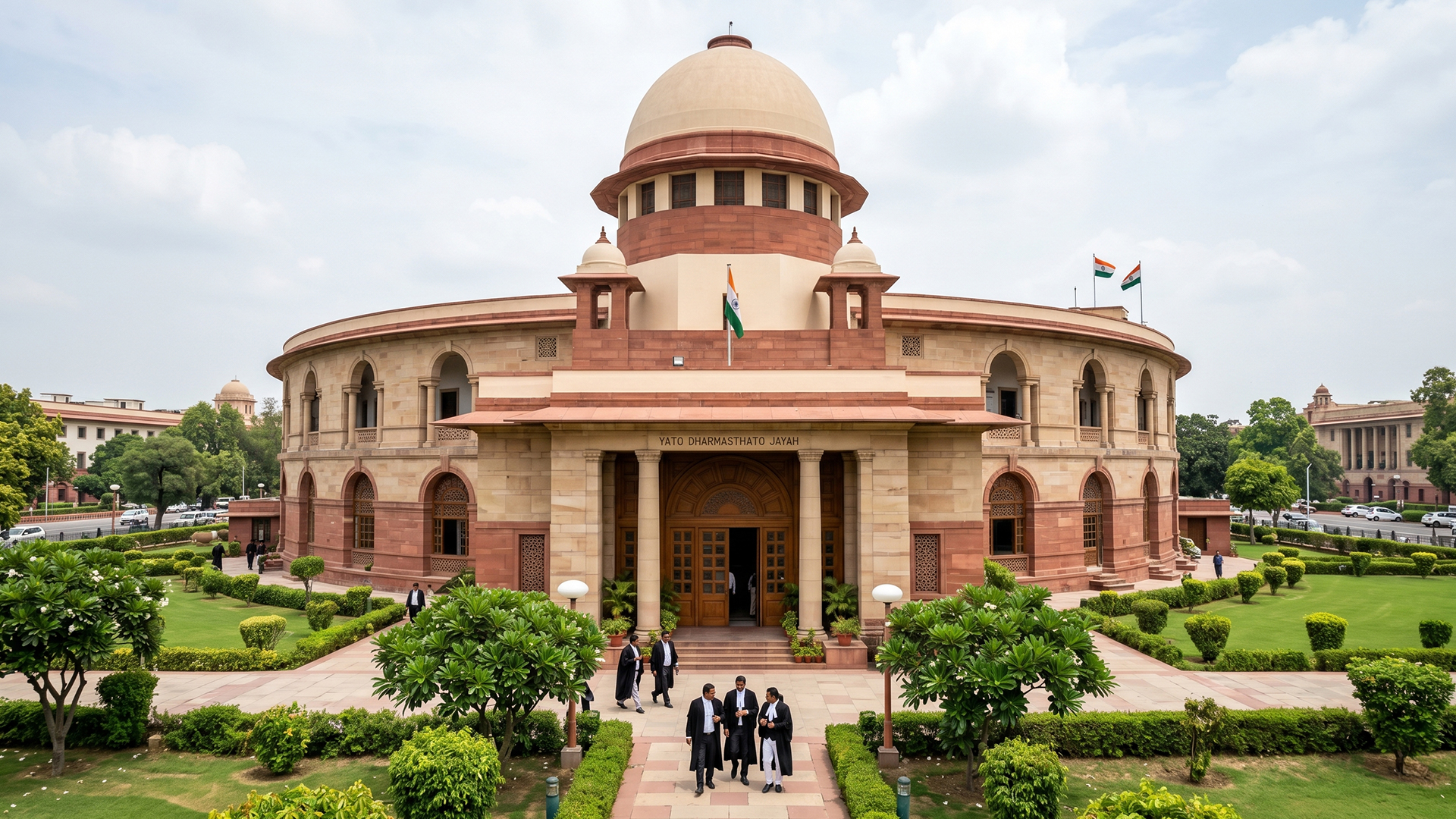
The Supreme Court of India has raised important questions over the continuation of reservation benefits or quota for children of financially and socially well-established families, particularly those whose parents hold senior government positions such as IAS officers.
During a recent hearing, the court questioned whether children of highly placed officials who have already achieved social and economic advancement should continue receiving the advantages meant under reservation policies. The observations came while examining issues related to affirmative action and the purpose behind providing quota benefits.
The bench reportedly asked why children of officers serving in top administrative roles should be considered eligible for reservation benefits when their families already have access to opportunities, education and economic security. The court stressed that the original aim of reservations was to uplift disadvantaged communities and create equal opportunities for those facing social and economic barriers.
The observations revived discussions surrounding the “creamy layer” concept, which seeks to exclude economically and socially advanced members within reserved categories from receiving certain benefits. The principle was introduced to ensure that reservation reaches those who continue to face disadvantages rather than repeatedly benefiting families that have already progressed.
The issue has remained a subject of debate for years, with some arguing that social discrimination may continue despite financial progress, while others believe reservation benefits should primarily reach those with greater need.
Legal experts believe the court’s comments could contribute to broader discussions on the future implementation of reservation policies and how benefits should be distributed among eligible groups. However, the observations made during court proceedings do not automatically indicate changes in existing laws or reservation structures.
The hearing has once again brought attention to larger questions around social justice, equal opportunities and the balance between economic progress and historical disadvantages.