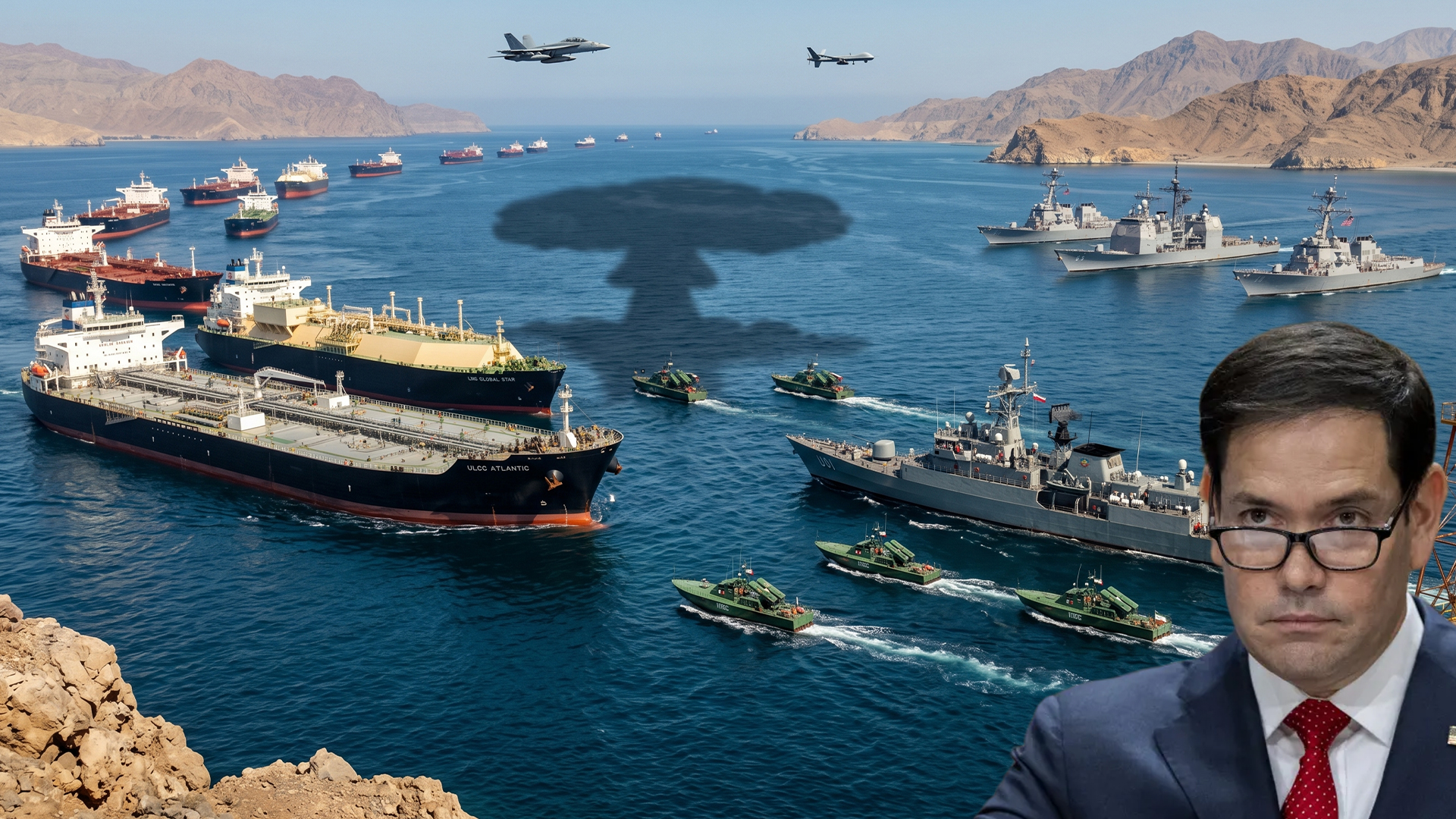
The standoff between the United States and Iran deepened on April 28, 2026, after US President Donald Trump and Secretary of State Marco Rubio reportedly rejected Iran’s latest proposal aimed at easing tensions and reopening the crucial Strait of Hormuz.
According to reports, Iran offered a phased peace plan that included reopening the Strait of Hormuz, halting hostilities, and addressing maritime disputes first, while delaying talks on its nuclear programme until later. However, the Trump administration remains firm that any agreement must immediately address Iran’s nuclear activities.
The Strait of Hormuz is one of the world’s most important oil shipping routes, carrying a significant share of global crude exports. Continued disruption in the waterway has kept energy markets on edge and added pressure to global inflation concerns.
Rubio signalled a tough US stance, saying Washington cannot accept Iran retaining effective leverage over the strategic passage and stressing that freedom of navigation must be restored without conditions.
The diplomatic setback comes despite mediation efforts involving regional countries including Oman and Pakistan. Iranian Foreign Minister Abbas Araqchi has reportedly been engaged in shuttle diplomacy to revive negotiations, but hopes for an immediate breakthrough have weakened.
Oil markets reacted sharply to the prolonged uncertainty. Brent crude prices rose above $109 per barrel, while US crude also gained as traders assessed the risk of extended supply disruptions. Limited vessel movement through the strait has intensified concerns over global energy supplies.
The conflict, now stretching for weeks, has disrupted shipping schedules, raised insurance costs for tankers, and increased volatility across energy and commodity markets.
Also Read: India–New Zealand sign FTA