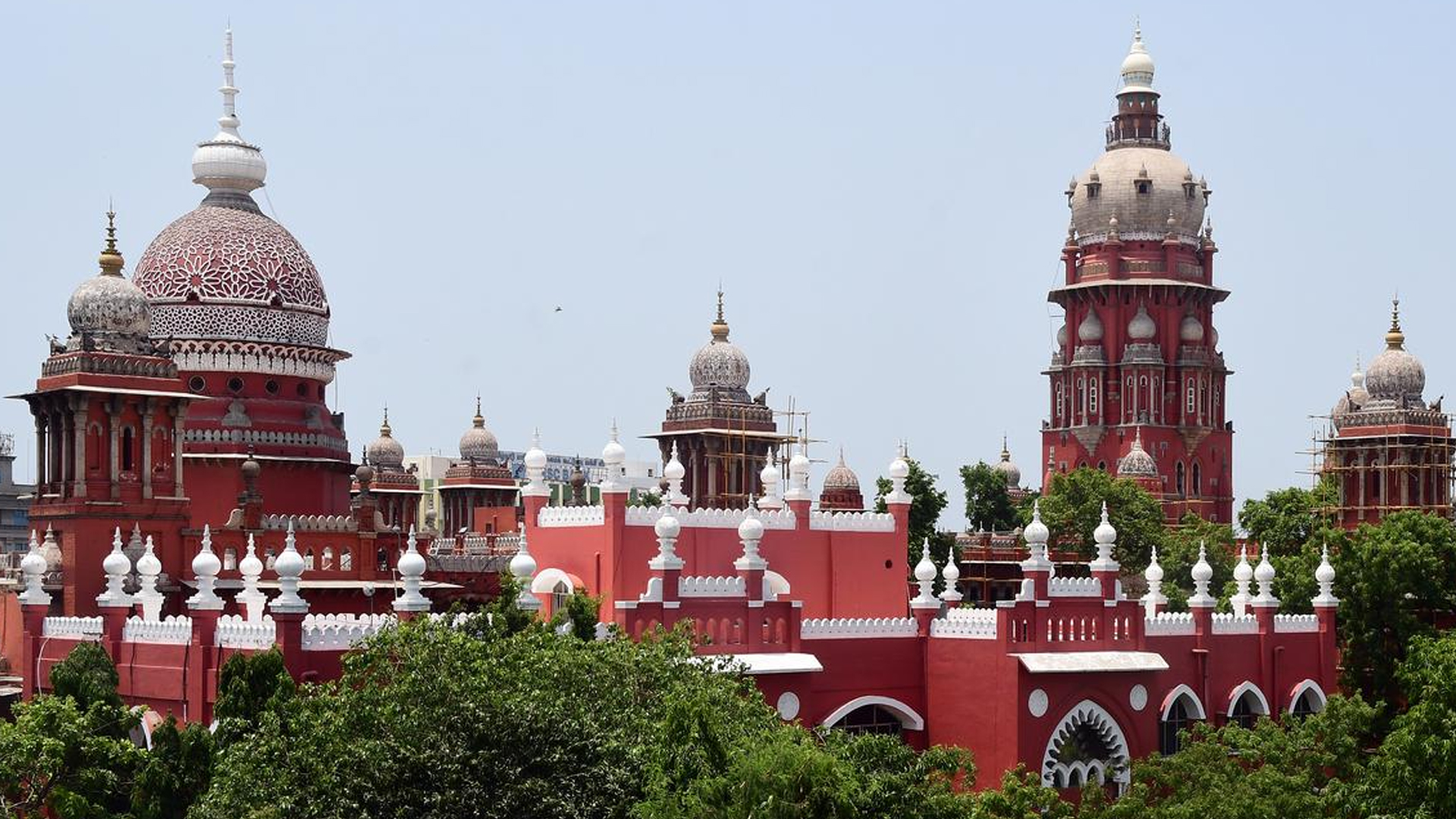
The Madras High Court’s recent directive to the Tamil Nadu government to create a buffer zone between human habitations and reserve forests in the Coimbatore division is a significant step toward safeguarding one of the most ecologically fragile regions in the state. The court’s intervention comes at a time when increasing urbanisation, commercial exploitation and agriculture near forest boundaries are threatening both wildlife and human safety.
The Coimbatore forest division shares a 320-km-long boundary with human settlements located near the foothills of the Western Ghats, a biodiversity hotspot. Parts of this stretch pass through densely populated areas, including Coimbatore city. The court’s concern stems from the fact that this entire region—spanning Sirumugai, Mettupalayam, Karamadai, Periyanaickenpalayam, Coimbatore, Bolampatty and Madukkarai—is rich in wildlife and vital forest cover, yet is under severe pressure from human activity.
Justices N. Sathish Kumar and D. Bharatha Chakravarthy, while responding to reports from independent observers (amici curiae), highlighted how human presence is rapidly expanding into forest edges, with agricultural lands being converted for commercial use and urban projects. The judges warned that such developments would not only disrupt the fragile ecosystem but also lead to a surge in human-wildlife conflicts. They noted that man-animal clashes are likely to increase manifold as habitats shrink and wildlife is forced into closer contact with people.
The court underscored that while developmental projects could be executed in other areas, the forest land—home to countless species—cannot be replicated elsewhere. “Even though these areas are notified under the Hill Area Conservation Authority, permissions for constructions are still being granted, undermining the efforts to protect the environment despite large expenditures by the government,” the bench observed.
Human settlements along this stretch are increasingly being used for commercial ventures like farm stays and resorts. The judges, based on their site inspection, pointed out how even cultivated lands are dotted with properties offering farm stays. Such tourism-related activity, they warned, would disturb nocturnal wildlife due to noise, campfires and other disruptions.
The court’s orders are far-reaching. It directed the state government to submit a proposal by October 10 to establish a buffer zone that would curb further land conversion and restrict new development activities along the forest boundary. The buffer would serve two essential purposes: conserving wildlife habitats and protecting human lives by reducing conflict with animals wandering out of their shrinking habitats.
The judgment is especially important because it recognises the larger issue at hand—development must not come at the cost of ecological integrity. With forests already under threat from habitat loss, pollution and invasive human activity, the buffer zone would act as a protective belt, preserving the delicate balance between human settlements and nature.
By insisting on stricter control over land-use change and commercial exploitation, the Madras High Court has sent a strong message that conservation and sustainable development cannot be treated as separate objectives. Its ruling affirms that protecting biodiversity, ensuring ecological health, and preventing human-animal conflict are not only environmental concerns but essential to public safety and long-term development. In a rapidly urbanising landscape, this judgment offers a blueprint for balancing growth with responsibility toward nature.
Also Read: Sushila Karki Appointed Nepal’s First Woman Prime Minister Amid Political Crisis