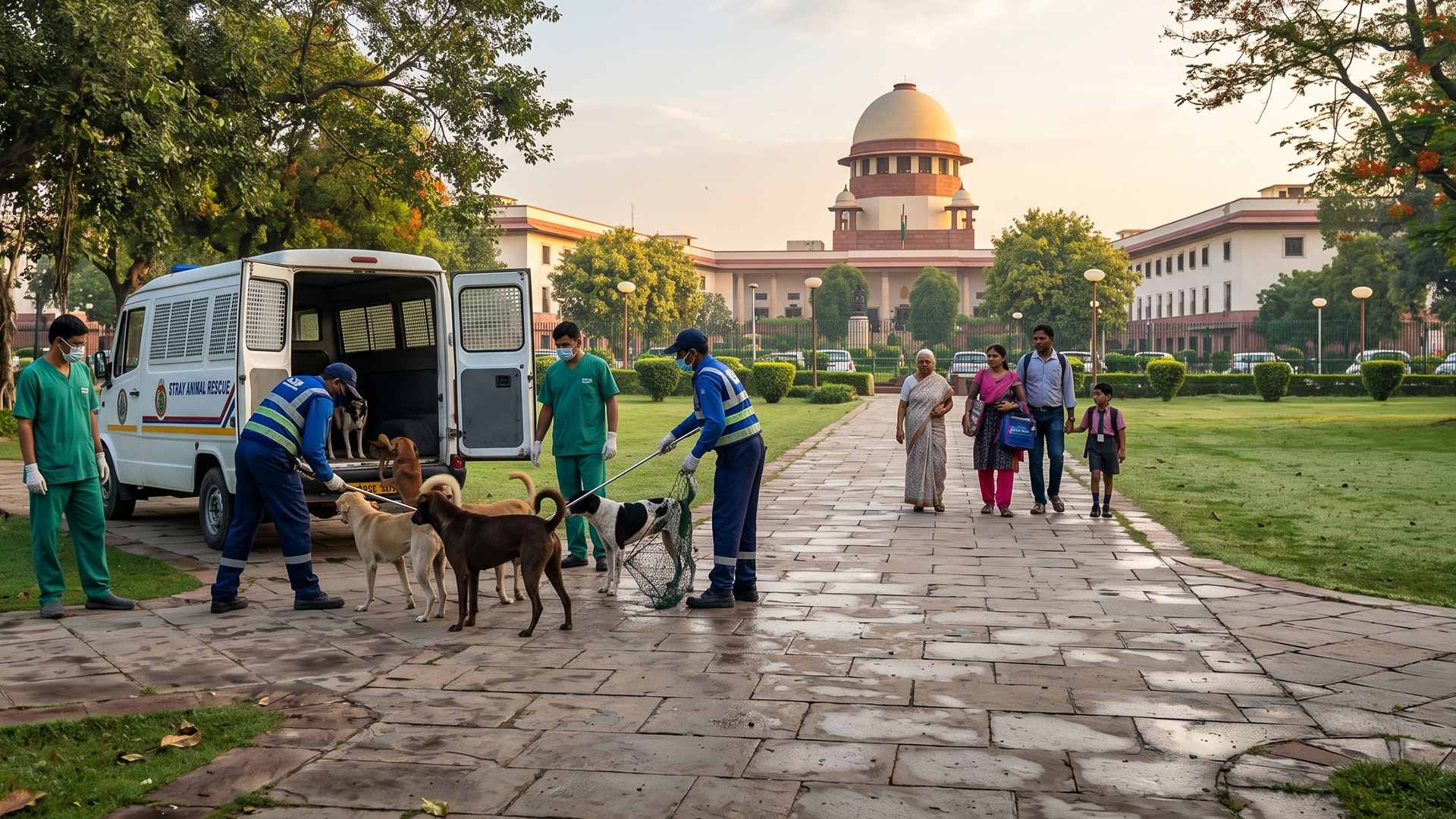
The Supreme Court has upheld its order to remove stray dogs from sensitive public places such as schools, hospitals, railway stations, and bus stands, saying the safety of people cannot be ignored.
The court said stray dogs do not have an unrestricted right to stay inside public institutions where children, patients, and large crowds are present. The ruling comes amid growing concern over rising dog bite cases in several parts of the country.
In its order, the court also allowed euthanasia of rabid, incurably sick, or dangerously aggressive stray dogs under proper veterinary supervision and according to legal guidelines. Judges observed that authorities must act when public safety is at risk, especially in cases involving repeated attacks or serious injuries.
At the same time, the court stressed that the solution should not be cruel or unplanned. It directed state governments and civic bodies to strengthen sterilisation and vaccination programmes and improve animal shelters. Every district has been asked to ensure proper facilities for animal birth control and anti-rabies treatment.
The bench noted that poor implementation of stray dog management programmes over the years has worsened the situation in many cities. It said citizens should be able to move freely in public spaces without fear of attacks, particularly children and elderly people who are more vulnerable.
The ruling has sparked mixed reactions. Many residents and parents welcomed the decision, saying stray dog attacks have become a serious issue in residential areas and near schools. Animal welfare groups, however, raised concerns over relocation and euthanasia, urging authorities to focus more on humane population control measures.
The Supreme Court clarified that dogs removed from public institutions should not be released back into the same locations after sterilisation. Instead, they should be shifted to designated shelters or managed according to existing rules.