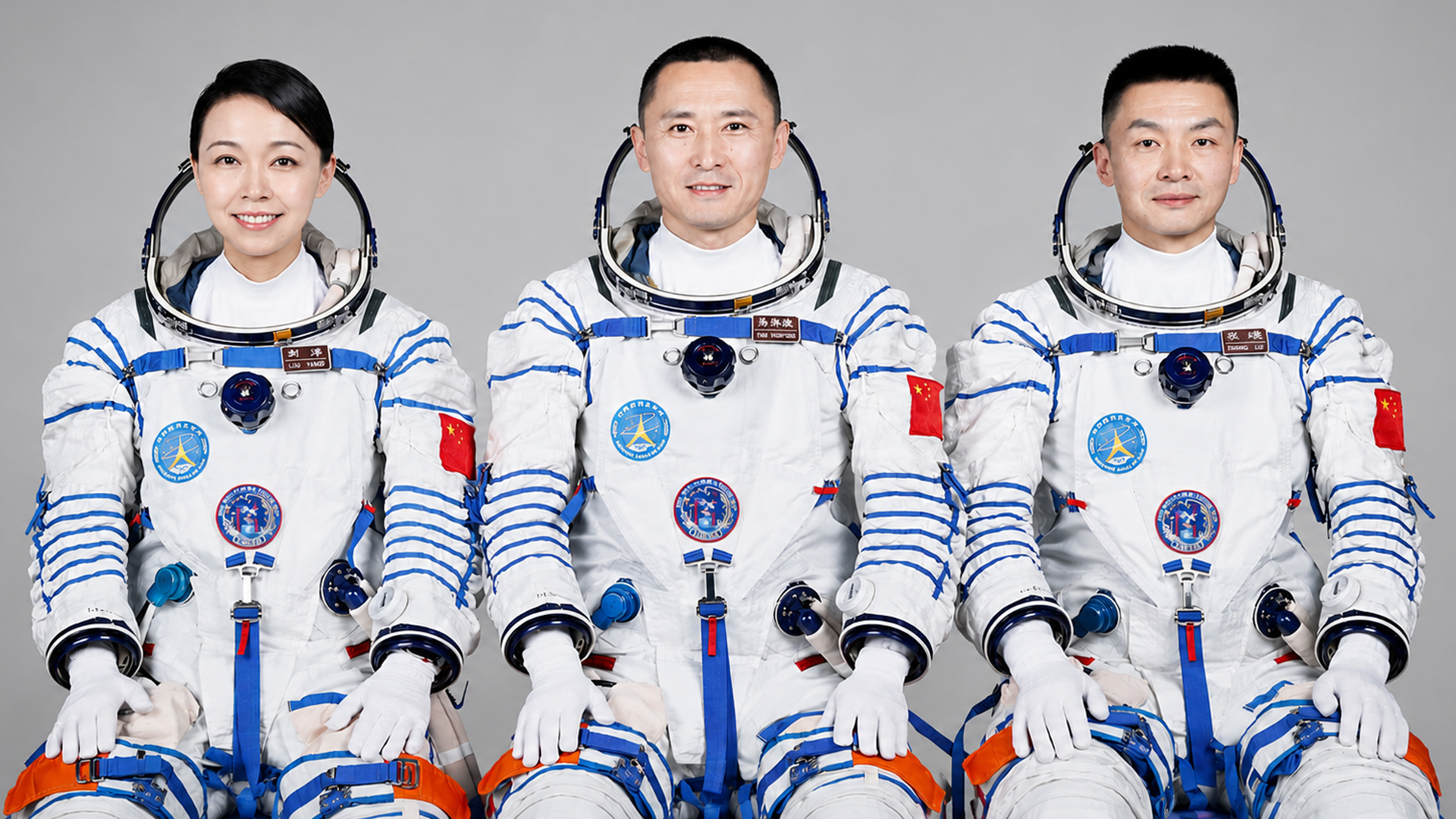
China has successfully launched its Shenzhou-23 spacecraft, sending a new crew of astronauts to its Tiangong space station as part of its ongoing human spaceflight programme. The mission marks another step in China’s expanding efforts in low-Earth orbit operations and long-duration space habitation.
The spacecraft lifted off aboard a Long March rocket from the Jiuquan Satellite Launch Centre in northwest China. On board are three astronauts who will spend several months aboard Tiangong, carrying out scientific experiments, maintenance work, and station upgrades.
Once docked, the Shenzhou-23 crew will take over duties from the outgoing team already stationed on Tiangong. The handover process is part of China’s regular rotation system, ensuring continuous human presence in orbit.
During their mission, the astronauts will conduct a range of scientific studies, including research in microgravity physics, materials science, and life sciences. These experiments are designed to help scientists understand how space conditions affect biological systems and physical processes.
The crew will also support maintenance and technical upgrades to the space station. This includes checking onboard systems, installing new equipment, and ensuring the long-term stability of the orbital laboratory.
China’s Tiangong space station has become a key platform for the country’s space ambitions after being built independently following exclusion from the International Space Station programme. The station is expected to operate for at least a decade and may host international collaboration in the future.
The Shenzhou missions are part of China’s broader goal to strengthen its presence in space exploration. Over the past few years, the country has made steady progress with crewed missions, lunar exploration plans, and satellite development.
Also Read: Apple watchOS 27 to improve fitness tracking accuracy