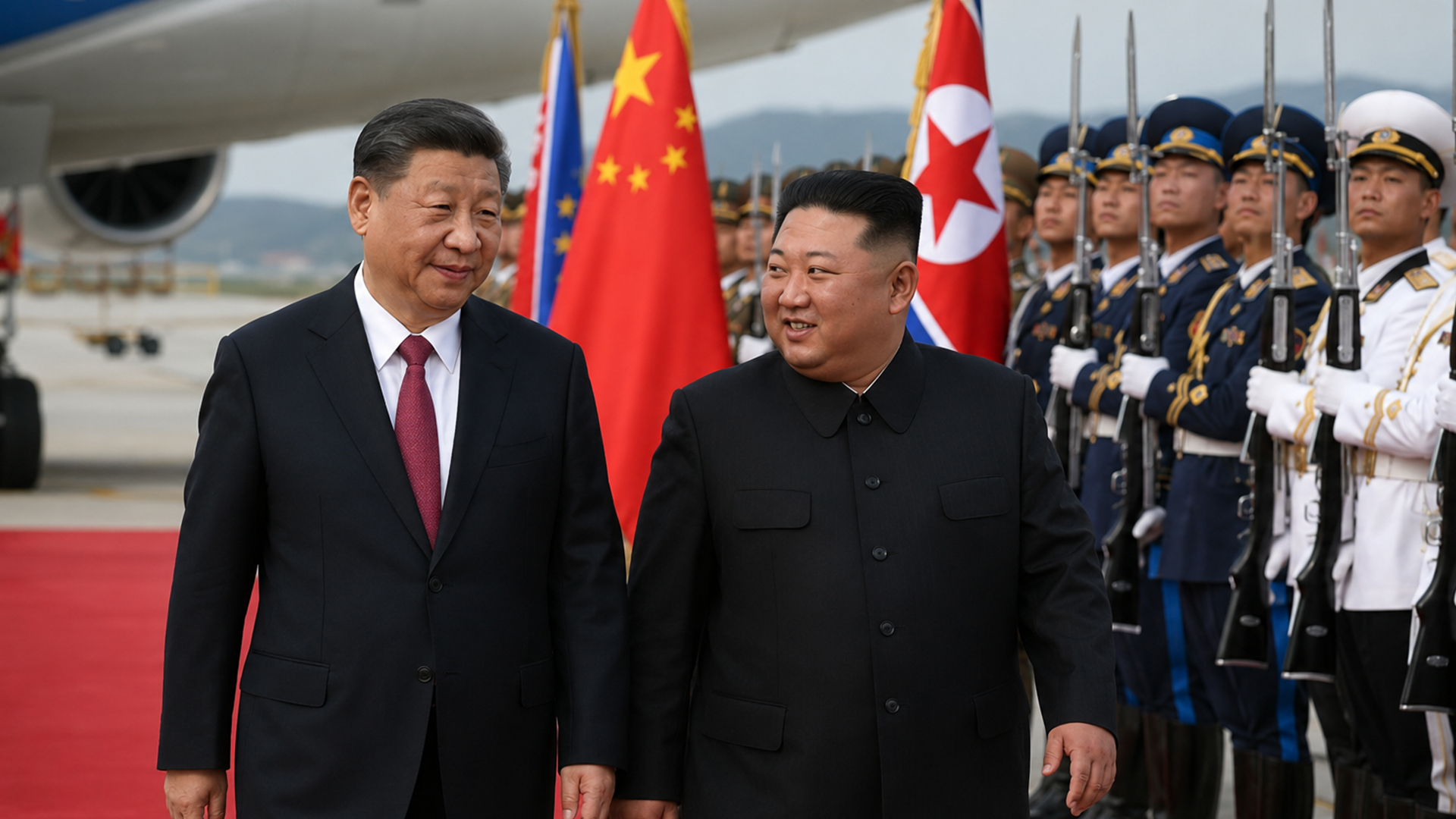
Chinese President Xi Jinping has arrived in North Korea for his first visit to the country in seven years, marking a significant diplomatic event as Beijing and Pyongyang seek to strengthen ties amid shifting geopolitical dynamics in Northeast Asia.
Xi was welcomed in Pyongyang by North Korean leader Kim Jong Un with a grand state reception that included a red-carpet ceremony, military honours and a 21-gun salute. The two leaders are expected to hold talks on regional security, economic cooperation and bilateral relations during Xi’s two-day visit.
The visit comes at a crucial time for both countries. Analysts say China is looking to reinforce its influence over North Korea as Pyongyang deepens military and economic ties with Russia. North Korea has emerged as one of Moscow’s closest partners in recent years, raising concerns in Beijing about maintaining its traditional role as Pyongyang’s most important ally.
Xi’s trip also coincides with growing tensions on the Korean Peninsula. Ahead of the visit, North Korea reiterated that its nuclear weapons programme is non-negotiable and vowed to continue strengthening its military capabilities. The country has recently showcased new military assets and expanded its nuclear programme, developments that have drawn international attention.
Chinese officials have described the visit as an opportunity to deepen cooperation and advance the long-standing friendship between the two neighbours. This year marks the 65th anniversary of the China-North Korea friendship treaty, a cornerstone of relations between the two countries.
Observers believe economic cooperation will feature prominently in the discussions, particularly as North Korea seeks greater trade and investment opportunities following years of international sanctions and pandemic-related restrictions.
The summit is being closely watched by regional powers, including the United States, South Korea and Japan, as its outcome could influence security and diplomatic developments across East Asia. For China, the visit highlights its continued strategic interest in maintaining stability and influence on the Korean Peninsula.
Also Read: Domestic LPG prices up by ₹29 per cylinder