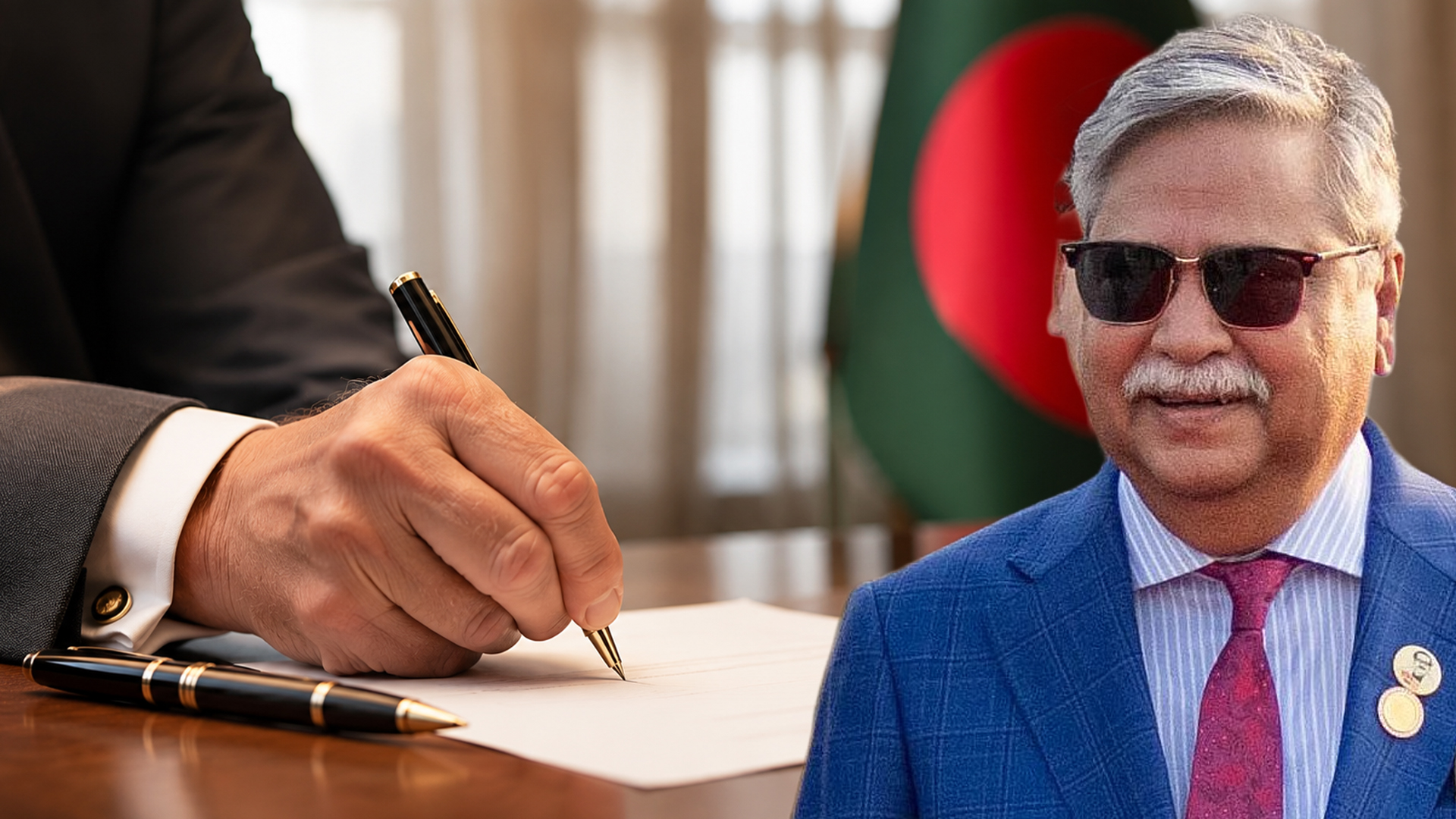
Bangladesh President Mohammed Shahabuddin resigned on Friday, bringing an early end to his tenure after citing serious health problems that he said had made it impossible for him to continue carrying out the responsibilities of the country’s highest constitutional office. His resignation comes nearly two years before the completion of his five-year term and marks another significant development in Bangladesh’s evolving political landscape.
The 76-year-old submitted his resignation letter to Parliament Speaker Hafiz Uddin Ahmed, who immediately assumed the role of Acting President in accordance with the Constitution. Parliament is now required to elect a new President within the next 90 days to serve the remainder of Shahabuddin’s term.
In his resignation letter, Shahabuddin said he had been struggling with several medical conditions for years. These include heart disease, diabetes, high blood pressure and kidney-related complications. He also revealed that he was recently diagnosed with autonomic neuropathy, a neurological disorder that has caused repeated episodes of unconsciousness.
Explaining his decision, Shahabuddin said his deteriorating health had left him physically and mentally unable to fulfil the demands of the office. He added that he now requires prolonged medical treatment and believed stepping down was in the country’s best interest.
His resignation was accepted by Speaker Hafiz Uddin Ahmed, who assured the nation that constitutional procedures would be followed to ensure a smooth transition. As Acting President, Ahmed will discharge all constitutional responsibilities until Parliament elects a permanent successor.
Mohammed Shahabuddin assumed office as Bangladesh’s 22nd President in April 2023 after being elected unopposed as the nominee of the then-ruling Awami League led by former Prime Minister Sheikh Hasina. Before becoming President, he had served as a judge, lawyer and senior public official, building a long career in public service.
Although the President of Bangladesh performs largely ceremonial duties, the office carries significant constitutional importance. The President is the formal head of state, appoints key constitutional authorities, signs legislation passed by Parliament and performs crucial responsibilities during periods of political transition.
Shahabuddin’s resignation is politically significant because he was one of the last senior constitutional office-bearers associated with the previous Awami League government.
Bangladesh has witnessed dramatic political changes since the student-led uprising in 2024 that led to the fall of Sheikh Hasina’s government. The unrest forced Hasina to leave the country, ending more than a decade of uninterrupted rule by the Awami League. Since then, the country’s political landscape has undergone sweeping changes, including legal action against several former ministers and restrictions on the Awami League’s political activities.
While the presidency maintained that Shahabuddin’s decision was based entirely on health concerns, political observers note that he had increasingly come under scrutiny because of his association with the previous administration. However, neither Shahabuddin nor the acting government linked his resignation to the ongoing political developments.
The resignation also comes at a time when Bangladesh is preparing for another important phase in its democratic transition. The election of a new President will be closely watched both within the country and internationally, as it could indicate the direction of the country’s constitutional institutions in the years ahead.
Under Bangladesh’s Constitution, Parliament must elect a new President within 90 days of the office falling vacant. The successful candidate will serve the remainder of Shahabuddin’s term rather than beginning a fresh five-year tenure.
Although no official names have been announced, political circles have already begun speculating about possible candidates. The choice of the next President is expected to reflect the priorities of the current political leadership while ensuring continuity in constitutional governance.
The government has stressed that Shahabuddin’s resignation will not disrupt the functioning of the state. Officials have assured citizens that constitutional mechanisms are working as intended and that the transition will be peaceful and orderly.
Political analysts believe the resignation is unlikely to have an immediate impact on day-to-day governance because executive powers in Bangladesh rest primarily with the Prime Minister and the Council of Ministers. Nevertheless, the President’s office remains an important symbol of constitutional stability, particularly during periods of political change.
Shahabuddin’s departure also carries emotional significance. Having spent decades in public life, he leaves office after citing declining health rather than political differences. His resignation letter reflected a sense of responsibility, stating that he no longer wished to continue in a role that demanded physical and mental fitness beyond what his health now permitted.
As Bangladesh begins the process of selecting a new constitutional head of state, attention will focus on ensuring a smooth and credible transition. The next President will assume office at a time when the country continues to navigate political change, institutional reforms and preparations for the future.
For many Bangladeshis, Shahabuddin’s resignation marks the end of an important chapter. While his exit has been prompted by health concerns, it also closes the tenure of one of the last senior constitutional figures from the previous political era, signalling yet another milestone in Bangladesh’s continuing transition.