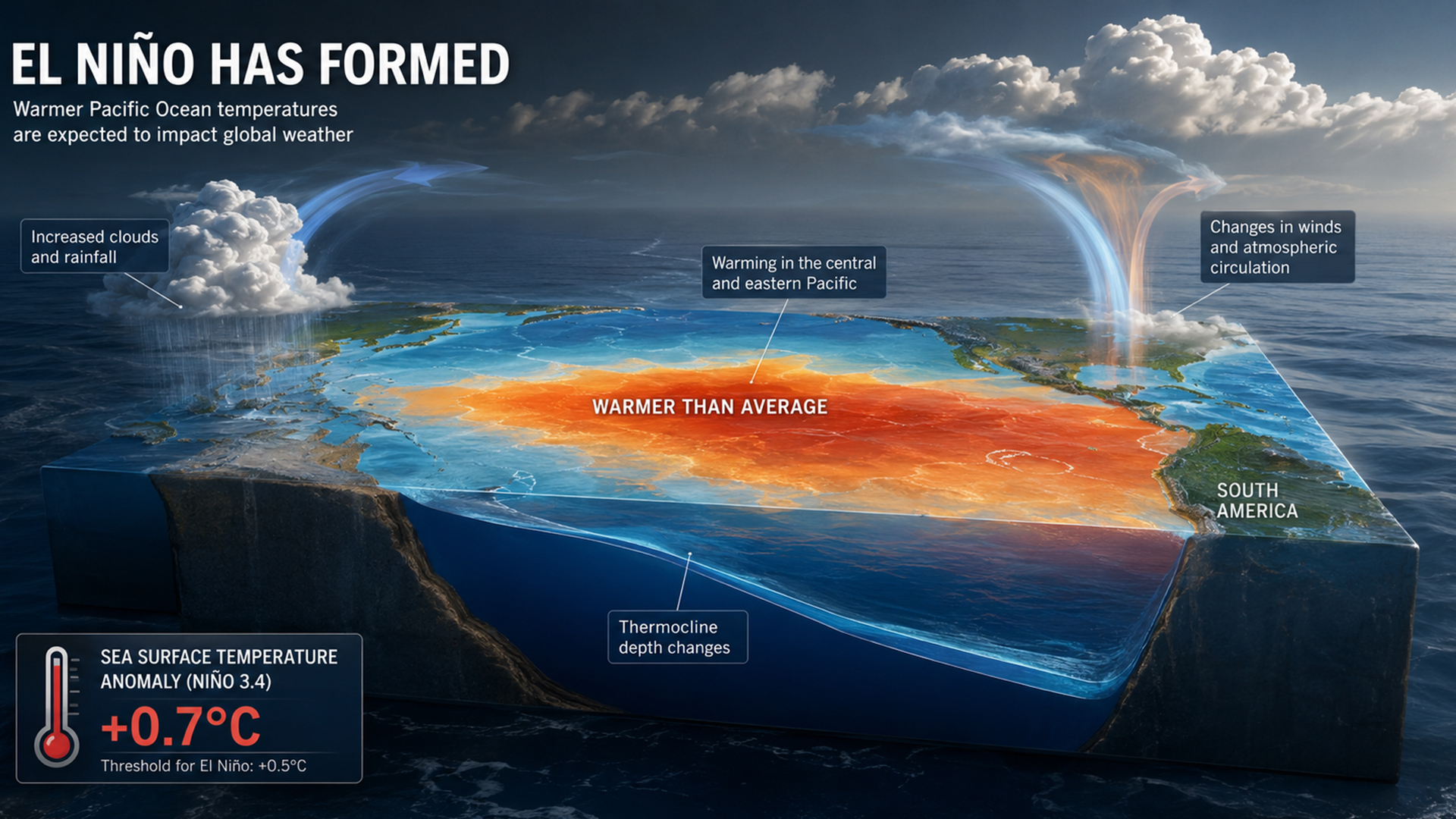
The United States’ National Oceanic and Atmospheric Administration (NOAA) has confirmed the return of El Niño, a climate phenomenon that is expected to strengthen in the coming months and influence weather patterns across the globe.
El Niño occurs when sea surface temperatures in the central and eastern Pacific Ocean become warmer than normal. Scientists say the latest event could trigger a range of extreme weather conditions, including intense heatwaves, droughts, heavy rainfall and flooding in different parts of the world.
Forecasters expect global temperatures to remain unusually high as El Niño combines with the effects of long-term climate change. The phenomenon has historically been linked to warmer years worldwide and can affect agriculture, water supplies, energy demand and disaster risks. Climate patterns such as El Niño are closely studied for their influence on global temperatures and extreme weather, with more climate research covered in our science news and discoveries section.
Countries in Asia and Australia may face drier conditions and increased drought risks, while parts of North and South America could experience heavier rainfall and flooding. Experts are also concerned about potential impacts on food production and commodity prices if weather disruptions affect major farming regions.
Scientists say governments and communities should prepare for possible climate-related challenges as the event develops. While the exact intensity and regional impacts remain uncertain, early forecasts suggest El Niño could become a significant global weather driver over the next year.
The return of El Niño is being closely monitored by meteorological agencies worldwide as they assess its potential impact on economies, ecosystems and millions of people vulnerable to extreme weather events.