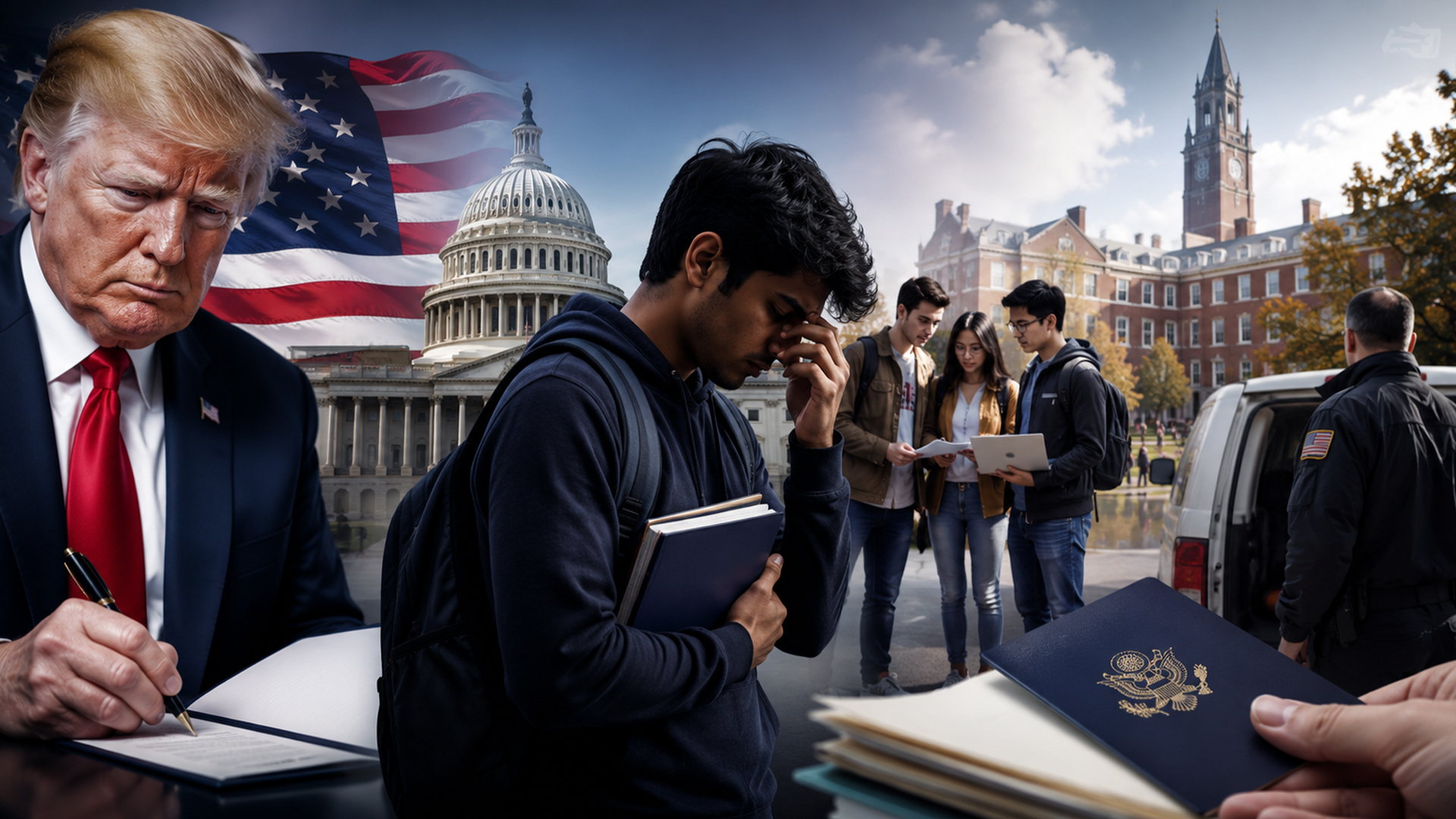
The Donald Trump administration has announced sweeping changes to the US visa policy, introducing fixed-term visas for foreign students, exchange visitors and journalists. The move marks a significant shift from the long-standing “duration of status” system and is expected to affect thousands of international applicants, including a large number of Indian students planning higher education in the United States.
Under the proposed rules, individuals travelling to the US on F, J and I visas will receive visas valid only for a specific period instead of being allowed to remain in the country as long as they continue to meet the conditions of their academic programme, exchange visit or media assignment. Once the approved period expires, they will have to apply for an extension if they wish to stay longer.
The Department of Homeland Security (DHS) said the change is aimed at strengthening immigration oversight, improving compliance and preventing visa misuse. Officials argue that assigning a definite expiry date to visas will make it easier to monitor foreign nationals and ensure that visitors leave the country or renew their status through the proper legal process.
The proposal represents a major departure from the existing system, under which most international students and exchange visitors are admitted for the “duration of status”. This allows them to remain in the United States until they complete their studies, research or exchange programme, provided they continue to fulfil visa requirements.
For international students, particularly those pursuing undergraduate, postgraduate and doctoral programmes, the new policy could introduce additional paperwork and uncertainty. Students whose academic programmes extend beyond the validity of their visas may have to seek extensions, creating concerns about administrative delays and potential disruptions to their education.
The proposed rules are also expected to affect journalists travelling on I visas. Foreign correspondents covering long-term assignments in the United States may be required to renew their visas periodically instead of enjoying open-ended permission linked to their professional accreditation. Media organisations fear the additional procedures could complicate reporting assignments and increase bureaucratic hurdles.
The changes could have a significant impact on Indian students, who form one of the largest international student communities in the United States. Every year, thousands of Indians enrol in American universities for higher education, particularly in science, technology, engineering and management courses. Education consultants say students may now need to factor visa renewal timelines into their academic planning.
Immigration experts note that while the policy does not reduce the number of student visas being issued, it changes the way visa validity is managed. Applicants who comply with immigration rules and maintain their academic or professional status will still be eligible to apply for extensions. However, critics argue that the process could increase costs, paperwork and uncertainty for genuine students and researchers.
The Trump administration has defended the move as part of a broader effort to tighten immigration controls and improve national security. Officials say the revised US immigration rules are intended to close loopholes in the visa system and ensure stronger monitoring of foreign nationals staying in the country for extended periods.
Universities and education groups, however, have expressed concern that stricter visa procedures could discourage talented international students from choosing the United States for higher education. They warn that additional administrative requirements may make competing destinations such as Canada, Australia and the United Kingdom more attractive for students seeking a smoother immigration process.
The proposal will undergo a public consultation process before it can be implemented. Stakeholders, including universities, educational institutions, media organisations and immigration experts, will have an opportunity to submit comments on the draft rules before the Department of Homeland Security finalises the policy.
If implemented, the new US visa rules would represent one of the most significant changes to student and exchange visitor immigration procedures in recent years. For thousands of aspiring students, researchers and journalists worldwide, the focus will now shift to understanding the revised requirements and planning well in advance to avoid disruptions to their academic, professional or reporting commitments. The proposal also signals the Trump administration’s continuing emphasis on stricter immigration enforcement while balancing the country’s role as a leading destination for global education and international talent.