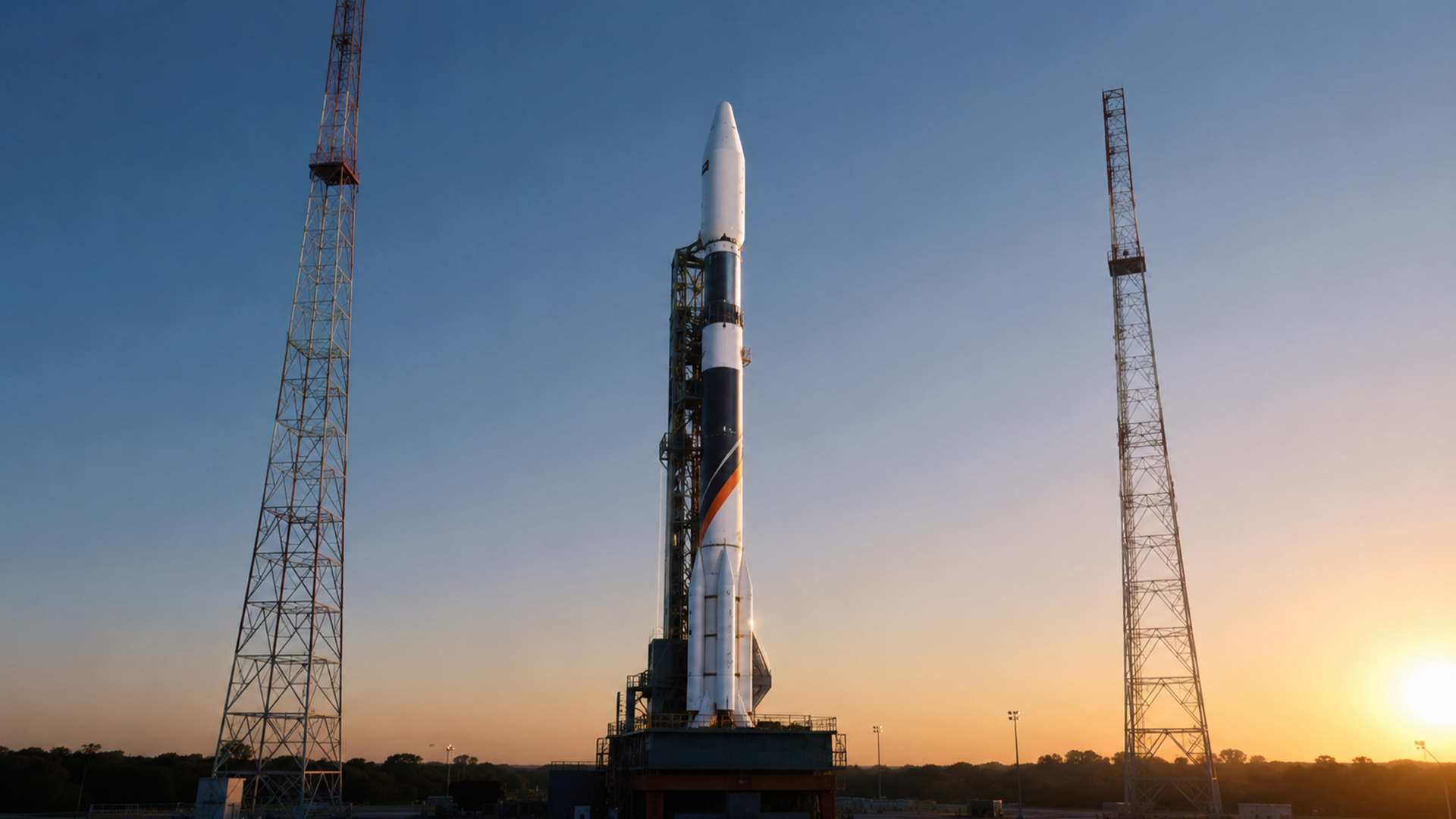
India’s private space sector achieved a historic milestone on Saturday as Skyroot Aerospace successfully launched Vikram-1, the country’s first privately developed orbital rocket. The landmark mission, named Aagaman, lifted off from the Satish Dhawan Space Centre in Sriharikota, marking the first time an Indian private company has sent an orbital-class launch vehicle into space.
The successful Vikram-1 launch is being hailed as a defining moment for India’s growing commercial space industry. It reflects how the country’s private space ecosystem has evolved since the government opened the sector to private players, allowing startups to build rockets, satellites and launch services alongside the Indian Space Research Organisation (ISRO).
The mission began with a brief moment of uncertainty. Just minutes before the scheduled liftoff, the automated launch sequence was paused after engineers detected a technical issue. The problem was quickly identified and resolved, delaying the launch by around 35 minutes. Once all systems were cleared, Vikram-1 lifted off smoothly, drawing cheers from scientists, engineers and Skyroot employees gathered at the mission control centre.
Developed by Hyderabad-based Skyroot Aerospace, Vikram-1 has been designed to carry small satellites into low-Earth orbit. During its maiden orbital mission, the rocket successfully deployed six payloads, including satellites and technology demonstration experiments from Indian and international customers. The successful deployment validated the rocket’s performance and demonstrated Skyroot’s readiness to enter the commercial satellite launch market.
The achievement is especially significant because it marks India’s first successful orbital launch by a private company. While ISRO has built an impressive global reputation through missions such as Chandrayaan, Mangalyaan and the PSLV programme, Vikram-1 represents the next phase of India’s space journey, where private companies are expected to play a much larger role.
Ahead of the launch, Prime Minister Narendra Modi described the mission as a “historic new frontier” for India’s space programme. To commemorate the occasion, Vikram-1 also carried a handwritten “Vande Mataram” message from the Prime Minister into space. Following the successful mission, he congratulated the Skyroot team, saying the achievement reflected the innovation, determination and scientific capabilities of India’s young entrepreneurs.
Founded in 2018 by former ISRO engineers Pawan Kumar Chandana and Naga Bharath Daka, Skyroot Aerospace has rapidly emerged as one of India’s leading space technology startups. The company first made headlines in 2022 when it launched Vikram-S, India’s first privately built suborbital rocket. Vikram-1 is a much bigger leap, placing the company among a select group of private firms globally capable of developing orbital launch vehicles.
The rocket incorporates several advanced technologies, including lightweight carbon composite structures, indigenously developed propulsion systems and 3D-printed rocket engines. These innovations are designed to reduce manufacturing costs, improve efficiency and make satellite launches more affordable for commercial customers worldwide.
Industry experts believe the success of Mission Aagaman will significantly boost confidence in India’s private space ecosystem. The global demand for launching small satellites is growing rapidly as companies, governments and research organisations increasingly rely on space-based services for communication, navigation, Earth observation and scientific research. By offering cost-effective launch solutions, Indian startups like Skyroot are expected to become important players in this expanding market.
The launch also highlights the impact of recent policy reforms that have transformed India’s space sector. Since the government allowed greater private participation, startups have gained access to ISRO’s testing facilities, launch infrastructure and technical expertise. This collaboration has accelerated innovation and encouraged new investments in the country’s rapidly growing space technology industry.
For the Skyroot team, the successful mission represents years of research, engineering and perseverance. What started as an ambitious dream by two former ISRO scientists has now become a landmark achievement for India’s private space industry. The celebrations at mission control reflected not only the success of one company but also the confidence that Indian startups can build world-class space technologies.
With Vikram-1 successfully completing its maiden orbital mission, Skyroot Aerospace has opened a new chapter in India’s space story. The historic launch is expected to inspire a new generation of entrepreneurs, attract greater investment into space technology and strengthen India’s position as a competitive destination for commercial satellite launches, private space innovation and the rapidly expanding global space economy.