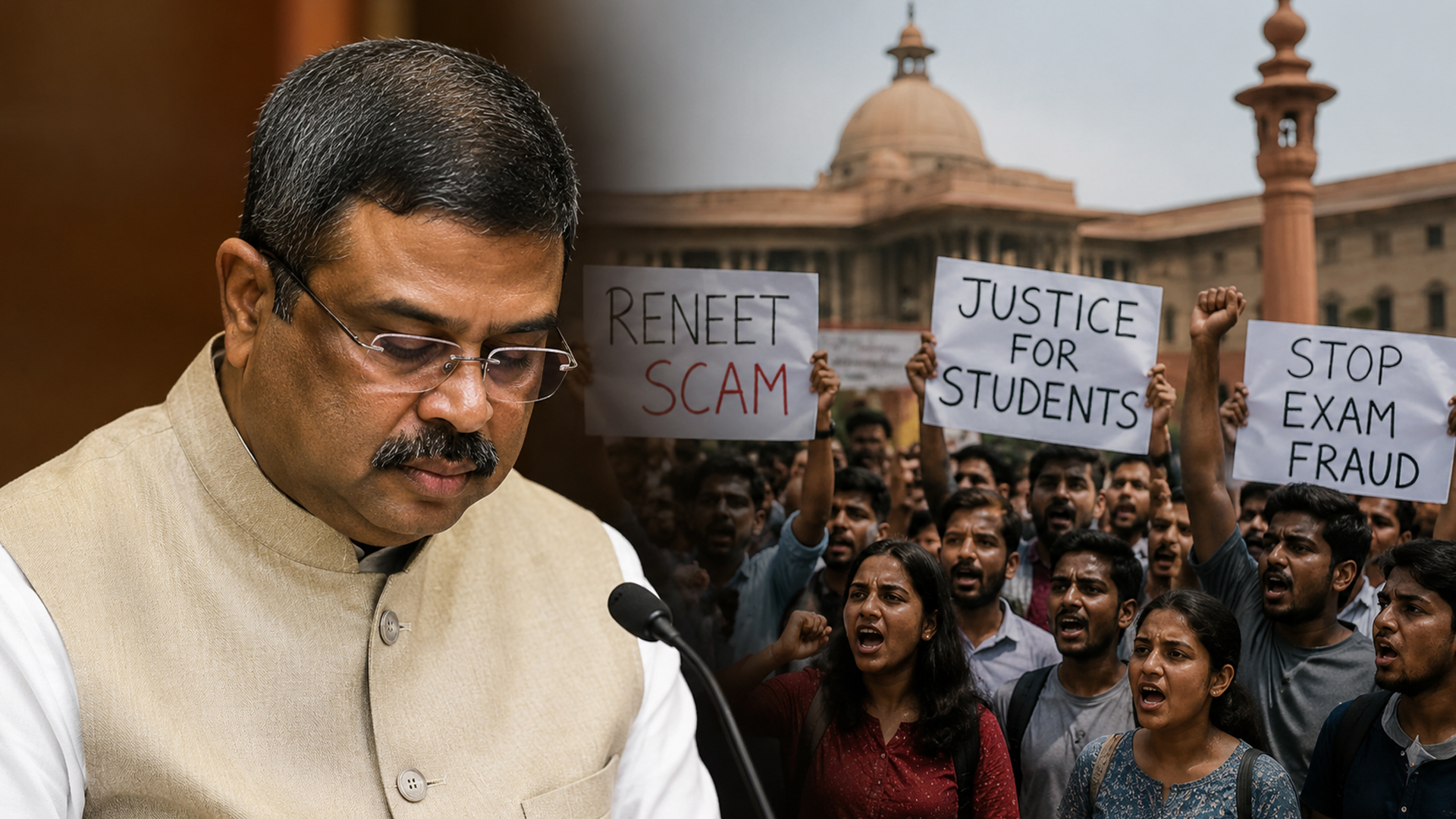
Union Education Minister Dharmendra Pradhan resigned today, bringing an end to weeks of intense nationwide protests led by students demanding accountability over alleged examination irregularities. His resignation marks one of the most significant political developments arising from India’s ongoing education crisis and comes amid mounting public pressure for reforms in the country’s competitive examination system.
Pradhan confirmed that he had submitted his resignation to Prime Minister Narendra Modi, saying the decision was taken in the larger interest of the nation and to ensure that the controversy surrounding the Education Ministry does not overshadow efforts to restore confidence in the system.
In his resignation letter, Pradhan reportedly said stepping down would prevent “anti-national elements” from taking advantage of the situation and reiterated his commitment to protecting students’ interests. He also expressed confidence that ongoing investigations into the alleged examination irregularities would identify those responsible and help strengthen the system.
The protests were triggered by allegations of paper leaks and irregularities in major competitive examinations, including the National Eligibility cum Entrance Test (NEET), one of India’s most important entrance exams for medical admissions. Millions of students appear for the examination every year, making concerns over its credibility a matter of national importance.
Over the past several weeks, students, youth organisations and civil society groups organised demonstrations across Delhi and several other cities, demanding greater transparency, strict action against those responsible for examination lapses and the resignation of the Union Education Minister. Protesters argued that repeated controversies had undermined the hard work and aspirations of lakhs of students preparing for highly competitive exams.
The movement gained momentum as thousands gathered at Delhi’s Jantar Mantar and other public spaces, carrying placards and raising slogans calling for accountability. Protest leaders maintained that their campaign was not directed against students or institutions but against what they described as repeated administrative failures in safeguarding the integrity of national examinations.
As the protests grew, opposition parties also intensified their criticism of the government, accusing the Education Ministry of failing to prevent recurring examination controversies. The issue dominated political debates and drew widespread attention on social media, where students shared personal stories of months, and in many cases years, of preparation that they feared had been rendered meaningless by alleged paper leaks.
For many students, however, the resignation is only the beginning. Protest organisers welcomed the minister’s decision but said their movement would continue until comprehensive reforms are introduced to ensure fair and transparent examinations. Their demands include stronger security measures, faster investigations into paper leaks, stricter punishment for offenders and institutional reforms to rebuild trust in the examination process.
Education experts have also stressed that restoring public confidence will require more than a change in leadership. They have called for improvements in digital security, tighter monitoring of examination centres, better coordination among agencies conducting national-level tests and greater transparency throughout the recruitment and admission process.
The resignation is being seen as a rare instance in recent years where sustained student-led protests resulted in the exit of a senior Union minister. Political observers believe the development reflects the growing influence of youth voices on issues directly affecting education and employment, particularly at a time when competitive examinations play a crucial role in shaping the careers of millions of young Indians.
The Centre is now expected to announce a new Education Minister while continuing investigations into the alleged examination irregularities. Attention will also turn to the government’s next steps in addressing students’ concerns and implementing reforms aimed at preventing similar controversies in the future.
Also Read: 47 NTA officials sacked amid reform push