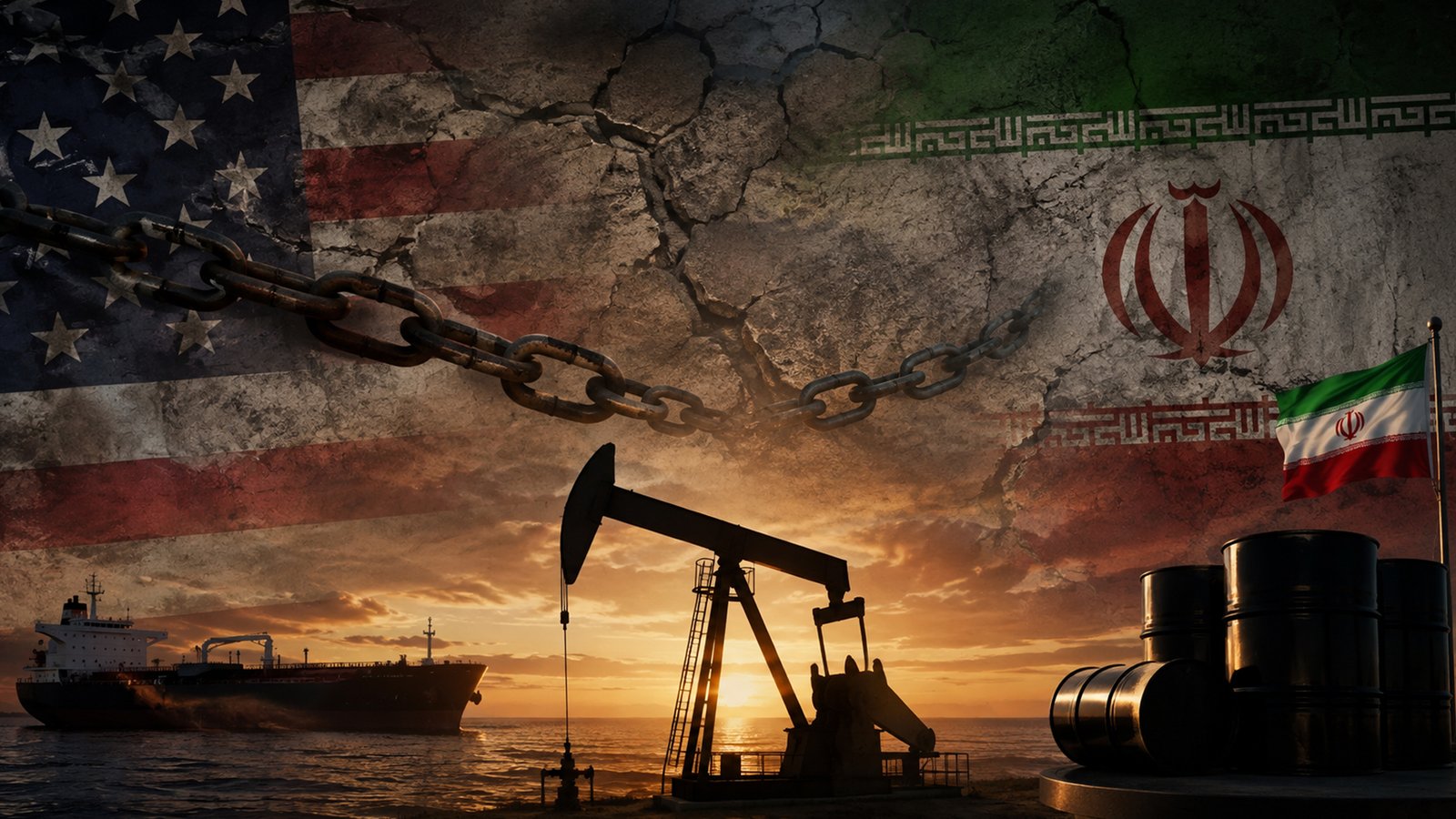
The United States is preparing to impose sweeping new sanctions on Iran as President Donald Trump’s administration shifts its focus towards economic pressure after months of military confrontation. US Treasury Secretary Scott Bessent has described the planned measures as an “economic D-Day”, saying Washington intends to use its financial power to further isolate Tehran.
The sanctions are expected to target Iran’s oil trade, financial networks and companies or countries that continue doing business with the country. Bessent is due to announce the measures on Monday, with the administration presenting them as one of the most extensive economic offensives ever directed at an adversary.
The announcement marks a significant shift in the US approach to the Iran war. After months of military pressure, Washington is now seeking to squeeze Iran’s economy and cut off the financial channels that allow Tehran to continue exporting oil and funding its operations.
Bessent has argued that the United States has already significantly weakened Iran’s military capabilities and nuclear ambitions and that economic pressure is now needed to push Tehran towards a settlement. He has also warned countries and businesses that continue supporting Iran’s oil trade or financial system that they could face consequences from Washington.
The proposed sanctions are expected to include measures against buyers of Iranian crude, financial institutions handling Iranian transactions and companies involved in shipping or other commercial activity linked to Tehran. Secondary sanctions could become particularly important because they would put pressure on third parties that continue trading with Iran despite US restrictions.
China is likely to be a major focus. Beijing has remained the largest buyer of Iranian oil, with Chinese imports averaging around 1.4 million barrels per day in 2025. However, Iranian shipments to China have already fallen sharply in recent months as US pressure has intensified. Reuters reported that estimated Iranian oil exports to China fell to about 534,000 barrels per day in August from 823,000 barrels per day in July.
For Washington, restricting this trade is central to the broader Iran sanctions strategy. Limiting Tehran’s ability to sell oil would reduce one of its most important sources of foreign currency and could put further pressure on an economy already struggling with inflation and a rapidly weakening currency.
Iran, however, has rejected the US approach. Iranian officials have described the planned sanctions as another sign that Washington’s strategy is failing. The Islamic Revolutionary Guard Corps (IRGC) has also argued that moving towards an economic offensive shows that the United States has been unable to achieve its objectives through military means.
Iranian Foreign Minister Abbas Araqchi has dismissed the proposed measures as ineffective and repeated, while Tehran has warned that it will respond to further US pressure. Iranian officials have also indicated that the country has prepared economic plans to reduce the impact of sanctions, including expanding trade links with regional partners.
The standoff is also closely tied to the Strait of Hormuz, one of the world’s most important energy routes. Disruption in the waterway has already affected global oil markets and raised concerns about energy supplies. The United States has been using naval power to pressure Iran, while Tehran has maintained its ability to disrupt tanker traffic.
Iranian officials have warned that continued economic pressure could lead to further action over oil shipments and the Strait of Hormuz. Any major disruption could have consequences well beyond the Middle East, particularly for countries that depend heavily on imported crude oil.
Oil markets have therefore been watching the latest US-Iran developments closely. Prices rose sharply last week amid concerns over the conflict and uncertainty surrounding the reopening of the strategic waterway. On Monday, however, crude prices fell as traders waited for details of the new sanctions package and assessed whether the measures could further restrict Iranian exports.
The economic pressure is already being felt inside Iran. The Iranian rial has fallen to record lows against the US dollar, with reports putting the informal exchange rate close to two million rials per dollar. The currency’s weakness adds to pressure on households and businesses by making imported goods more expensive.
The new US strategy also carries risks for Washington. Tougher sanctions could further restrict global oil supplies if Iranian exports fall substantially, potentially pushing energy prices higher and adding another layer of uncertainty to global geopolitical developments. The impact could be particularly complicated if China refuses to comply fully with the measures, creating another point of tension between Washington and Beijing. Analysts have warned that enforcing maximum economic pressure could test the broader US-China relationship.
At the same time, Tehran’s ability to maintain alternative trading networks will determine how effective the sanctions ultimately become. Iran has spent years developing mechanisms to bypass US restrictions, including using intermediaries, alternative shipping arrangements and non-dollar transactions.