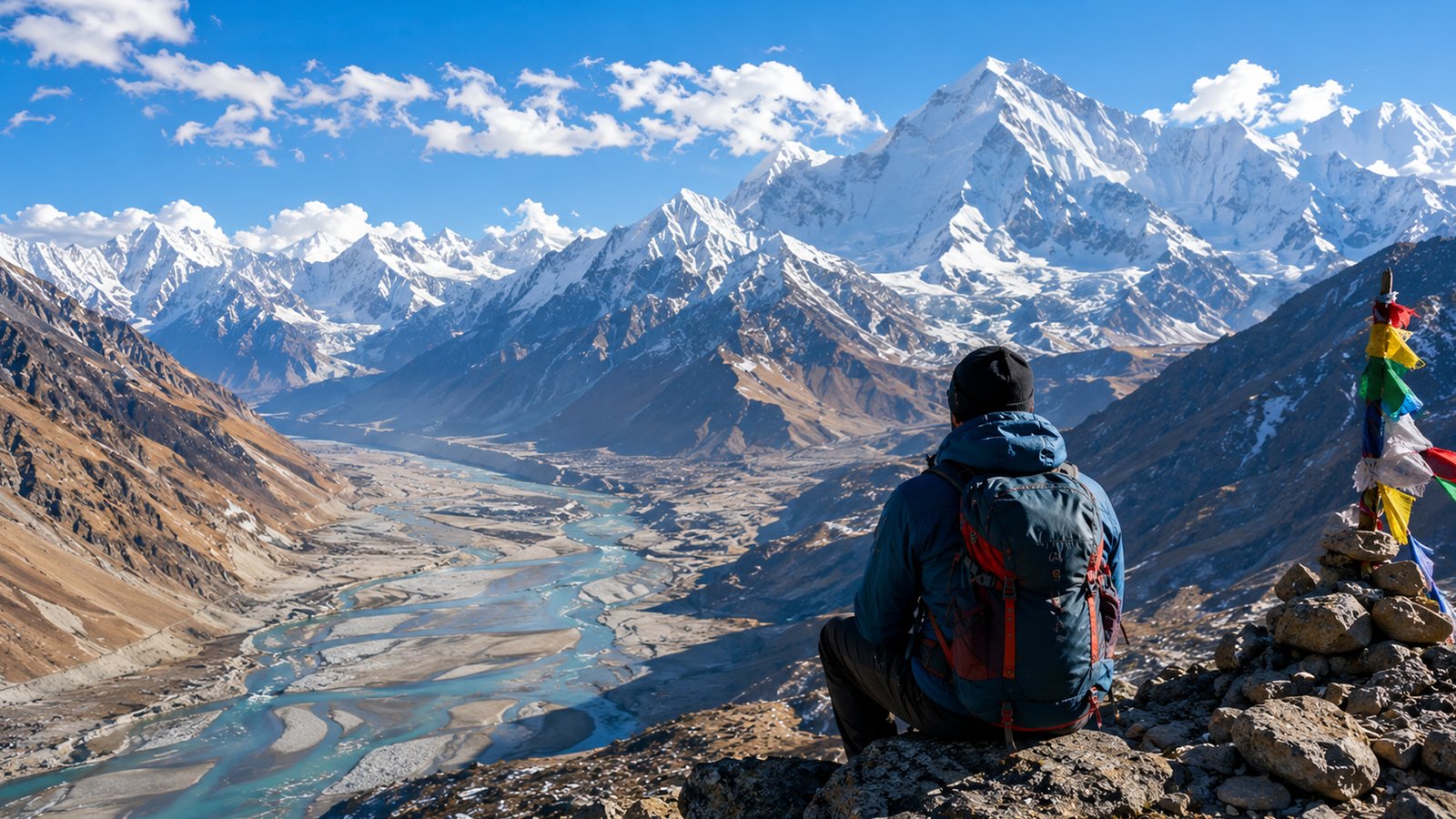
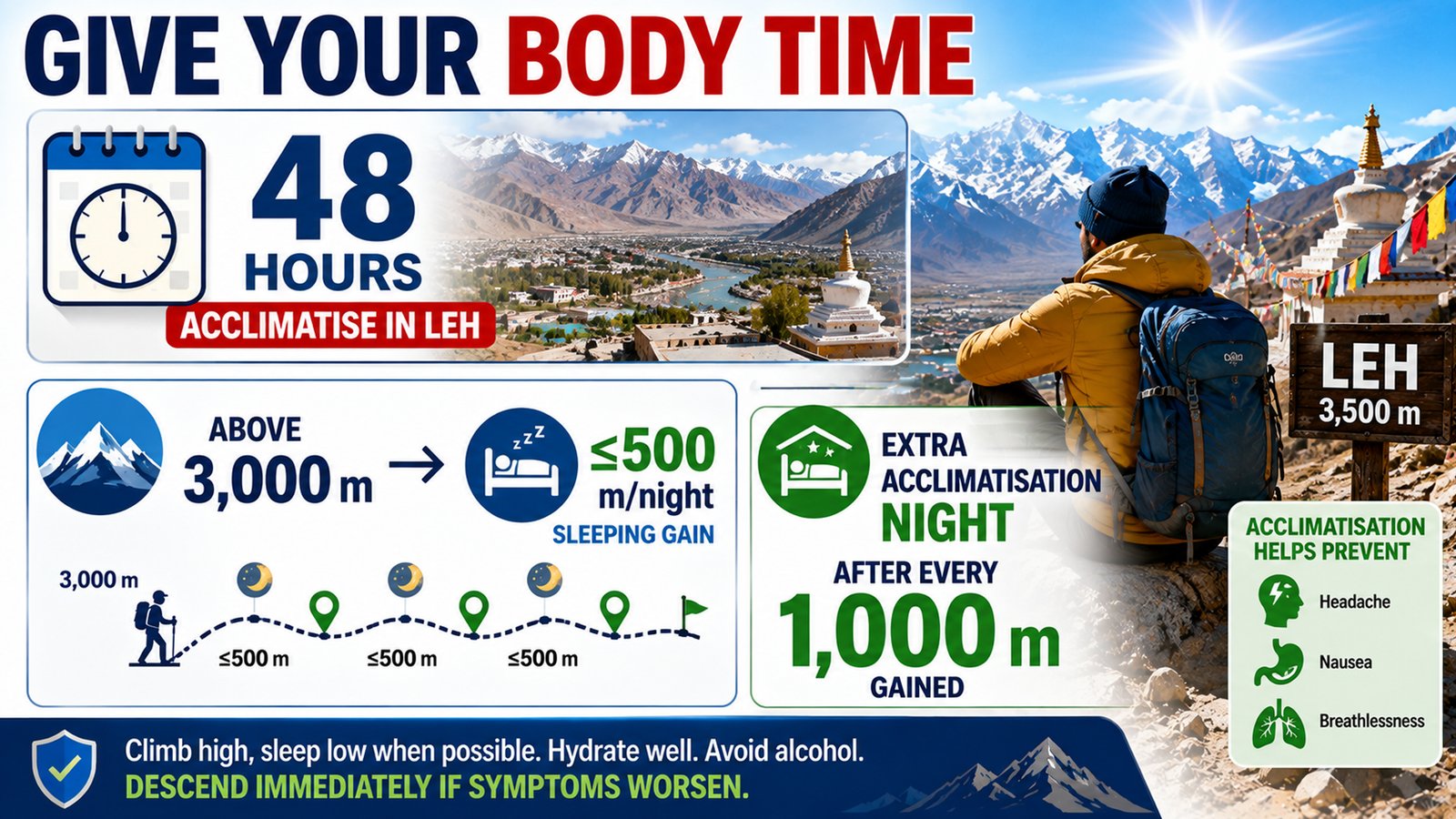
A traveller can fly up from the plains into Leh, roughly 3,500 metres above sea level, in just a few hours and step out of the aircraft feeling perfectly well. However, the traveller’s body will need days of adjustment at this new elevation. That is why Leh district requires at least 48 hours of acclimatisation before tourists proceed to higher areas such as Pangong Lake or Khardung La.
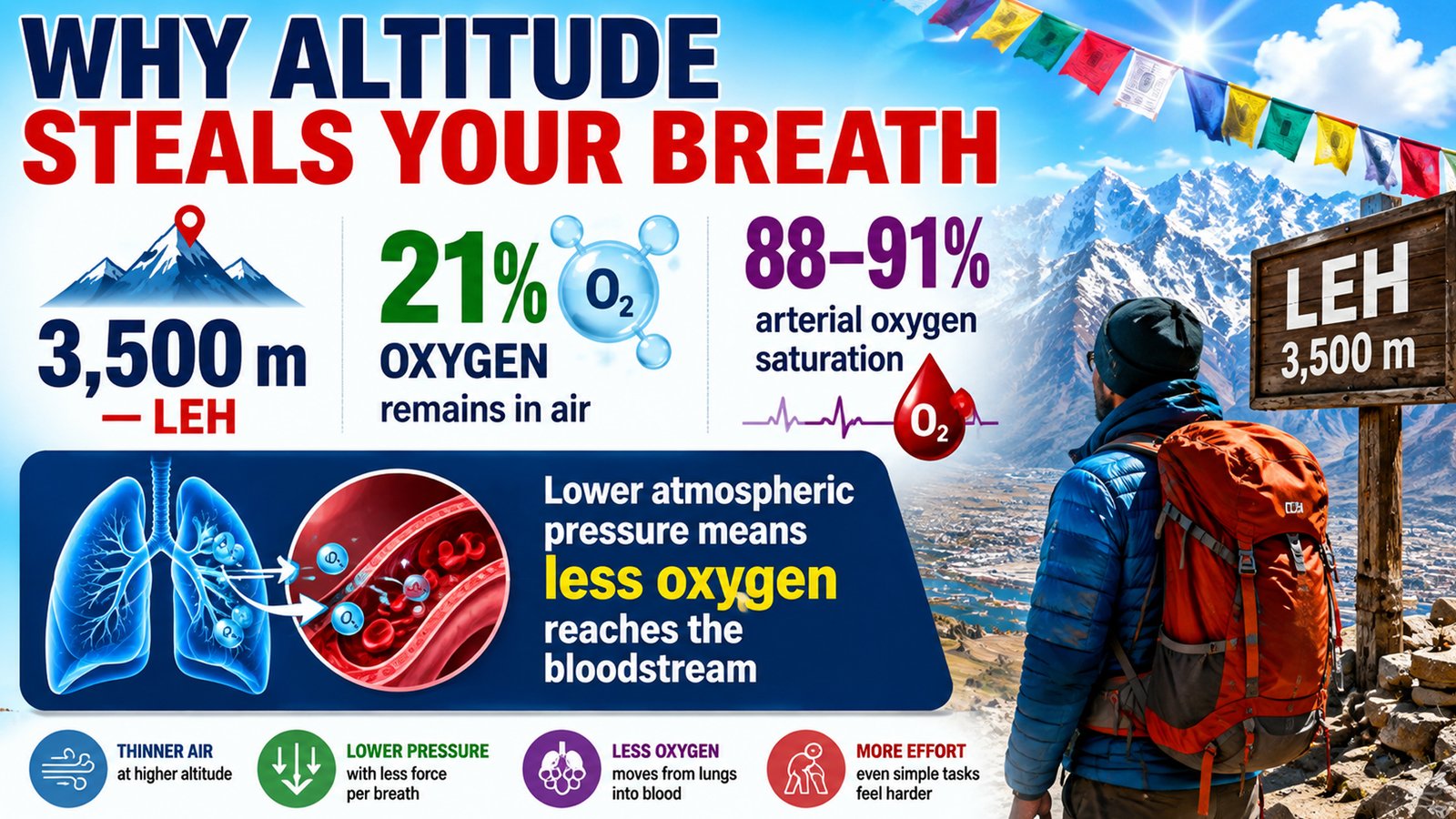
It is not that the air in Leh has suddenly “lost” oxygen. Oxygen still makes up about 21% of the atmosphere as altitude rises. What changes is atmospheric pressure. With less pressure pushing each breath into the lungs, the partial pressure of oxygen falls, so fewer oxygen molecules cross from the air sacs into the blood. At around 3,050 metres, the inspired oxygen pressure is only about 69% of the sea-level value, and arterial oxygen saturation can fall to roughly 88–91% during acute exposure. That is enough to make a brisk walk feel unexpectedly hard.
What “thin air” actually does
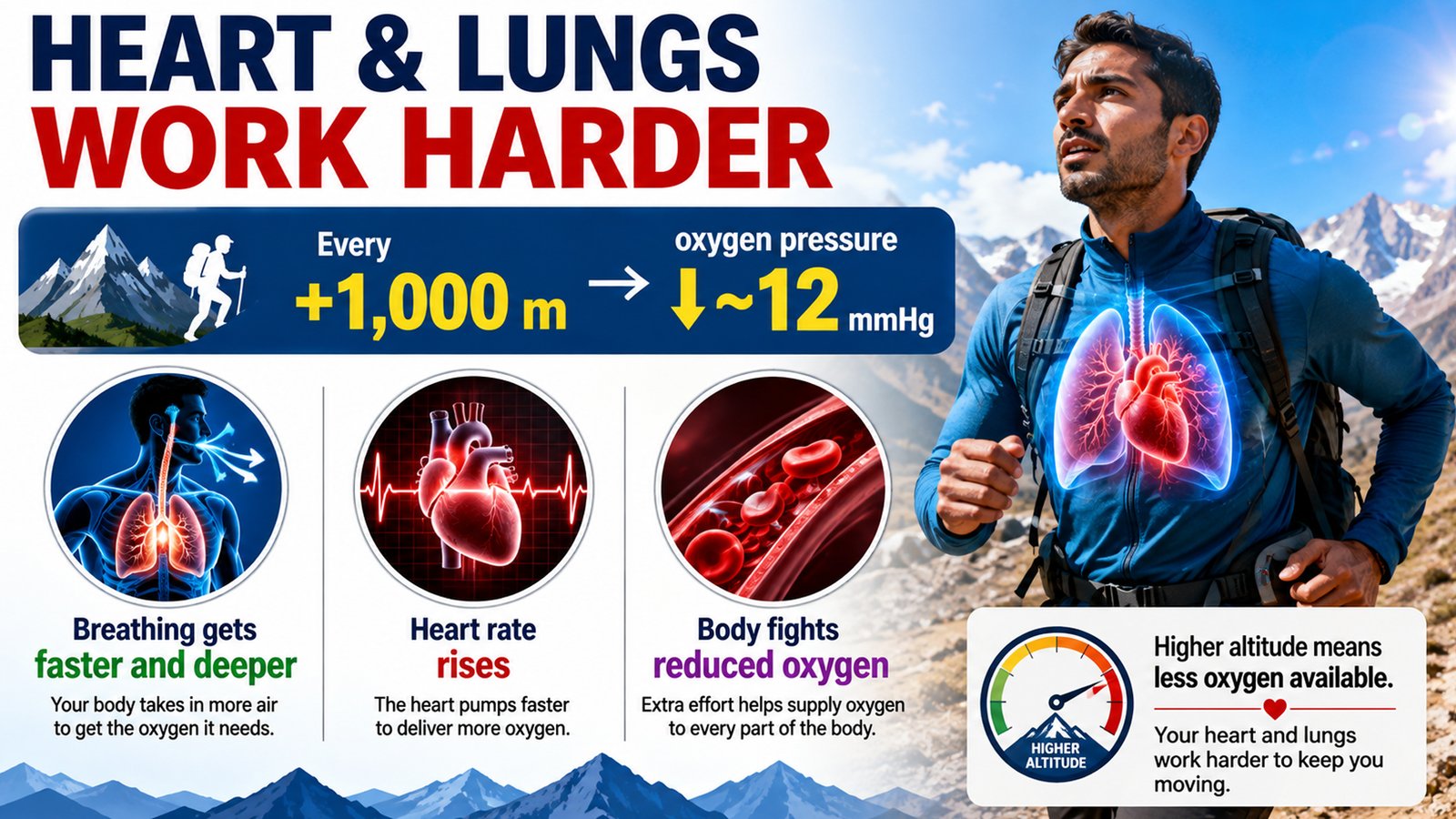
Every organ depends on a pressure gradient that moves oxygen from the atmosphere into the lungs, from the lungs into blood and finally into tissues. As altitude increases, that gradient weakens. A JAMA Network Open meta-analysis of 53 prospective studies involving 777 healthy adults found that arterial oxygen pressure fell, on average, by about 1.6 kPa—roughly 12 mmHg—for each 1,000 metres of vertical ascent.
The body reacts within minutes. Sensors in the carotid arteries detect the drop in oxygen and drive deeper, faster breathing. The sympathetic nervous system becomes more active, so the heart beats faster and cardiac output initially rises. At the same time, pulmonary artery pressure increases because low oxygen makes the small arteries in the lungs constrict.
Small pulmonary arteries behave differently from most vessels in the body: they constrict when oxygen is low. In a normal lung this helps divert blood away from a poorly ventilated patch. At altitude, the whole lung is hypoxic, so pulmonary pressure rises; most people tolerate this, but an excessive and uneven hypoxic pulmonary vasoconstriction response is a central mechanism in high-altitude pulmonary oedema (HAPE).
Why climbing a staircase suddenly feels like exercise
At altitude, the heart and lungs work harder to deliver less oxygen. For the same walking pace, breathing and heart rate rise, while maximal exercise performance remains lower than at sea level. A runner who breezes through a 10 kilometre stretch in Bengaluru may find a hotel staircase in Leh surprisingly demanding.
But there is an important distinction between performance and altitude illness. Aerobic fitness can make you better at exercise; it does not make you immune to acute mountain sickness. The CDC specifically notes that training and physical fitness do not reduce susceptibility to altitude illness. A marathoner and a sedentary traveller who ascend on the same rapid itinerary can both become ill. The mountain is testing acclimatisation, not character or willpower.
The brain often complains first
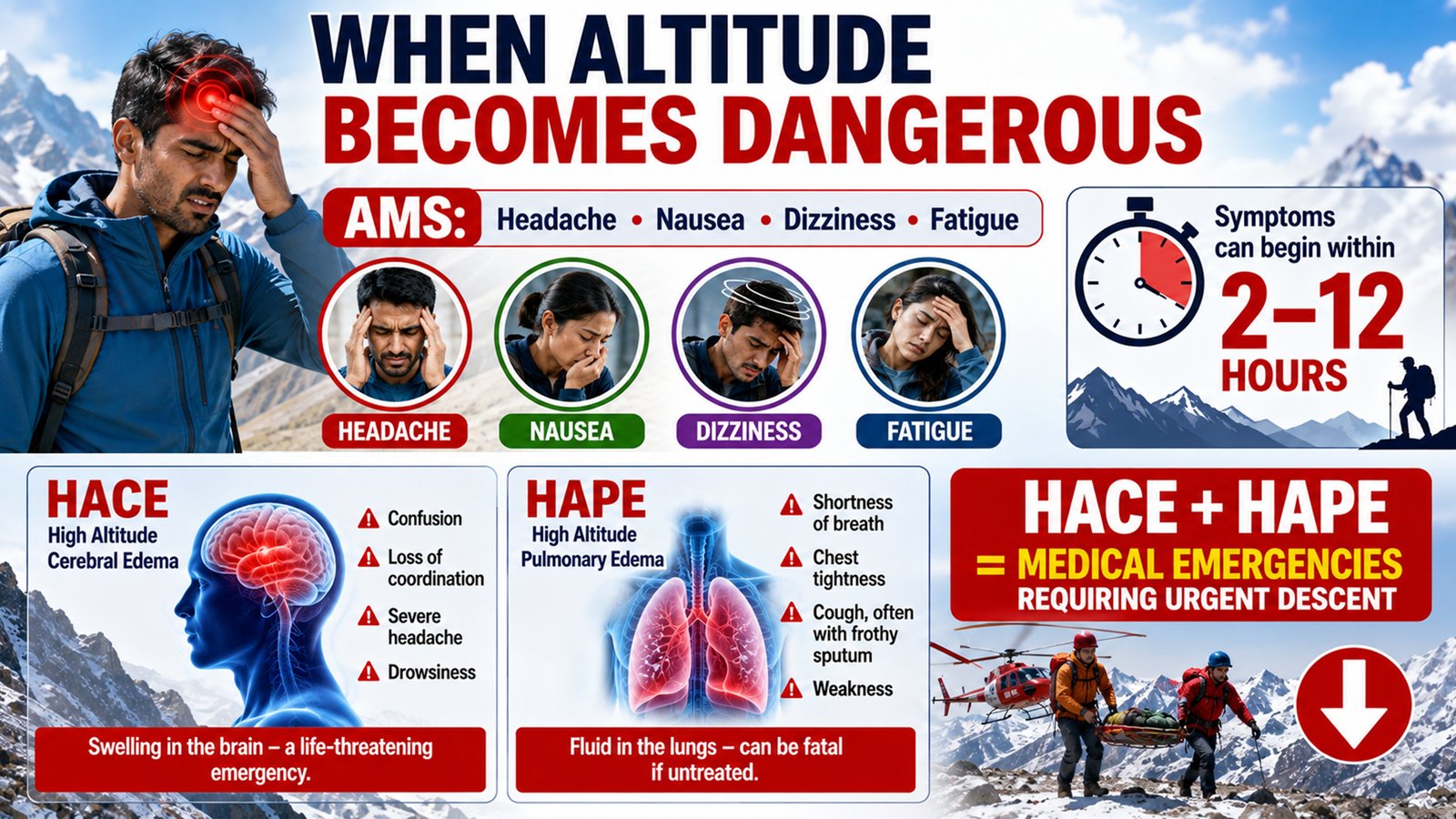
Acute mountain sickness, or AMS, is the commonest altitude illness. Its symptoms are famously similar to a hangover: headache, nausea or loss of appetite, dizziness, unusual fatigue and sometimes vomiting. Symptoms typically begin 2–12 hours after arrival or after a further ascent, often during or after the first night. A traveller may feel fine at the airport, eat dinner normally and wake at 2 a.m. with a pounding headache.
AMS is more complex than a simple “low oxygen number,” so a pulse oximeter cannot diagnose it. People with AMS may have an oxygen saturation that is normal for that particular altitude. Symptoms and the recent ascent history are more important than chasing a sea-level reading on a fingertip device.
The dangerous neurological progression is high-altitude cerebral oedema, or HACE. The warning signs are not merely a worse headache. They include confusion, marked drowsiness, inability to care for oneself and especially loss of coordination—someone who cannot walk heel-to-toe in a straight line should be treated seriously. Untreated HACE can progress to coma rapidly. This is a medical emergency requiring descent, oxygen when available and urgent treatment.
When the lungs begin to fill with fluid
HAPE is the pulmonary emergency every high-altitude traveller should recognise. It is not ordinary breathlessness from being unfit. It may begin with an unusual loss of exercise capacity, a dry cough or chest congestion, then progress to breathlessness with minimal activity and finally at rest. Advanced cases can cause blue lips and pink, frothy sputum.
The problem is fluid leaking into the air spaces of the lungs under abnormally high pulmonary vascular pressures, not left-sided heart failure. The CDC notes that HAPE can progress rapidly and that oxygen saturations of 50–70% are common in established cases. Once breathlessness occurs at rest, the correct response is not to “see how things are in the morning.” Descent is the single best treatment, with supplemental oxygen when available. Exertion should be kept to a minimum during evacuation.
Why the very fit can still get sick
Susceptibility varies enormously. There is no simple fitness test, blood test or sea-level oxygen reading that reliably predicts AMS. A previous trip is informative, but only when the altitude and speed of ascent are similar.
Two factors repeatedly matter: how high you sleep and how quickly you get there. The Wilderness Medical Society considers unacclimatised travellers at risk above about 2,500 metres, with susceptible people occasionally becoming ill lower than that. Sleeping altitude matters more than the highest point reached during the day. This is the logic behind the mountaineering principle of climbing higher during the day but sleeping lower when possible.
For a lowlander arriving directly, Leh’s sleeping altitude of about 3,500 metres represents an abrupt ascent. The local 48-hour acclimatisation rule is therefore not bureaucratic fussiness; it reflects the time the lungs, heart, kidneys and brain need to begin adapting.
Acclimatisation: what the body is doing while you rest
The most important acute adaptation is more breathing. Over the first three to five days, ventilation progressively increases and oxygenation improves. The kidneys help by excreting bicarbonate, allowing the body to sustain this faster breathing without the blood becoming excessively alkaline. Heart rate remains higher, while other circulatory adjustments develop.
A common misconception is that the body immediately solves the problem by making lots of new red blood cells. It does not. Increased red-cell production is not an important part of the first few days of acclimatisation. Those haematological adaptations take longer. In the early phase, breathing is doing much of the heavy lifting.
Sleep can be particularly strange. Above roughly 2,700 metres, periodic breathing—cycles of deeper breathing followed by brief pauses—becomes nearly universal. Sleep disturbance is one of the commonest complaints at high altitude. These pauses are not automatically dangerous; new breathlessness at rest, confusion or loss of coordination is different and demands action.
The safest way up is usually the slowest
The most effective prevention is not a gadget or a supplement. It is time. Current guidance recommends avoiding a sudden jump to a very high sleeping altitude when possible. Once above 3,000 metres, sleeping elevation should generally increase by no more than about 500 metres per night, with an extra acclimatisation night for every 1,000 metres gained. The first 48 hours should be gentle rather than athletic; alcohol is best avoided during this period because it can worsen sleep and depress breathing.
Acetazolamide can help when rapid ascent is unavoidable or a traveller has an appropriate risk profile. By altering acid-base balance, it stimulates ventilation and speeds acclimatisation. The latest Wilderness Medical Society guideline supports acetazolamide for prevention in appropriate travellers, but it is not a substitute for a sensible itinerary, and preventive medication or any form of treatment must be discussed with a clinician who understands the traveller’s history and planned ascent.
People with chronic lung disease, pre-existing low oxygen levels, significant heart disease, pulmonary hypertension or obstructive sleep apnoea need particular care. The CDC advises travellers with underlying cardiopulmonary conditions to discuss high-altitude travel with a clinician familiar with altitude medicine. Stable disease may be compatible with travel; unstable or severe disease may require a modified plan, supplemental oxygen or postponement.
Three rules worth remembering
Altitude illness is unusual among medical problems because the most important treatment may be measured in metres rather than milligrams. The CDC distils prevention of serious outcomes into three practical rules: know the early symptoms; never ascend to a higher sleeping altitude while symptoms are present; and descend if symptoms worsen despite rest or treatment at the same elevation.
High altitude need not be feared, but the body cannot be bullied into acclimatising faster because an itinerary is tight or a traveller is fit.
Breathlessness on a slope is a reminder that every breath arrives under less pressure. Given time, most healthy bodies adapt remarkably well; denied that time, normal survival responses can tip into illness.
At altitude, the smartest traveller is not the one who proves how much discomfort can be ignored. It is the one who knows when to stop climbing—and when to go down.
This article provides general health information and is not a substitute for individual medical assessment, particularly for people with heart or lung disease or those planning rapid ascent to high altitude.
(The author is an interventional pulmonologist and respiratory medicine consultant in Bengaluru.)