US efforts to revive a Gaza peace plan have hit another roadblock after American envoy Jared Kushner held lengthy talks with Israeli Prime Minister Benjamin Netanyahu, following a rare direct meeting with Hamas representatives in Egypt.
Kushner, who is also US President Donald Trump’s son-in-law, has been trying to bridge the widening gap between Israel and Hamas over the next phase of the proposed Gaza settlement. His meetings in the region were aimed at turning broad acceptance of the US roadmap into concrete steps towards a ceasefire, Hamas disarmament, Israeli military withdrawal and reconstruction of the devastated Palestinian territory.
The latest diplomatic push, however, ended without a breakthrough. The central disagreement remains the sequence in which the proposed measures should be implemented. Israel wants Hamas to surrender its weapons and dismantle its military infrastructure before Israeli forces withdraw from Gaza or large-scale reconstruction begins. Hamas, meanwhile, wants Israel to halt attacks and withdraw first, arguing that disarmament must form part of a wider political settlement.
The disagreement has become the biggest obstacle to Trump’s Gaza peace plan. Hamas has indicated its willingness to engage with the US-backed roadmap, but Israel has resisted moving ahead without firm guarantees that Hamas can no longer pose a military threat.
Netanyahu has repeatedly insisted that Israeli forces will remain in Gaza until Hamas is fully disarmed. The Israeli position is that simply agreeing to surrender weapons is not enough; the process must be independently verified and include the dismantling of tunnels and other military infrastructure.
The issue is particularly sensitive because Israel fears that a premature withdrawal could allow Hamas to rebuild its military capabilities. Netanyahu has therefore linked any future Israeli pullback and reconstruction effort to what his government considers genuine demilitarisation.
Hamas, on the other hand, has argued that it cannot be expected to give up its weapons while Israeli troops remain in Gaza and military operations continue. The group has also connected the question of disarmament to broader Palestinian political demands, including a future pathway towards Palestinian statehood.
Kushner’s meeting with Hamas leaders in Egypt was significant because direct engagement between US officials and the Palestinian militant group has traditionally been politically sensitive. He met Hamas leader Khalil al-Hayya, who has emerged as a key figure in the organisation’s leadership. The discussions focused on the proposed roadmap and the conditions needed to move towards its implementation.
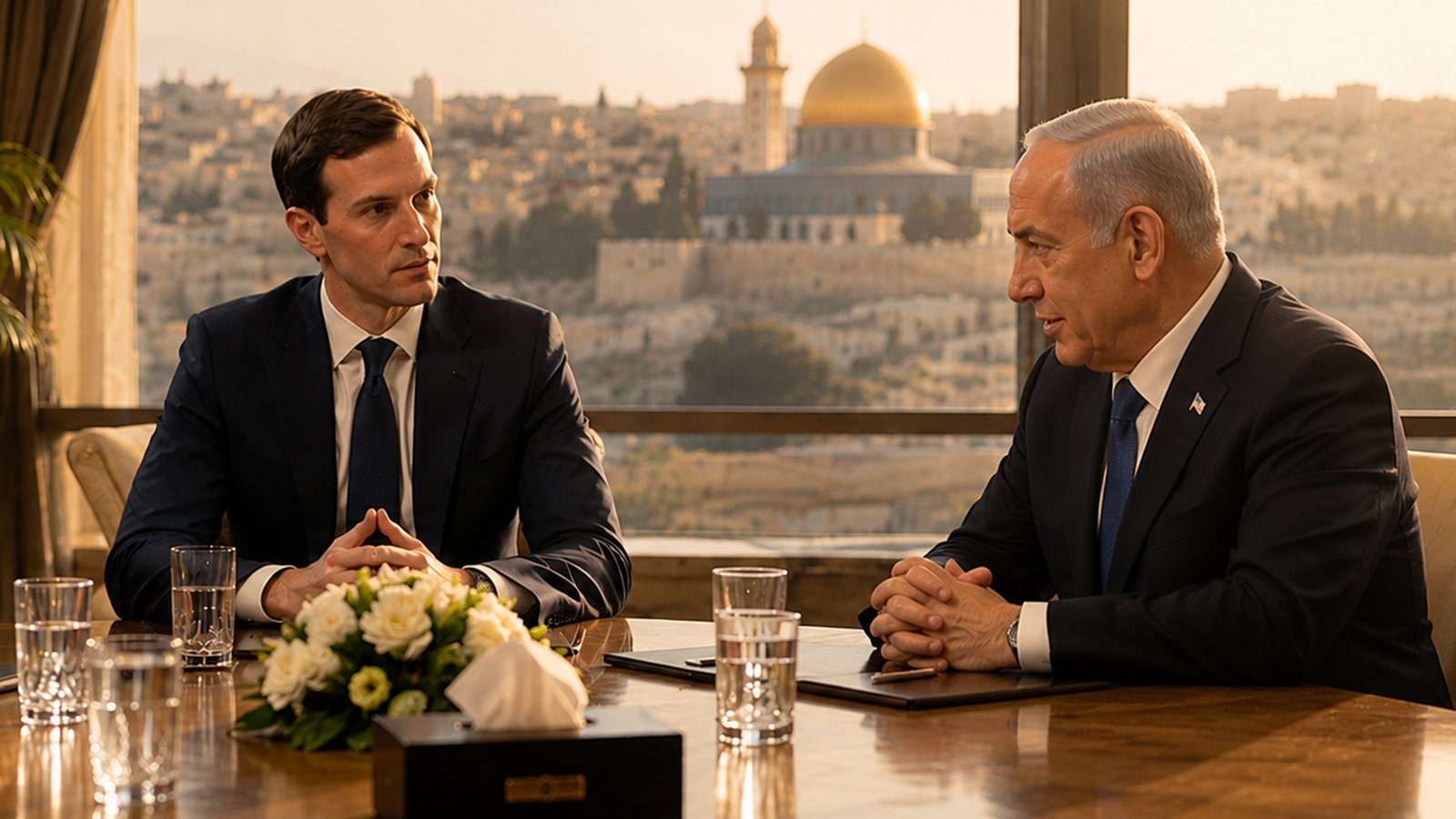
After those discussions, Kushner travelled to Jerusalem for talks with Netanyahu. The meeting lasted several hours and was described by officials as constructive, but it did not result in a firm Israeli commitment to the US proposal. Two working groups are expected to focus on the difficult practical questions surrounding Hamas disarmament, security arrangements, public health and Gaza’s eventual reconstruction.
The proposed framework is intended to go beyond simply stopping the fighting. It envisages a phased process in which Hamas would be disarmed, Gaza would move towards a civilian administration and international actors would help oversee security and reconstruction. The ultimate objective is to prevent a return to the cycle of war while creating conditions for the territory’s recovery.
But turning those principles into an agreement remains difficult. Neither Israel nor Hamas appears ready to make the first major concession on the issue of security. That has left Washington attempting to find a compromise that can satisfy Israel’s demand for lasting security while addressing Hamas’ insistence on Israeli withdrawal.
Trump has also publicly called for an end to Israeli strikes in Gaza, adding pressure on Netanyahu as the US administration seeks to keep negotiations alive. His comments signal growing frustration in Washington over the continued fighting and the lack of movement on the peace initiative.
The diplomatic challenge is unfolding against a worsening humanitarian situation in Gaza. Any prolonged delay in a political settlement risks further casualties and could make reconstruction even more difficult. Regional powers, including Saudi Arabia and the United Arab Emirates, have also criticised Israel’s reluctance to commit fully to the proposed roadmap.
Until that sequencing dispute is resolved, the Gaza ceasefire and broader peace process are likely to remain fragile, keeping the conflict at the centre of international diplomatic developments. The latest Kushner-Netanyahu meeting may have kept diplomacy alive, but it has also underlined how far the two sides remain from a lasting Gaza peace agreement.