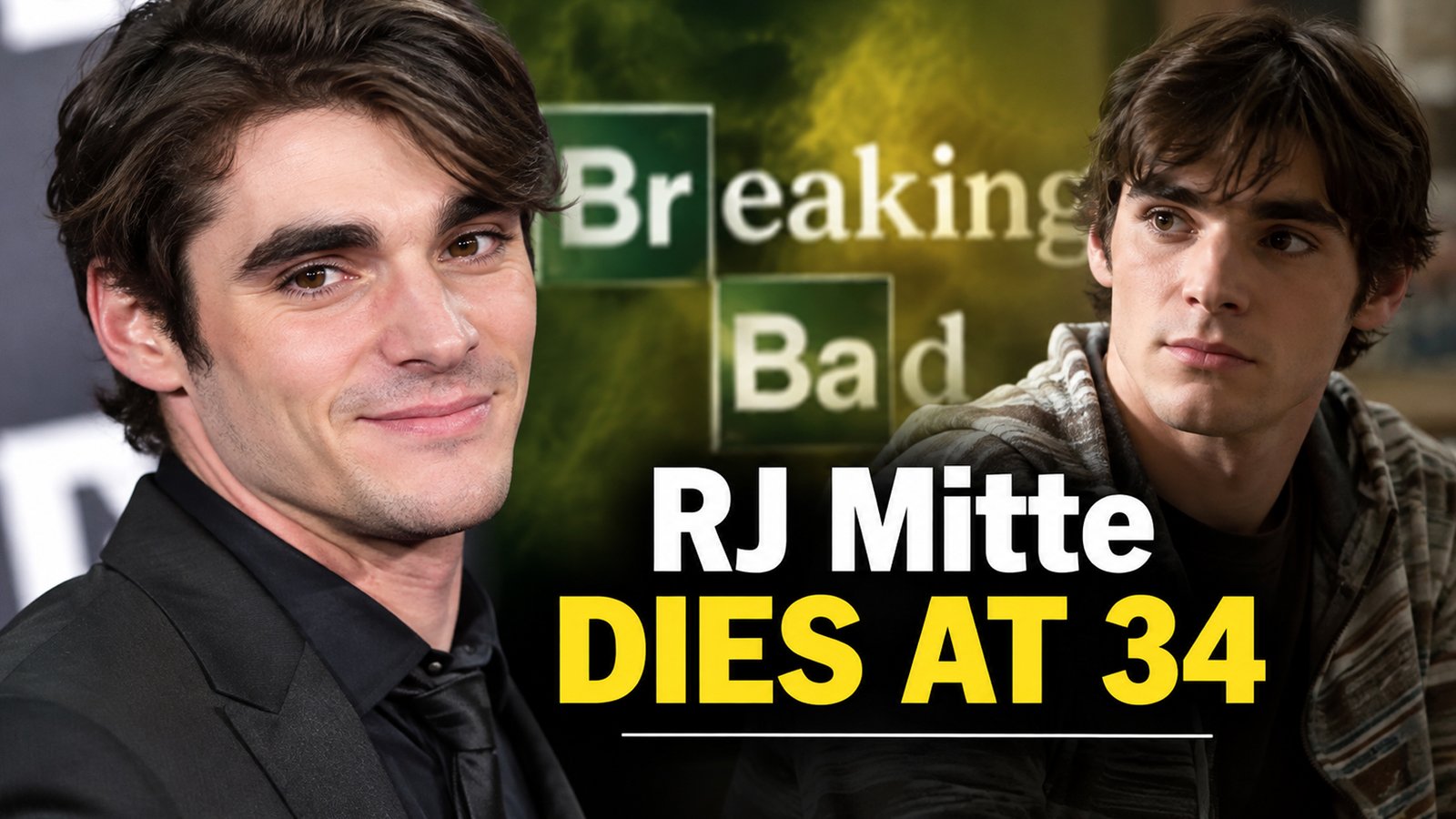
American actor RJ Mitte, best known for playing Walter White Jr. in the acclaimed television series Breaking Bad, has died at the age of 34. His death on October 12 has prompted an outpouring of grief from fans, fellow actors and members of the entertainment industry, who remember him for his performances and his efforts to improve representation for people with disabilities.
Mitte rose to international recognition through his portrayal of Walter “Flynn” White Jr., the son of Bryan Cranston’s chemistry teacher-turned-drug kingpin Walter White, in the award-winning crime drama. The character became an important part of the series, offering an emotional counterpoint to the increasingly dangerous choices made by his father.
Mitte appeared across all five seasons of Breaking Bad, which ran from 2008 to 2013. His performance earned him a place among the show’s memorable cast members and helped establish his career in television and film.
His death was confirmed by his representative, who described him as a beloved actor, philanthropist and passionate disability rights advocate. The representative also highlighted Mitte’s work to promote disability awareness, inclusion and more authentic representation in entertainment.
According to reports published on October 13, his representative confirmed that he died by suicide. Authorities had earlier said that the circumstances surrounding his death were under investigation, with the official determination to be made following a medical examination.
Mitte lived with cerebral palsy, a neurological condition that affects movement and coordination. He was diagnosed as a young child and underwent therapy to improve his mobility. His personal experience informed his portrayal of Walter Jr., who also has cerebral palsy in the series.
The role stood out for bringing a character with a disability into a major television production without making the condition the sole focus of his identity. Walter Jr. was portrayed as a teenager navigating family relationships, school and the consequences of his father’s criminal activities. Mitte’s performance helped audiences connect with the character as a person rather than simply through his disability.
Beyond Breaking Bad, Mitte continued to build his acting career through projects across television and film. His credits included the family drama Switched at Birth and the superhero series The Guardians of Justice. He also appeared in independent films, including The Oak Room and Triumph, demonstrating his interest in roles beyond the series that made him famous.
His work extended beyond acting. Mitte became an advocate for greater opportunities for performers with disabilities, speaking about the barriers they face in the entertainment industry. He worked with organisations including United Cerebral Palsy and Shriners Children’s, supporting efforts to improve awareness and inclusion.
He also served as president of the Mitte Foundation, which supported philanthropic initiatives and community programmes. Through these activities, he used his public profile to challenge stereotypes and encourage more meaningful representation of people with disabilities in film and television.
His contribution was particularly significant in an industry where actors with disabilities have historically had fewer opportunities to portray complex, leading characters. Mitte’s career helped demonstrate the value of authentic casting and the importance of allowing performers to bring their lived experiences to their work.
Bryan Cranston, who played his on-screen father, paid tribute to the actor, recalling his growth from a young performer on the Breaking Bad set into a talented actor and disability advocate. Cranston expressed deep sadness at the loss and remembered their relationship beyond the series.
Dean Norris, who portrayed Hank Schrader, also expressed heartbreak over Mitte’s death, remembering him as a kind young man. Aaron Paul, another of the show’s leading actors, shared an emotional tribute, expressing his love for his former co-star and urging people to remember that they are not alone when facing difficult times.
Mitte had continued working in entertainment in recent years and was promoting the film Talking to Strangers. His professional activities reflected a career that continued to evolve long after the conclusion of Breaking Bad.
His death has brought renewed attention to both his artistic contribution and his advocacy for disability rights. For many viewers, he will remain closely associated with Walter White Jr., a character whose decency and vulnerability offered a human perspective within a story dominated by crime, ambition and moral decline.
Mitte’s legacy extends beyond one celebrated television role. Through his acting and advocacy, he helped challenge assumptions about disability and encouraged greater inclusion in the entertainment industry. His death at 34 marks a painful loss for his family, colleagues and fans, as well as for the communities he worked to support.