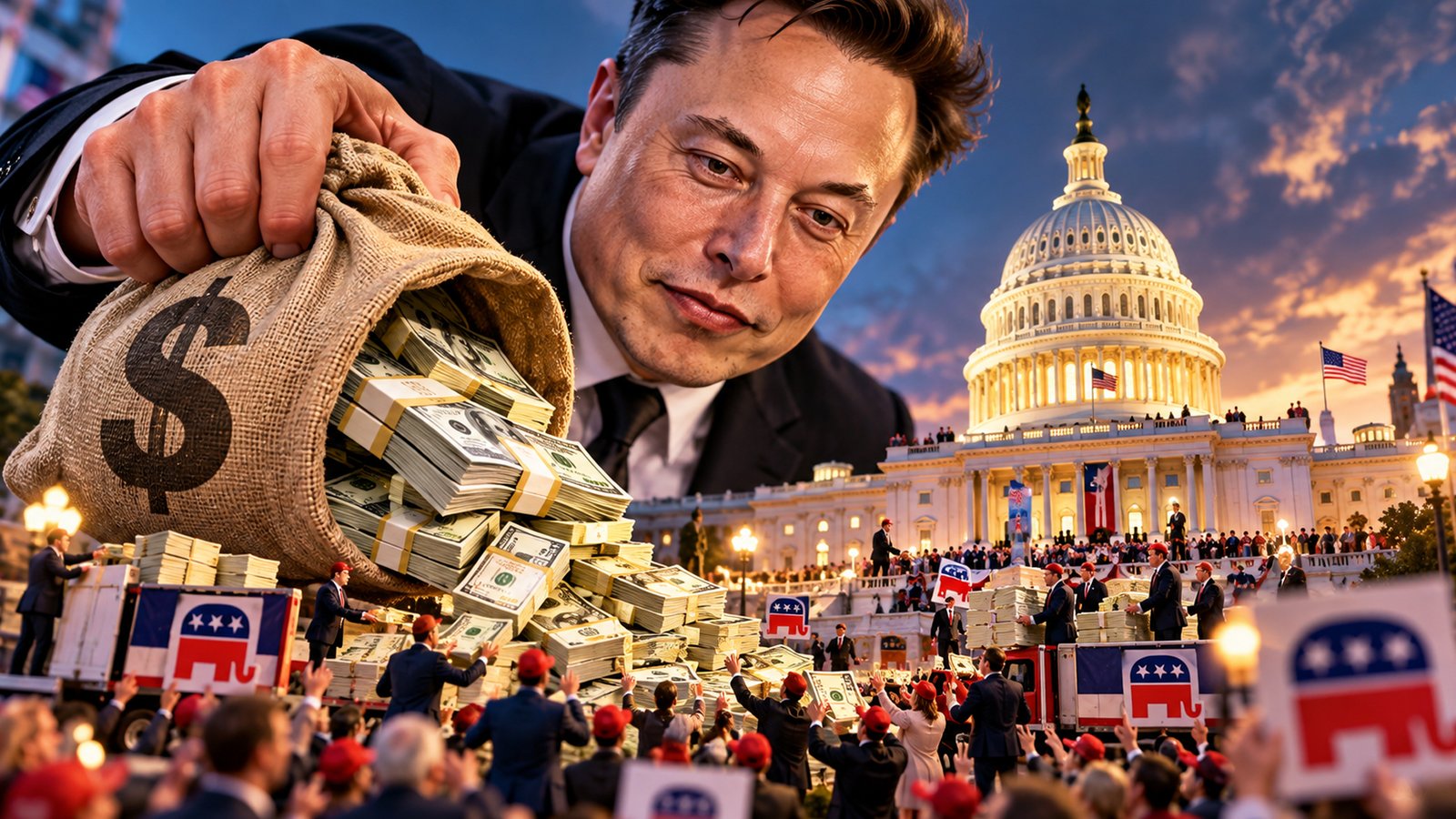
Elon Musk has spent approximately $366 million to support Republican candidates and political groups in the 2026 US midterm elections, emerging as the biggest known individual donor in this year’s contest. The contributions reflect a major financial push to help President Donald Trump’s party retain control of Congress as Democrats seek to capitalise on voter dissatisfaction.
According to campaign finance disclosures reported on October 12, Musk has contributed $276 million since July alone. His latest spending exceeds the approximately $290 million he spent during the 2024 presidential election cycle, when he became one of Trump’s most influential financial supporters.
The largest share of Musk’s recent contributions went to the Senate Leadership Fund, a political action committee that supports Republican candidates for the US Senate. The group received $158 million. Musk also donated $20 million to the Congressional Leadership Fund, which works to elect Republicans to the House of Representatives.
His own political action committee, America PAC, received $76 million, while $10 million went to Lone Star Liberty PAC, which supports Republican Texas Senate candidate Ken Paxton. Another $10 million was donated to the Republican Governors Association. The contributions form part of a wider effort to strengthen Republican campaigns ahead of the November 3 elections.
America PAC has defended the spending, arguing that financial support would help Republicans communicate their message to voters and compete effectively. The committee has also pursued voter outreach, including door-to-door campaigning, building on the approach used during the 2024 presidential race.
The scale of Musk’s spending comes at a challenging time for Republicans. The party currently controls both chambers of Congress, but Democrats are hoping to win back seats by focusing on economic concerns, rising living costs and dissatisfaction with Trump’s leadership.
The midterm elections will determine whether Republicans can retain their congressional majorities or face a more difficult political landscape during the remainder of the president’s term. Control of Congress influences legislation, government spending and oversight of the administration. A Democratic majority in either chamber could make it harder for Trump to advance his policy agenda and could lead to closer scrutiny of government decisions.
Musk’s political spending has also revived questions about the influence of billionaires in American elections. Super political action committees, commonly known as super PACs, can raise and spend substantial sums to support or oppose candidates, although they must operate independently of candidates’ official campaigns. Critics argue that this system gives wealthy donors an outsized role in shaping political advertising and public debate.
The contributions also come amid scrutiny of Musk’s business interests and government connections. Democrats have called for greater examination of SpaceX’s government contracts and Musk’s role in the Department of Government Efficiency, which he helped lead under Trump. These concerns have renewed debate over potential conflicts of interest, although the donations alone do not establish that Musk is seeking specific government decisions in return.
Musk had previously indicated that he intended to reduce his political involvement. In May 2025, he said he had done enough, suggesting that he did not plan to undertake another major spending effort. His latest contributions represent a substantial return to election financing and reinforce his position as a central figure in Republican fundraising.
His relationship with Trump has also experienced periods of tension. The two had a public disagreement in 2025, but relations have since improved. On October 8, Trump presented Musk with the National Medal of Science, highlighting their renewed ties as the midterm campaign enters a crucial phase.
Republicans already have significant financial resources at their disposal. The pro-Trump super PAC MAGA Inc reportedly held $416 million in reserves as of August, giving Republican-aligned groups considerable capacity to fund advertising and voter mobilisation. Musk’s additional contributions further strengthen the party’s financial position.
Democrats, however, argue that campaign spending cannot necessarily overcome voter concerns about household expenses, the economy and the administration’s policies. They are seeking to turn these concerns into electoral gains, particularly in competitive congressional districts and Senate races.
The November 3 elections will test whether Musk’s financial backing can translate into electoral success. His donations give Republican groups greater resources to reach voters, but the outcome will depend on turnout, local contests and how Americans assess the Trump administration’s performance. The campaign is also likely to intensify the wider debate over political donations, campaign finance and the influence of wealthy individuals on American democracy.