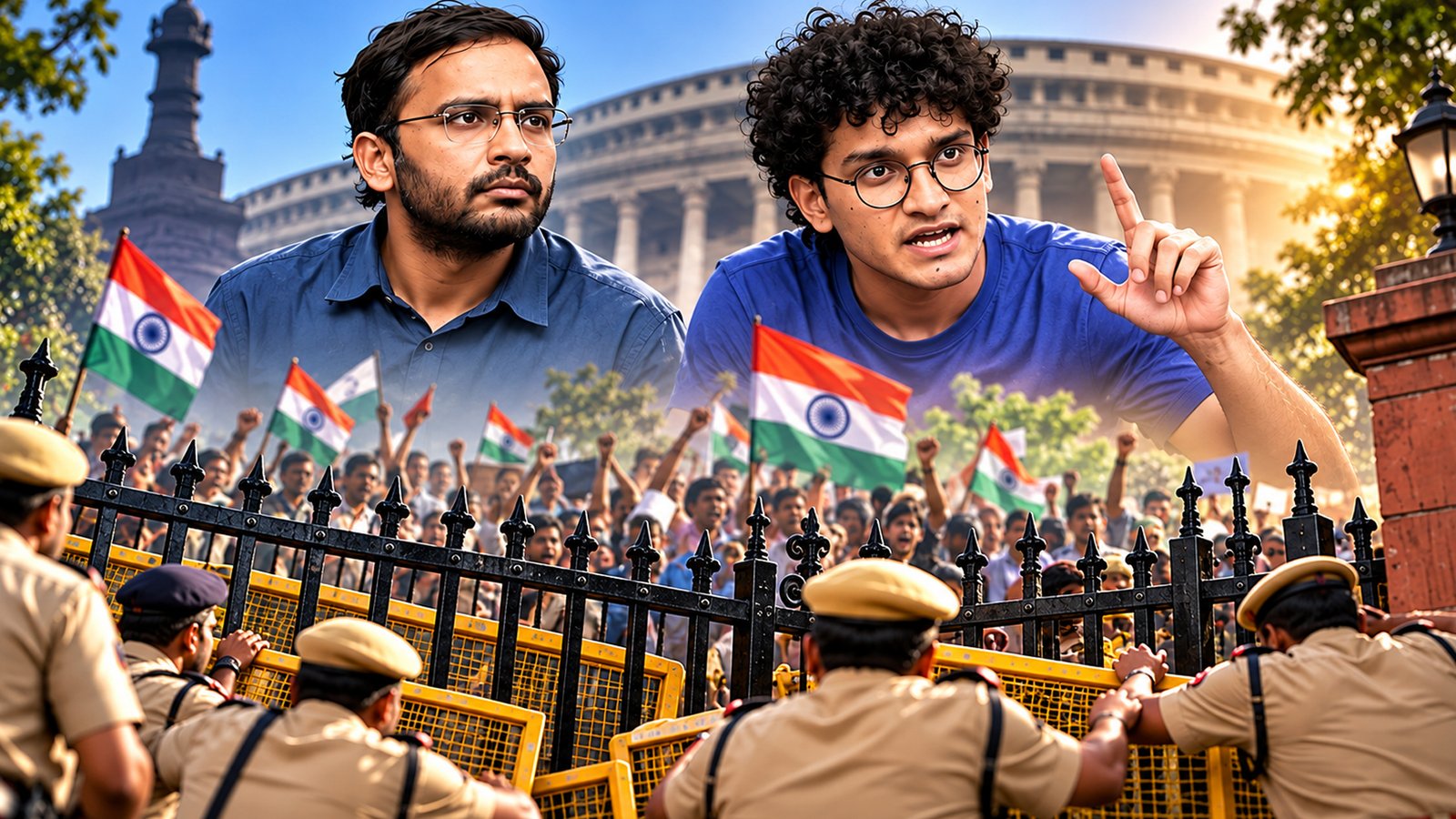
Delhi Police detained Cockroach Janta Party (CJP) leaders Saurav Das, Ashutosh Ranka and other party members on Tuesday, October 13, during another attempt to protest against Chief Election Commissioner (CEC) Gyanesh Kumar in the national capital. The detentions came amid growing opposition to the Election Commission of India (ECI) over its Special Intensive Revision (SIR) of electoral rolls.
CJP founder Abhijeet Dipke said party members carrying the national flag had reached the Jantar Mantar area before police detained them. The party has been demanding Kumar’s resignation, alleging that the revision of voter lists could lead to eligible voters losing their voting rights.
The latest detentions came amid a wider political campaign by opposition parties against the Election Commission. The INDIA bloc has questioned the transparency of the SIR process and raised concerns over the removal of names from electoral rolls.
The controversy intensified on Monday when Leader of the Opposition in the Lok Sabha Rahul Gandhi and other opposition leaders attempted to march towards the Supreme Court. Delhi Police stopped the procession on Bhagwan Das Road, around 600 metres from the court.
Despite the police stopping the march, opposition leaders moved ahead with legal action. Their petition challenges aspects of the Election Commission’s decisions and seeks scrutiny of alleged irregularities in voter deletions during the SIR exercise.
The petition includes several opposition leaders, among them Congress president Mallikarjun Kharge, Samajwadi Party chief Akhilesh Yadav and RJD leader Tejashwi Yadav. The INDIA bloc has called for greater transparency in the revision process and an investigation into alleged irregularities.
The Supreme Court and the Delhi High Court are also expected to consider pleas related to the protests and restrictions on demonstrations. The proceedings could help clarify the rules governing protest sites and the concerns raised about electoral roll revision.
Meanwhile, the political campaign against Kumar is expected to continue. Rahul Gandhi is expected to meet INDIA bloc MPs, student activists and civil society representatives at his residence on Tuesday. Opposition leaders are also expected to hold a joint press conference to explain their position on the controversy.
CJP has separately asked Delhi Police to clarify when it would be allowed to hold a peaceful protest at Jantar Mantar. The deadline issued by the party’s co-convenor, Ashutosh Ranka, expires on Tuesday. The party has warned that it will announce its next course of action if the police do not respond.
The dispute over the protest venue has become another point of conflict. Authorities have reportedly directed demonstrations towards alternative locations, including Ramlila Maidan, Burari Ground and CBD Ground. Police have cited public safety, traffic management and law-and-order concerns. CJP, however, has argued that restrictions should not prevent people from expressing their views peacefully.
Security arrangements remained in place in parts of central Delhi as the situation developed. Traffic restrictions were reported in some areas, while Metro services continued to operate.
The latest action follows an incident on October 10, when CJP leaders Abhijeet Dipke, Saurav Das and Ashutosh Ranka were detained at Indira Gandhi International Airport before they could reach Jantar Mantar for a planned demonstration. They were later released. The party said it would continue its campaign until Kumar resigned.
The SIR exercise is intended to verify and update electoral rolls. However, opposition parties have questioned how names are being removed and whether eligible voters could be left out. They have demanded that the Election Commission explain its procedures and ensure that no eligible citizen loses the right to vote.
The Election Commission has maintained that decisions on the SIR were taken unanimously by its three-member panel. The allegations made by opposition parties remain part of the ongoing political and legal dispute.
With CJP members detained again and opposition parties preparing further action, the controversy has moved beyond street protests. The coming days will be important for the legal challenges, the demand for transparency in voter list revision and the debate over the right to peaceful protest.