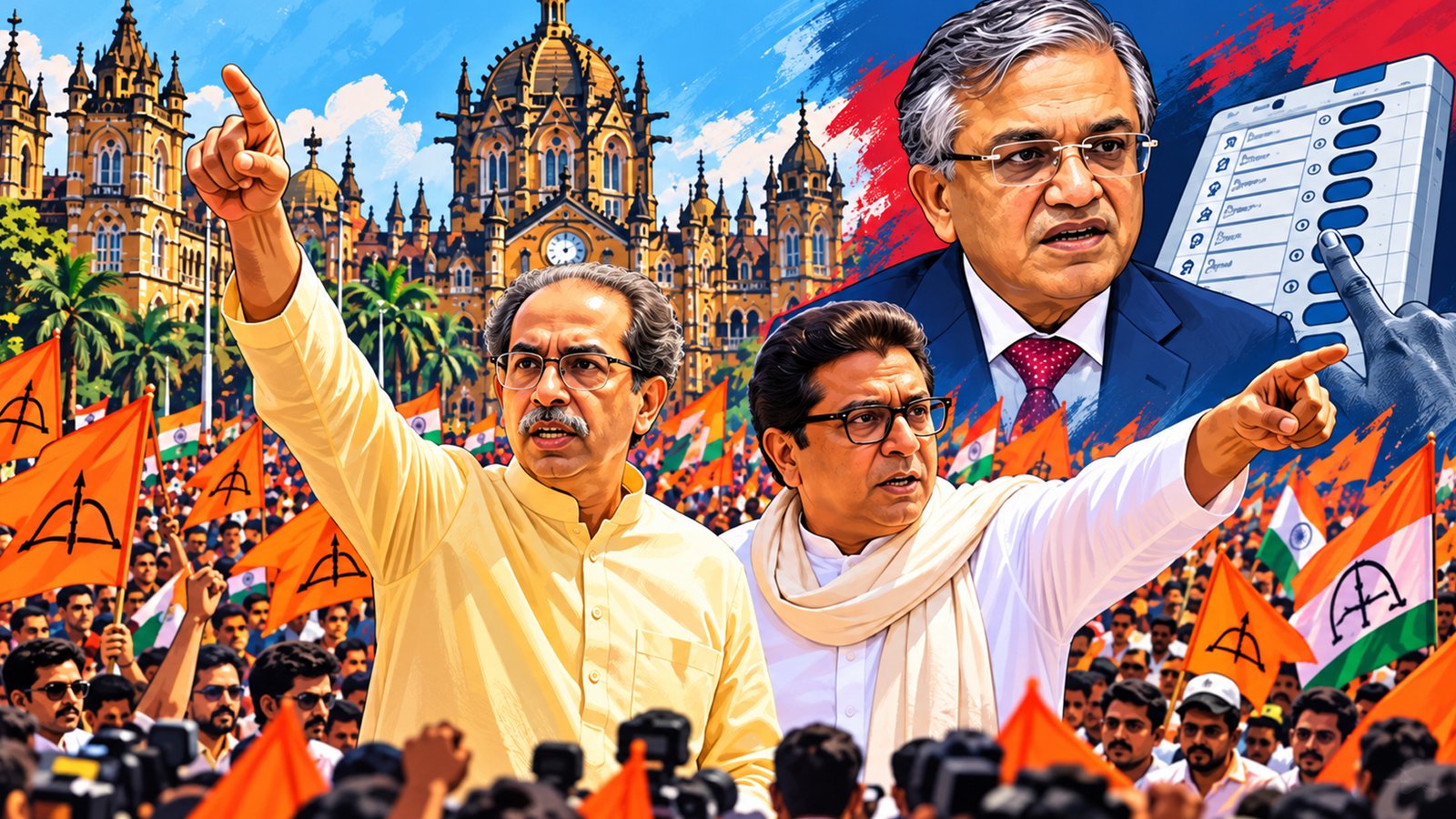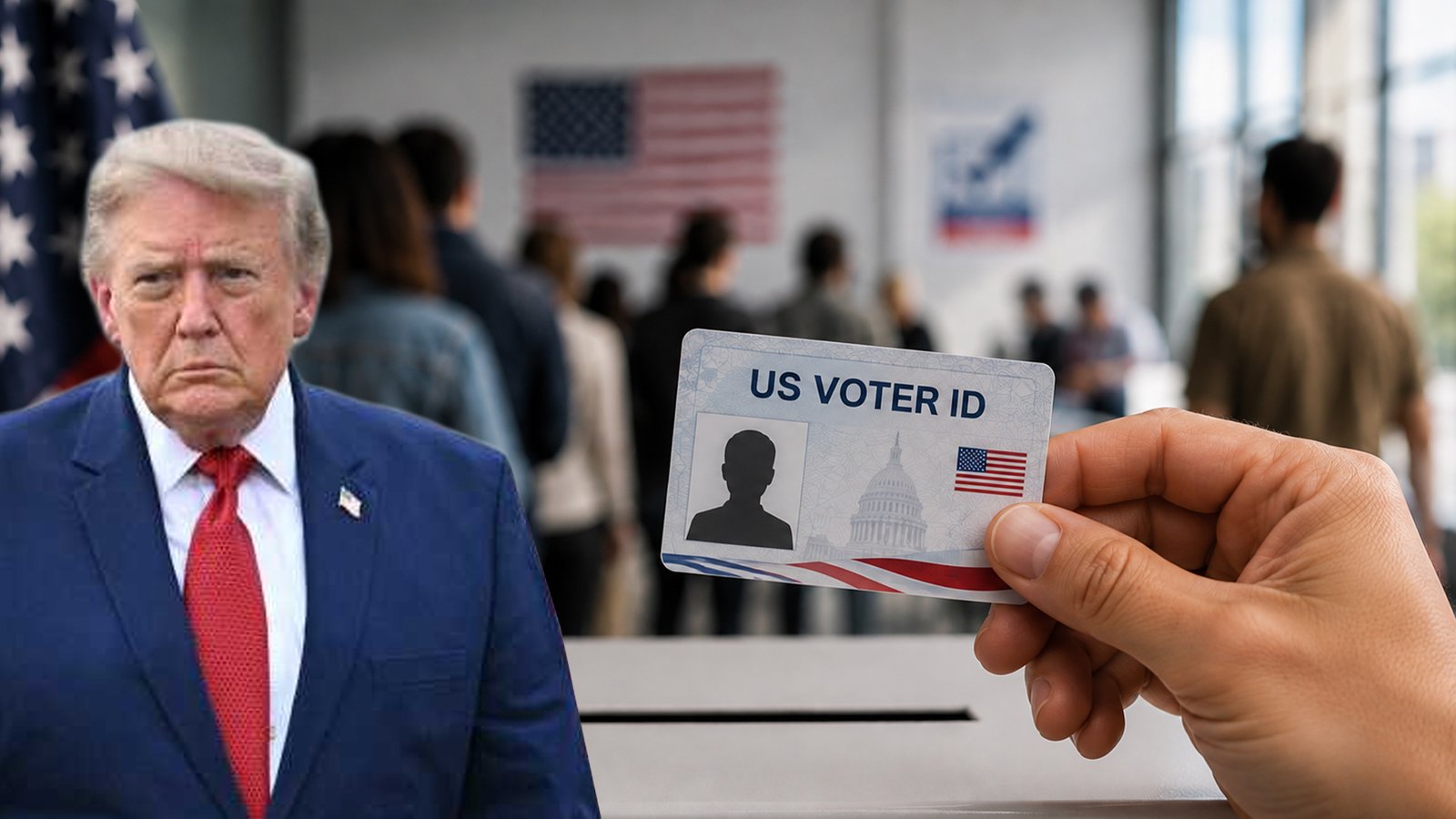
US President Donald Trump has invoked India’s election system while renewing his demand for stricter voter identification requirements in the United States, citing a recent interaction involving Chief Election Commissioner Gyanesh Kumar.
In a post on his Truth Social platform, Trump said Kumar had questioned how elections could be conducted in the US without a mandatory valid photo identity document. Trump used the example to argue that American voters should be required to show identification and called on Congress to advance the SAVE America Act.
Trump said India’s recent general election involved about 646 million voters and claimed that less than 1% voted by mail, while every voter was required to have valid photo identification. His comments were aimed at strengthening his argument for tighter US voter ID laws, particularly ahead of the 2026 midterm elections.
The remarks have brought India’s electoral system into the centre of an increasingly contentious debate in Washington over voting rules, citizenship verification and election integrity.
India has long used voter identification as part of its polling process. At polling stations, voters generally establish their identity through the Electoral Photo Identity Card, or EPIC, or one of the alternative identity documents permitted by the Election Commission of India. The system is designed to ensure that an eligible voter can be identified before casting a ballot.
The scale of India’s elections was another point highlighted by Trump. The 2024 Lok Sabha election was one of the world’s largest electoral exercises, with hundreds of millions of people casting votes across seven phases. The Election Commission’s official election data records more than 600 million votes, underscoring the enormous logistical challenge involved in conducting elections across the country.
Trump’s reference to India came as he pushed again for the Safeguard American Voter Eligibility Act, commonly known as the SAVE America Act. The legislation seeks to introduce stricter requirements for federal elections in the US, including documentary proof of US citizenship when registering to vote and photo identification when voting.
The measure has already cleared one major hurdle. The US House of Representatives passed the Republican-backed SAVE America Act in February by 218-213. The legislation, however, has remained stalled in the Senate, where it faces significant opposition and the procedural challenge of securing the votes required to move forward.
The bill would require states to obtain documentary evidence of citizenship from people registering to vote in federal elections. Its provisions include documents such as a US passport, certain government-issued identification documents and birth or naturalisation records. The legislation would also require eligible photo identification to be presented when voting in federal elections.
Trump and his Republican allies describe the proposal as an election integrity measure. They argue that stronger identification and citizenship checks would help ensure that only eligible US citizens participate in federal elections.
Democrats and voting-rights groups have strongly opposed the legislation. Critics argue that documentary requirements could create additional barriers for eligible voters who do not have easy access to passports, birth certificates or other qualifying documents. They also contend that existing safeguards already make non-citizen voting extremely difficult.
Trump’s comparison with India therefore comes at a politically sensitive moment, adding an international dimension to developments in global politics. Unlike the US, where election administration is largely handled at the state level and voter identification requirements vary considerably, India’s elections are administered under a nationwide framework overseen by the Election Commission of India.
India’s system also relies on a combination of voter rolls, identity verification and polling-station procedures. While the voter ID card is widely used, Indian election rules allow specified alternative identity documents in cases where voters do not have their EPIC with them.
Trump specifically credited his administration’s interaction with Gyanesh Kumar for raising the issue. His comments followed a recent engagement between Kumar and US Ambassador to India Sergio Gor. Kumar has been leading the Election Commission as it works on electoral administration, voter rolls and election-related reforms.
The US ambassador has also backed Trump‘s position, saying the American president was right to highlight voter identification and citing India’s system in support of the argument for stronger election safeguards.
The debate also comes against the backdrop of Trump’s continuing focus on election rules. His administration has repeatedly pushed for stronger citizenship verification and voter identification requirements, arguing that federal elections need greater safeguards.
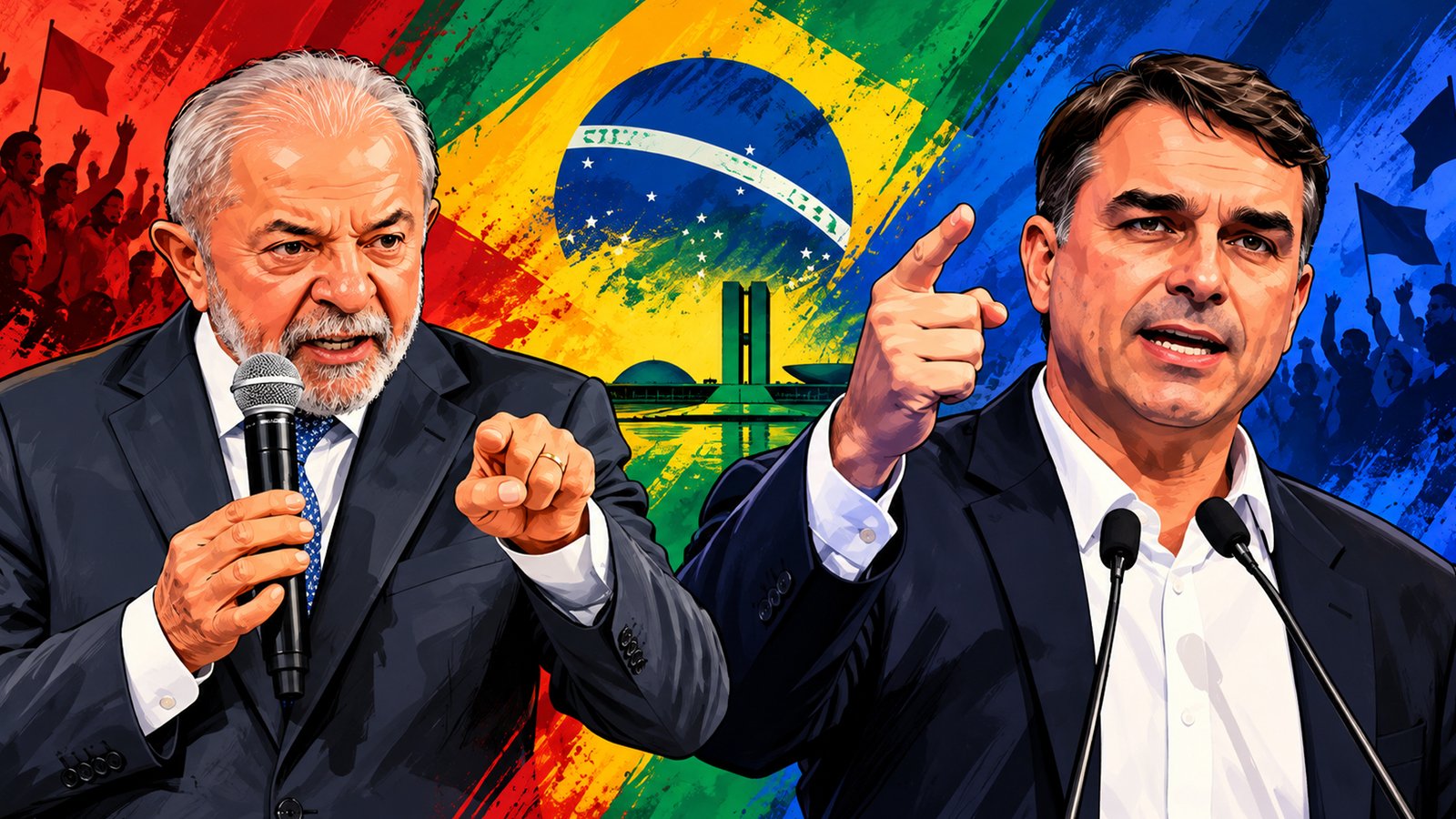
The White House’s own presentation of the SAVE America Act points to India and Brazil as countries that link voter identification to broader identity systems. It argues that the US should adopt stronger mechanisms to verify voter eligibility and protect the electoral process.
Trump’s comments amount to an unusual endorsement of a key feature of India’s electoral system. The country has frequently faced political debates over voter lists, electronic voting machines, election procedures and the role of the Election Commission. Yet its use of photo identification has now been presented by the US president as an example for American election policy.
The comparison is likely to attract further attention because the two countries operate very different electoral systems. India conducts elections through a central election management body covering a vast electorate, while US elections are administered through a decentralised system involving states and local authorities.
Trump’s latest remarks consequently serve two purposes: highlighting India’s election model and putting renewed pressure on US lawmakers to act on voter identification. Whether the SAVE America Act can overcome opposition in the Senate remains uncertain, but Trump’s reference to India has given his campaign for stricter voter ID requirements a fresh international dimension.