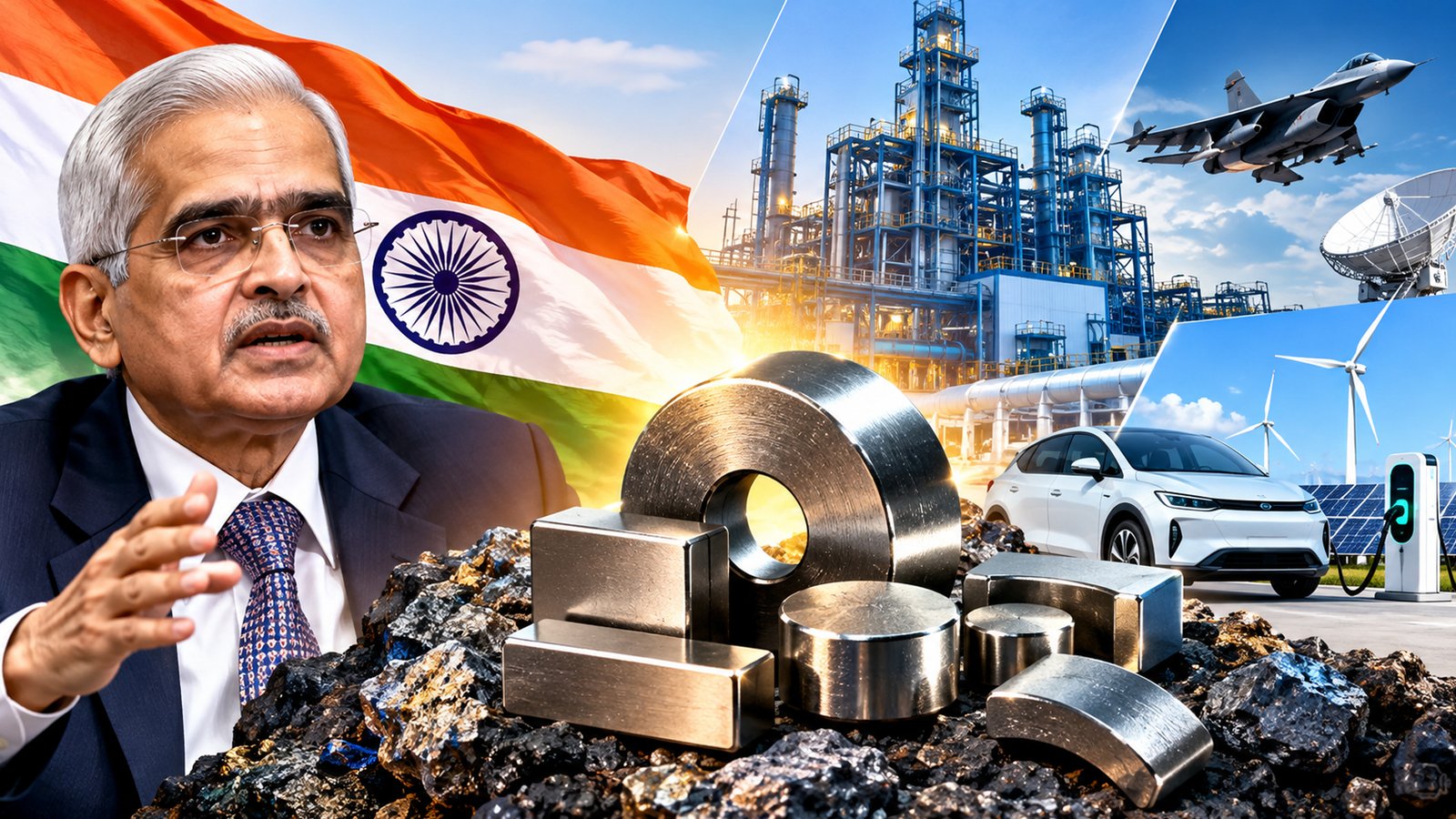
India’s economic resilience is the result of years of reforms rather than a temporary phase of strong growth, Shaktikanta Das, Principal Secretary-2 to Prime Minister Narendra Modi, has said, arguing that the country is now moving closer to its ambition of becoming a developed economy by 2047.
Speaking at the Kautilya Economic Conclave, Das said India’s growth momentum had been supported by a combination of structural reforms, stronger institutions, domestic demand and investment in productive capacity. He said the goal of building a “Viksit Bharat” by 2047 was increasingly within reach.
His comments come as India’s economy continues to expand at a relatively strong pace despite an uncertain global environment. Real GDP growth stood at 7.8% in the first quarter of 2026-27, with growth over the last three quarters averaging above 8%.
Das said the recent performance reflected the impact of reforms that have strengthened the foundations of the economy. These include the Goods and Services Tax, inflation-targeting framework, banking-sector reforms, digital public infrastructure, fiscal consolidation and improvements in infrastructure.
According to Das, the strength of the Indian economy has become more visible during periods of global disruption. The Covid-19 pandemic, geopolitical tensions, supply-chain disruptions and volatility in global commodity markets have tested economies around the world. India, he said, has been able to absorb many of these shocks because of stronger domestic economic capacity.
Digital infrastructure has been one of the major changes. The expansion of digital payments, Aadhaar-linked services and direct benefit transfers has made it easier for the government to reach citizens and transfer financial assistance. The Jan Dhan-Aadhaar-Mobile framework also helped support the delivery of welfare measures during the pandemic.
The financial sector has undergone a significant transformation as well. Das pointed to the improvement in bank balance sheets and the decline in bad loans as evidence of greater financial stability. Gross non-performing assets of banks stood at 1.68% in June 2026, strengthening banks’ ability to support credit growth and investment.
Infrastructure development is another important part of the growth strategy. Initiatives such as PM Gati Shakti, the National Logistics Policy, Sagarmala and Udan have been aimed at improving connectivity, lowering logistics costs and expanding productive capacity.
Das also highlighted the importance of reducing India’s dependence on imports in strategically important areas. Energy, fertilisers and rare-earth permanent magnets are among the sectors where stronger domestic capabilities could help reduce vulnerabilities created by global supply disruptions.
However, he cautioned that greater self-reliance should not mean withdrawing from the global economy. India needs to build domestic capacity while remaining integrated with international trade and global supply chains. Stronger manufacturing, exports and trade partnerships will therefore remain important as the economy expands.
The global backdrop remains challenging. Geopolitical conflicts, trade restrictions, fragmented supply chains, technological barriers and fluctuations in energy prices are creating new risks for economies. High government debt in several advanced economies is also keeping global financial conditions under pressure.
India’s ability to withstand these pressures will depend partly on maintaining macroeconomic stability. Das stressed the importance of keeping inflation under control, strengthening public finances, deepening financial markets and maintaining confidence in the economy.
Energy security is another area gaining importance. India is seeking to diversify its energy mix through renewable energy, biofuels and nuclear power while reducing its exposure to external shocks in global oil and gas markets.
Looking ahead, Das identified artificial intelligence, financial-market development, strategic self-reliance, sustainable growth and human capital as key areas for India’s next phase of development.
Artificial intelligence, he said, could significantly improve productivity and transform sectors ranging from healthcare and education to manufacturing and public services. At the same time, issues around data protection, cybersecurity, algorithmic risks and AI safety will need greater attention.
India will also require larger pools of long-term capital to finance infrastructure and private investment. Deeper corporate bond markets, stronger pension and insurance participation and greater availability of green and transition finance could help meet those requirements.
The central challenge, therefore, is no longer simply to achieve faster economic growth. India needs to make that growth more durable by strengthening productivity, domestic capabilities and financial stability.
Das’s assessment comes at a time when India is seeking to maintain high growth while navigating an increasingly unpredictable global economy. His message was that the country’s resilience has been built over time—and sustaining it will require the reform process to continue.
With growth moving towards the 8% mark, the focus is now shifting from recovery and resilience to creating the foundations for sustained expansion. That, Das suggested, will be critical to turning the Viksit Bharat 2047 ambition into a lasting economic reality.