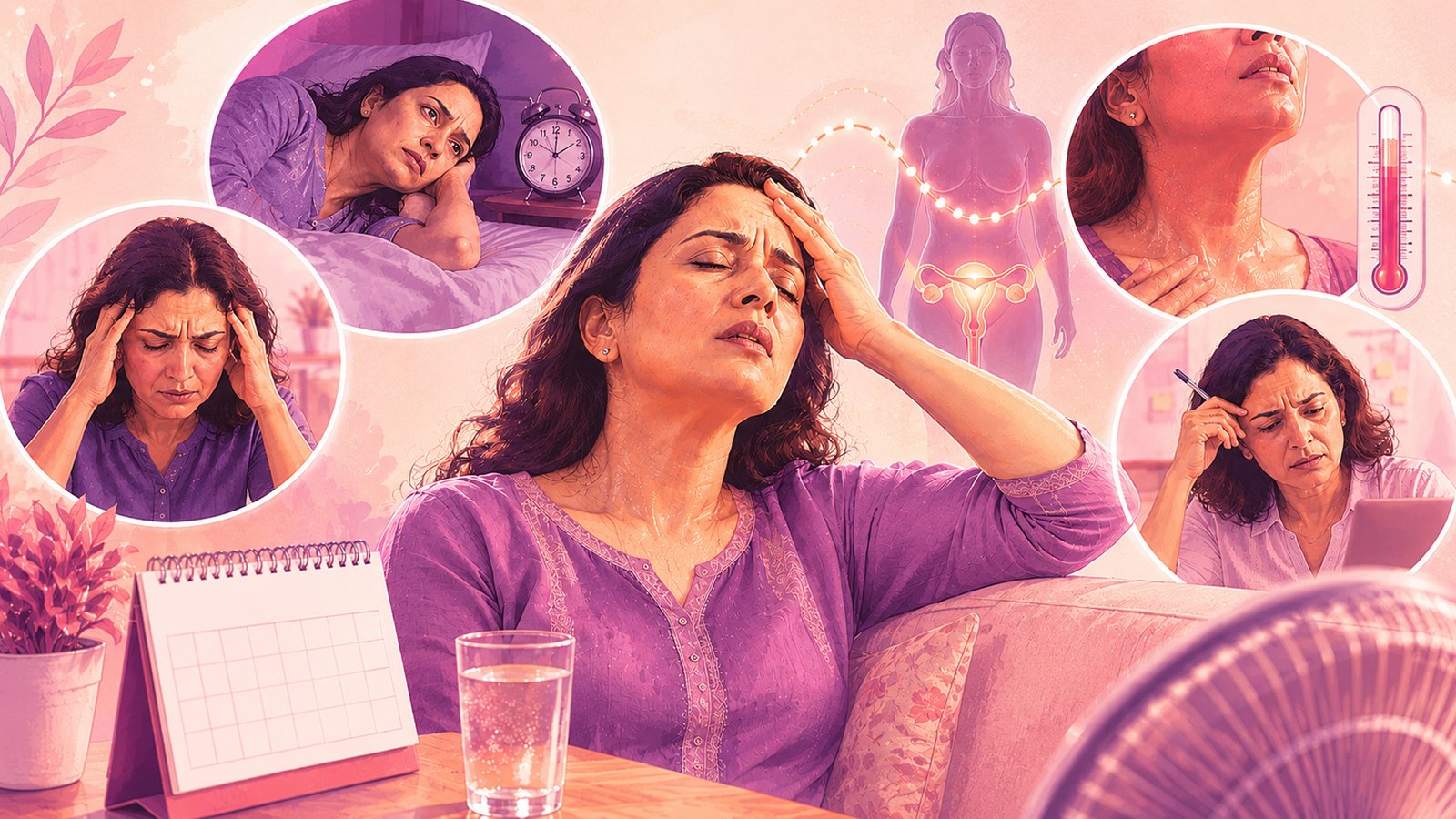
A woman in her early 40s may arrive at the clinic with a puzzling collection of complaints: her once-predictable period has started appearing early, she wakes at 3 a.m. drenched in sweat, and small irritations now feel disproportionately large. She may wonder whether it is stress, a thyroid problem, ageing — or all three. Often, the missing word is perimenopause.
Perimenopause is not menopause itself. Menopause is a single milestone, confirmed only after 12 consecutive months without a period for which there is no other explanation. Perimenopause is the shifting hormonal runway leading up to it. It can begin while periods are still regular and fertility, though declining, has not disappeared.
Menopause is a date; perimenopause is a journey
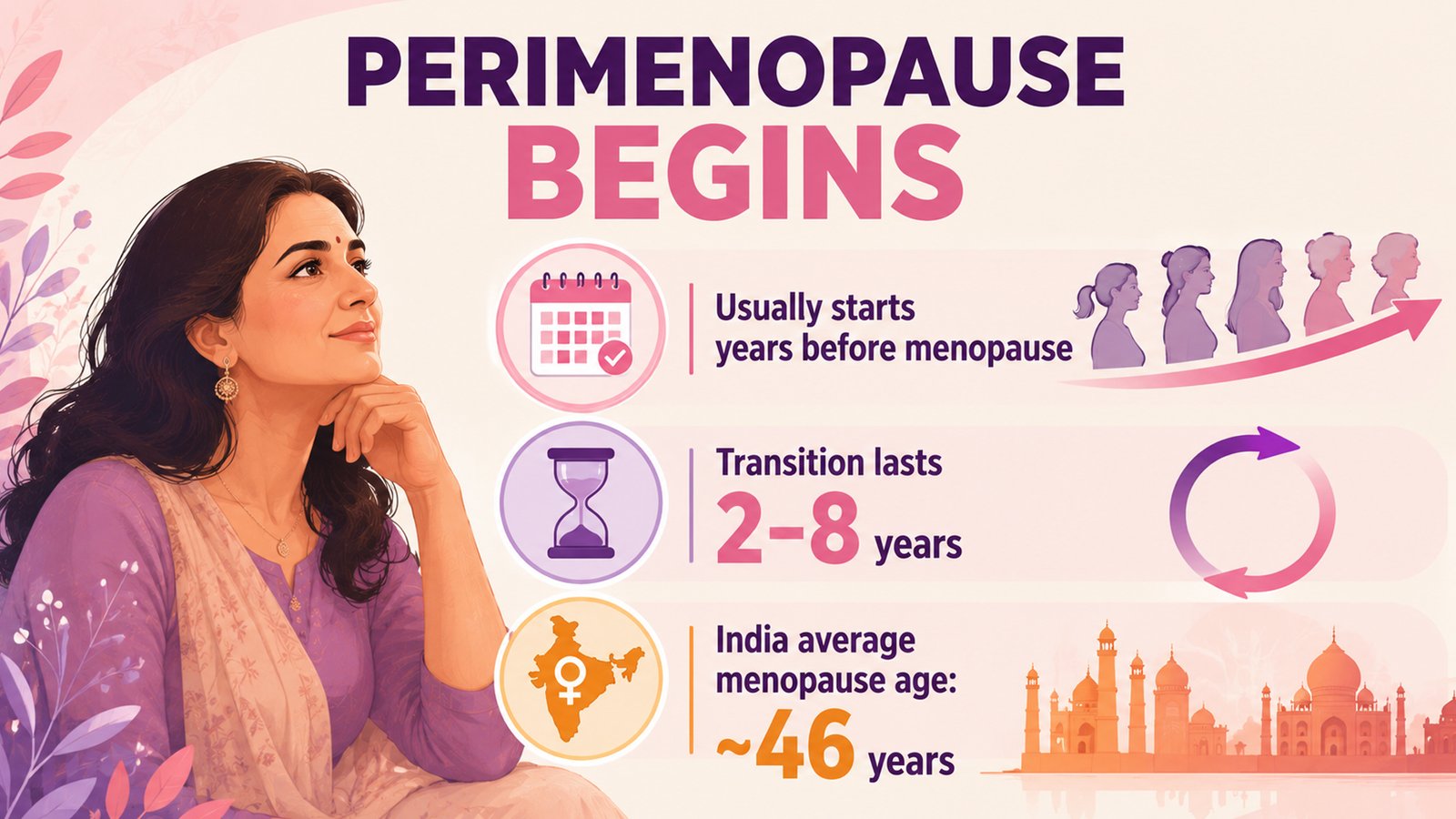
Globally, natural menopause most often occurs between 45 and 55. India deserves its own context: a 2024 analysis of the NFHS-5 and Longitudinal Ageing Study in India estimated the average age of natural menopause at about 46 years, with substantial variation between states. Since the transition can last two to eight years, averaging roughly four, symptoms may begin well before many women expect them.
There is no universal sequence. Some women notice only altered periods. Others experience hot flushes, poor sleep, low mood, headaches, joint pains, vaginal dryness or difficulty concentrating. Symptoms may come in waves, vanish for months and return. That unpredictability is not imagined; it reflects what the ovaries are doing.
The ovaries do not simply switch off
By midlife, the number and responsiveness of ovarian follicles have fallen. The brain tries harder to recruit a follicle each month, but ovulation becomes less reliable. Oestrogen does not descend smoothly like water draining from a tank: it may surge, plunge and surge again. Progesterone is produced mainly after ovulation, so cycles without ovulation often bring less progesterone exposure. The result is hormonal variability before the eventual low-oestrogen state after menopause.
This explains why a single hormone measurement can be misleading. A blood test may capture a high or low value on one particular day without describing the overall transition. In women aged 45 to 55 with a typical menstrual pattern and symptoms, the latest British Menopause Society advice says hormone blood tests are generally not required for diagnosis or routine monitoring. Tests still matter when the story is atypical — especially symptoms before 40, suspected pregnancy, thyroid disease, anaemia or another medical cause.
Why periods become unpredictable
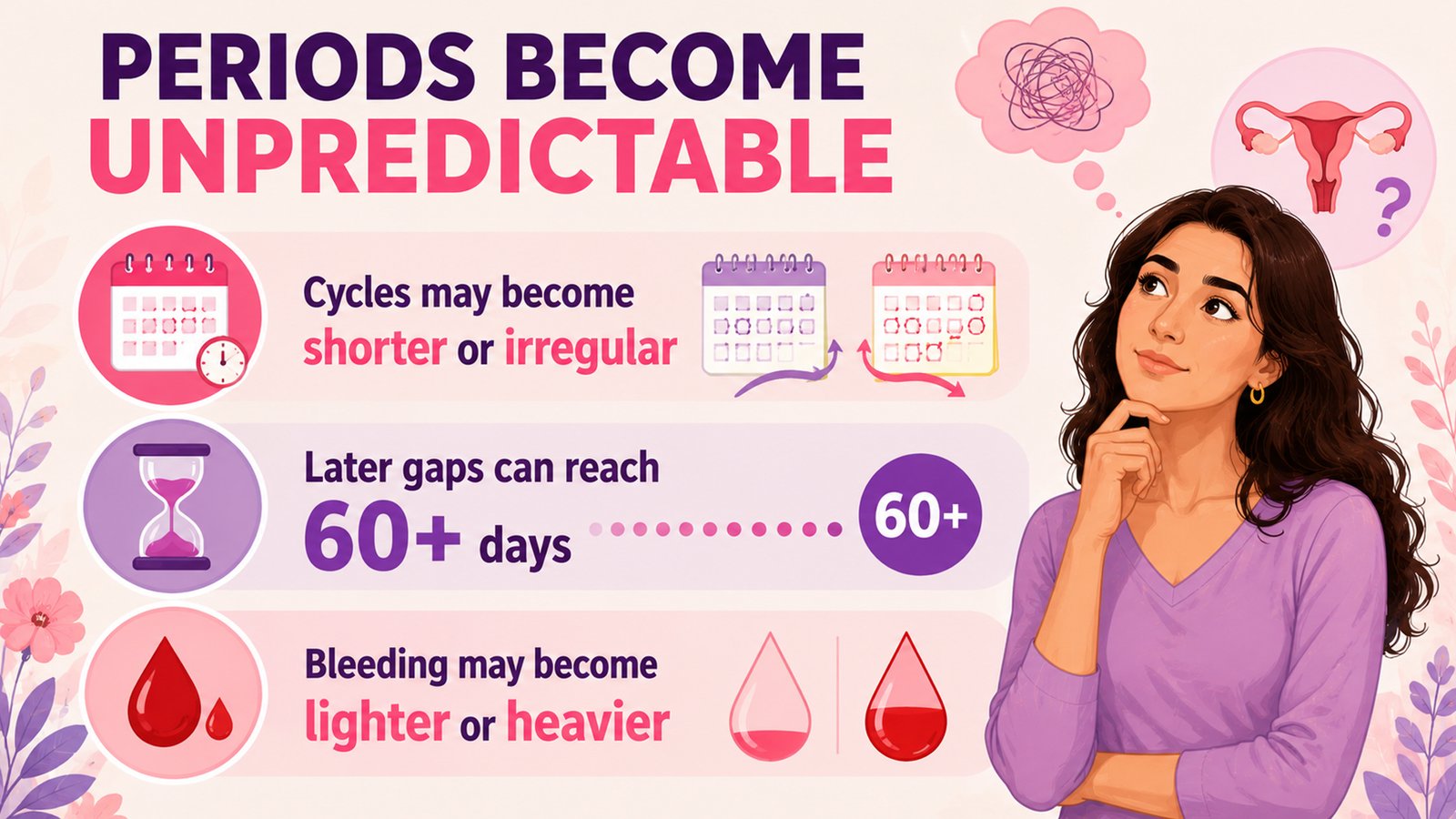
Early in the transition, cycles often shorten. Later, their length may differ by at least seven days from one cycle to the next; in the later transition, gaps of 60 days or more can occur. Bleeding may be lighter, heavier, shorter or prolonged. These recognised patterns arise from erratic hormone production and less-frequent ovulation. Without orderly ovulation and progesterone, the uterine lining may build and shed less predictably.
But “it is probably perimenopause” must never become a reason to ignore abnormal bleeding. Fibroids, polyps, adenomyosis, pregnancy-related problems, thyroid disorders, medication effects, cervical disease and abnormalities of the uterine lining can coexist at this age. New very heavy or prolonged bleeding, bleeding between periods or after sex, or symptoms of anaemia deserve assessment. Any bleeding after 12 months without periods is postmenopausal bleeding and should be checked promptly; the RCOG notes that around one in ten women presenting with postmenopausal bleeding may have cancerous cells in the uterine lining, although most do not.
Why the body’s thermostat misfires
A hot flush is not merely ‘feeling warm’. Hormonal change alters neural signalling in the hypothalamus, the brain’s temperature-control centre. The leading model involves specialised KNDy nerve cells becoming more active as oestrogen falls; their projections can trigger heat-loss mechanisms such as widening skin blood vessels and sweating. The face and chest flush, the heart may race, and chills can follow as the body then tries to regain heat.
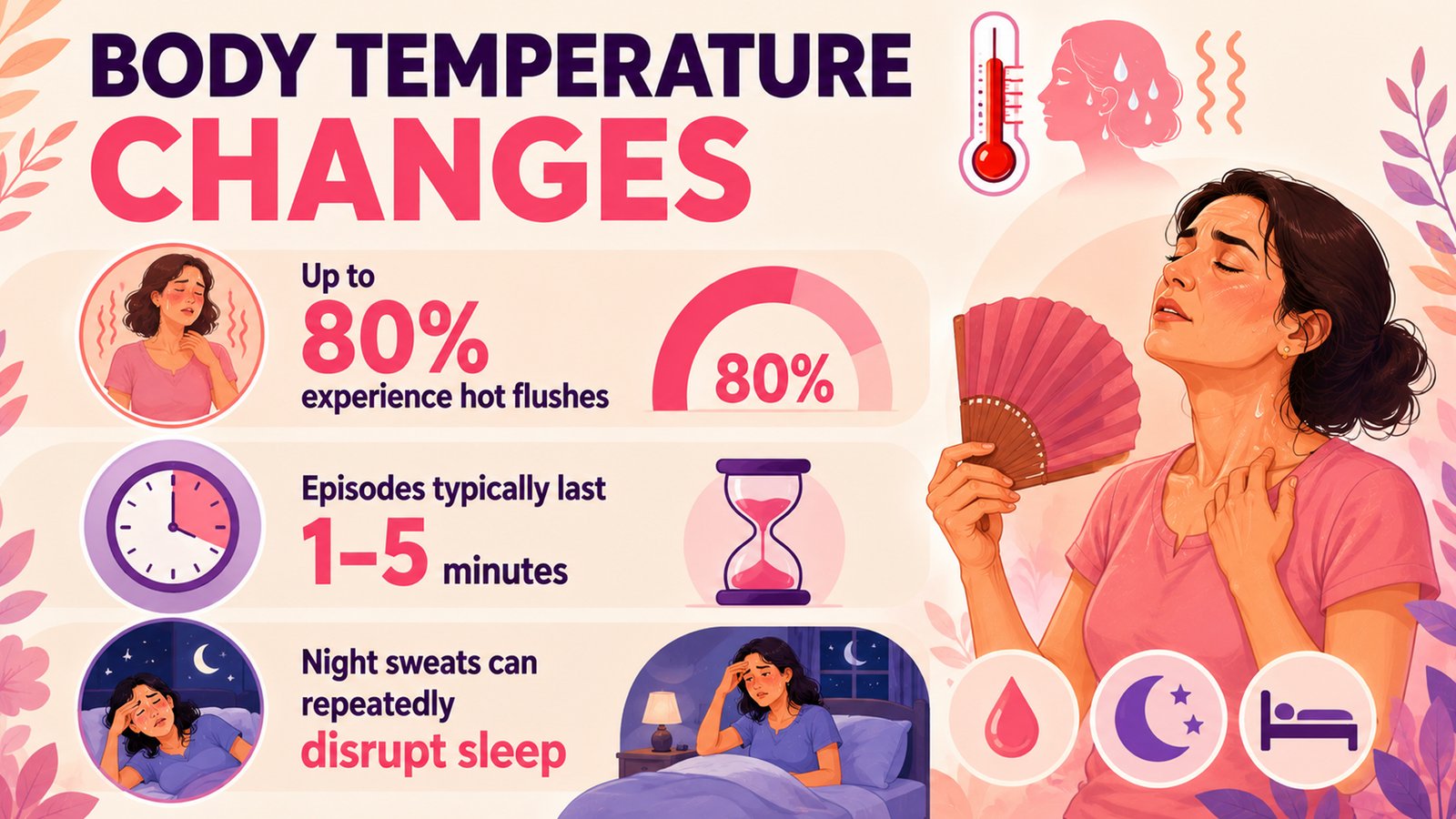
Up to 80% of women experience hot flushes or night sweats at some point in the transition. A typical episode lasts only one to five minutes, yet repeated flushes can fragment an entire night and undermine the following day. In a hot Indian summer, the symptom can be mistaken for weather — but a flush often arrives abruptly, concentrates over the face, neck and chest, and may be accompanied by palpitations or anxiety.
Why sleep, mood and memory become entangled
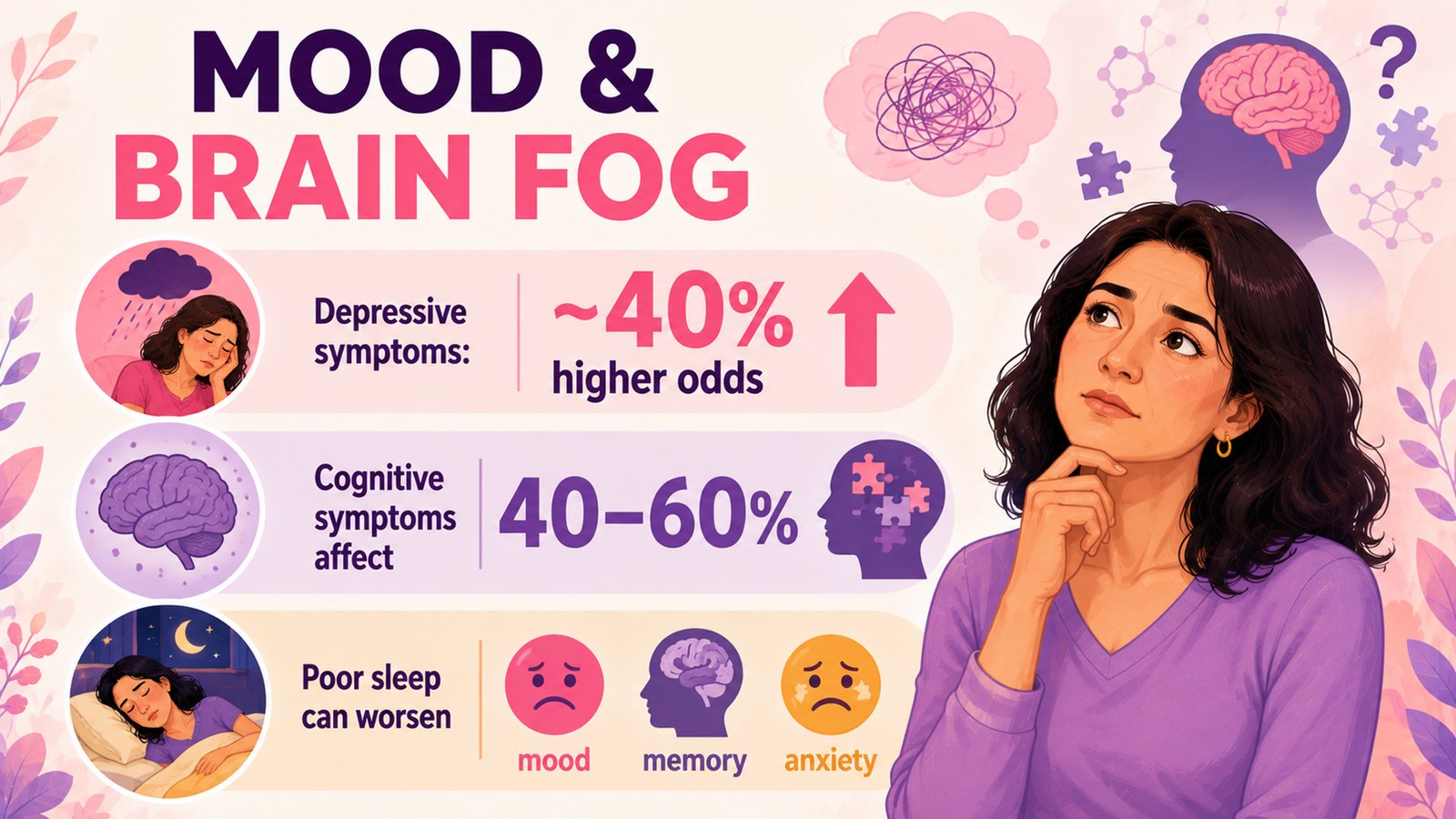
Night sweats are an obvious sleep thief, but they are not the only one. Hormonal change may affect sleep regulation, while midlife also brings work pressure, caregiving, pain and urinary symptoms; conditions such as sleep apnoea can coexist. Poor sleep can worsen irritability, anxiety and memory complaints. These symptoms form a loop rather than four isolated problems.
Mood changes deserve particular respect. A 2024 systematic review and meta-analysis found that perimenopausal women had about 40% higher odds of depressive symptoms or a depression diagnosis than premenopausal women. This is a relative increase, not a prediction that every woman will become depressed. Previous depression, severe premenstrual mood symptoms, stressful life events and disrupted sleep may increase vulnerability. Persistent hopelessness, loss of pleasure, disabling anxiety or thoughts of self-harm need proper mental-health assessment, not dismissal as ‘just hormones’.
Then there is ‘brain fog’: losing a familiar word, forgetting why one entered a room, or struggling to sustain attention. 40% to 60% of midlife women report cognitive symptoms during the transition. These changes are usually mild and do not mean dementia, but sleep loss, depression, thyroid disease, vitamin deficiencies and medicines should be considered when symptoms are marked or progressive.
The rest of the body is listening too
The transition is felt far beyond periods and temperature. As oestrogen fluctuates and eventually falls, some women notice vaginal dryness, painful sex, urinary symptoms, migraine changes, aching joints or palpitations. Body composition may shift towards more abdominal fat, while age-related loss of muscle can quietly reduce metabolic health. Bone loss accelerates around menopause, making strength work, weight-bearing activity, adequate protein, calcium, vitamin D and avoidance of smoking worthwhile investments in later life.
Still, perimenopause should not become a catch-all diagnosis. Weight change is influenced by ageing, sleep, activity and diet; palpitations may reflect anaemia or a rhythm problem; fatigue may arise from thyroid disease or depression. Good care validates menopausal symptoms while remaining curious about alternatives.
Diagnosis is usually a conversation, not a test result
For most women over 45, the diagnosis is clinical: age, menstrual changes, symptoms, their impact, contraception, medical history and examination when indicated. Tracking periods, flushes, sleep and mood for six to eight weeks can reveal patterns and make a consultation far more useful. Under 45 — and especially under 40 — altered periods or menopausal symptoms warrant earlier review because premature ovarian insufficiency has implications for fertility, bone and cardiovascular health.
Pregnancy remains possible because occasional ovulation continues. Hormone replacement therapy is not contraception, so contraceptive needs must be discussed separately. Hormonal contraception can also mask bleeding patterns, making the timing of menopause harder to recognise.
What actually helps
Treatment should target the symptoms that matter to the woman, not a fashionable hormone number. Regular physical activity, resistance and weight-bearing exercise, less alcohol and stopping tobacco support long-term health. A consistent sleep schedule and management of cardiometabolic risks matter too. Lifestyle measures are not a moral test, however, and may not control severe symptoms.
For troublesome hot flushes and night sweats, updated NICE guidance recommends offering hormone replacement therapy after an individual discussion of benefits and risks. If the uterus is present, systemic oestrogen normally needs adequate progestogen to protect the uterine lining. Route and regimen matter: tablets, patches or gels are not interchangeable in every risk profile. HRT may also improve sleep when flushes are the cause, and local vaginal oestrogen can treat dryness and urinary symptoms with very low systemic absorption.
HRT is neither compulsory nor suitable for everyone. Evidence-based non-hormonal options exist, including menopause-specific cognitive behavioural therapy and certain prescription medicines; the choice depends on the dominant symptom, other illnesses and medicines, availability and preference. Unregulated ‘bioidentical’ mixtures and over-the-counter supplements deserve caution: quality, interactions and long-term safety may be uncertain, and ‘natural’ does not automatically mean safe. The RCOG’s May 2026 patient guidance emphasises shared, individualised decisions rather than a universal prescription.
The practical message
Perimenopause is a real physiological transition, not a failure of resilience. Its signature is variability: hormones fluctuate, periods change, the thermostat becomes oversensitive, and sleep, mood and concentration influence one another. Recognising the pattern can be profoundly reassuring — but recognition should open the door to assessment and treatment, not close it.
If symptoms are disrupting work, relationships, sleep or sexual health, there is no prize for simply enduring them. A careful consultation can separate expected transition from other disease, identify bleeding or mental-health red flags, and build a plan that fits the woman rather than forcing the woman to fit a single version of menopause.
This article provides general health information and is not a substitute for individual medical assessment.
(The author is a consultant obstetrician and gynaecologist based in Bengaluru.)