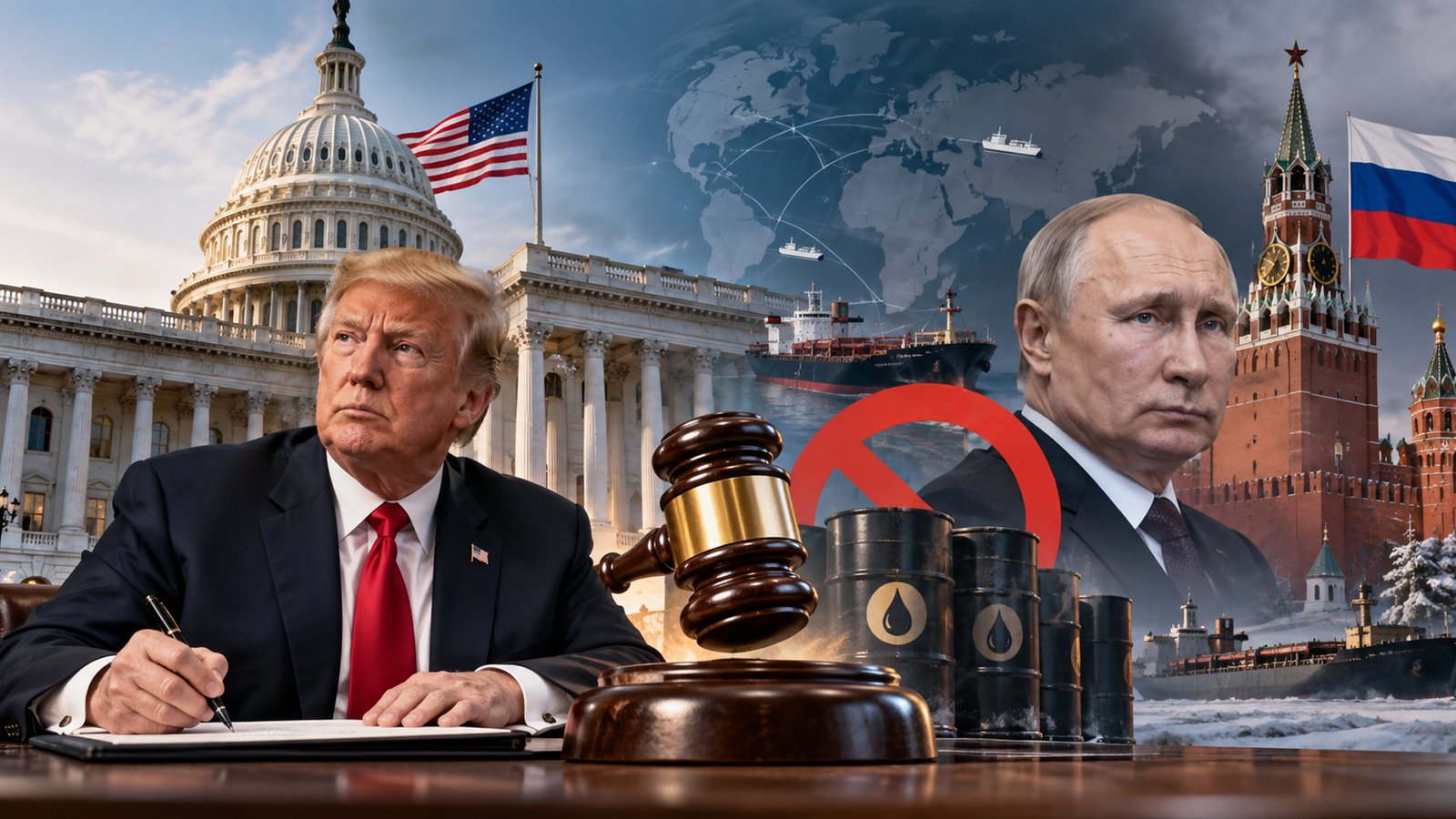
The US House of Representatives has passed a sweeping Russia sanctions bill that could expose India and other major buyers of Russian oil and gas to tariffs of up to 100%.
The legislation, known as the Lindsey O. Graham Sanctioning Russia and Iran Act of 2026, was approved by a 262-159 vote. It now goes to President Donald Trump, who is expected to decide whether to sign it into law. The US Senate had already passed the measure by an 86-11 vote in August.
The bill does not immediately impose a 100% tariff on Indian goods. Instead, it gives the US president the authority to impose tariffs of up to 100% on countries that continue buying Russian oil or natural gas. India and China are among the biggest buyers of Russian crude and have been specifically identified as countries that could be affected.
That distinction is important. House approval creates the legal route for possible tariffs, but no new 100% duty on Indian exports begins automatically with the passage of the bill. Any such measure would require a decision by the Trump administration after the legislation becomes law.
The legislation is part of a wider US effort to increase economic pressure on Russia over its war in Ukraine. It proposes tougher sanctions on Russian officials, banks and parts of the country’s energy sector. It also targets vessels linked to the so-called shadow fleet, which Washington and its allies accuse of helping Russia move energy despite existing sanctions.
The bill also contains measures concerning Iran, including an extension of certain sanctions. Its progress gained momentum after negotiations involving the late Senator Lindsey Graham, whose name was later attached to the legislation.
The potential impact on India is significant because Russian crude has become an important part of the country’s energy supply since the Ukraine war disrupted traditional oil trade. Indian refiners increased purchases of discounted Russian crude, helping them manage input costs while maintaining fuel supplies in the domestic market.
India has now responded cautiously to the latest US move. The Ministry of External Affairs said the country remains committed to ensuring energy security for its 1.4 billion people and will continue to diversify its sources of energy according to market conditions.
The government also said India would take all necessary steps to protect its trade and economic interests.
The issue comes at a sensitive time for India-US trade relations. The two countries have been working through differences over tariffs, market access and other trade issues. The possibility of additional US duties on Indian exports could add another complication to those negotiations.
A 100% tariff, if eventually imposed, would make Indian products entering the US substantially more expensive. The impact would depend on which products were covered and how the measure was implemented. Exporters in sectors that rely heavily on the American market could face higher costs and weaker competitiveness.
The effects could also extend beyond trade. If India were to reduce its Russian oil purchases because of US pressure, refiners would have to look for alternative suppliers. Those purchases could come from the Middle East, the United States, Latin America or other producing regions, depending on price, availability and shipping costs.
Any significant shift in India’s crude sourcing could therefore affect the country’s import bill and energy costs. Global crude prices could also respond if major buyers were forced to change their supply arrangements.
India has repeatedly maintained that its Russian oil purchases are guided by energy security and commercial considerations. Russian crude became particularly attractive to Indian refiners when Western restrictions on Russian energy created price discounts.
The proposed US sanctions introduce a new layer of uncertainty into that arrangement. Indian refiners could face a difficult choice if Washington eventually links access to the US market with purchases of Russian energy.
The bill also gives the US president considerable discretion. The legislation includes provisions allowing exemptions under certain circumstances, including for countries taking significant steps to reduce their dependence on Russian energy. It also gives the administration some flexibility in applying the measures.
Supporters of the bill argue that targeting major buyers of Russian energy could put additional pressure on Moscow by reducing the revenue generated from oil and gas exports. The objective is to make it harder for Russia to finance its war effort.
Some US lawmakers, however, raised concerns about the broader tariff powers being handed to the president. Democratic lawmakers argued that the measure could expand presidential authority over trade policy and potentially affect countries beyond Russia.
The House vote reflected those divisions. While most Republicans supported the bill, dozens of Democrats also voted in favour. The final legislation nevertheless secured the required majority and now awaits action from the White House.
China is also closely watching the development. Along with India, it is one of the largest purchasers of Russian crude. Any decision by Washington to use the tariff provision against major Russian energy buyers could therefore have consequences for global oil markets and US relations with both Asian economies.
The immediate next step is Trump’s decision on the legislation. Even if he signs it, a 100% tariff on India would not automatically follow. The administration would have to decide whether to invoke the authority, against which countries, and at what level.
India, meanwhile, is expected to weigh its energy requirements against the potential impact on exports to the US. The development puts both trade and energy security at the centre of an increasingly complicated India-US economic relationship.
The coming weeks could therefore be important for Indian refiners, exporters and policymakers as New Delhi assesses the potential consequences of the US Russia sanctions bill and Washington decides how far it intends to use the new tariff powers.