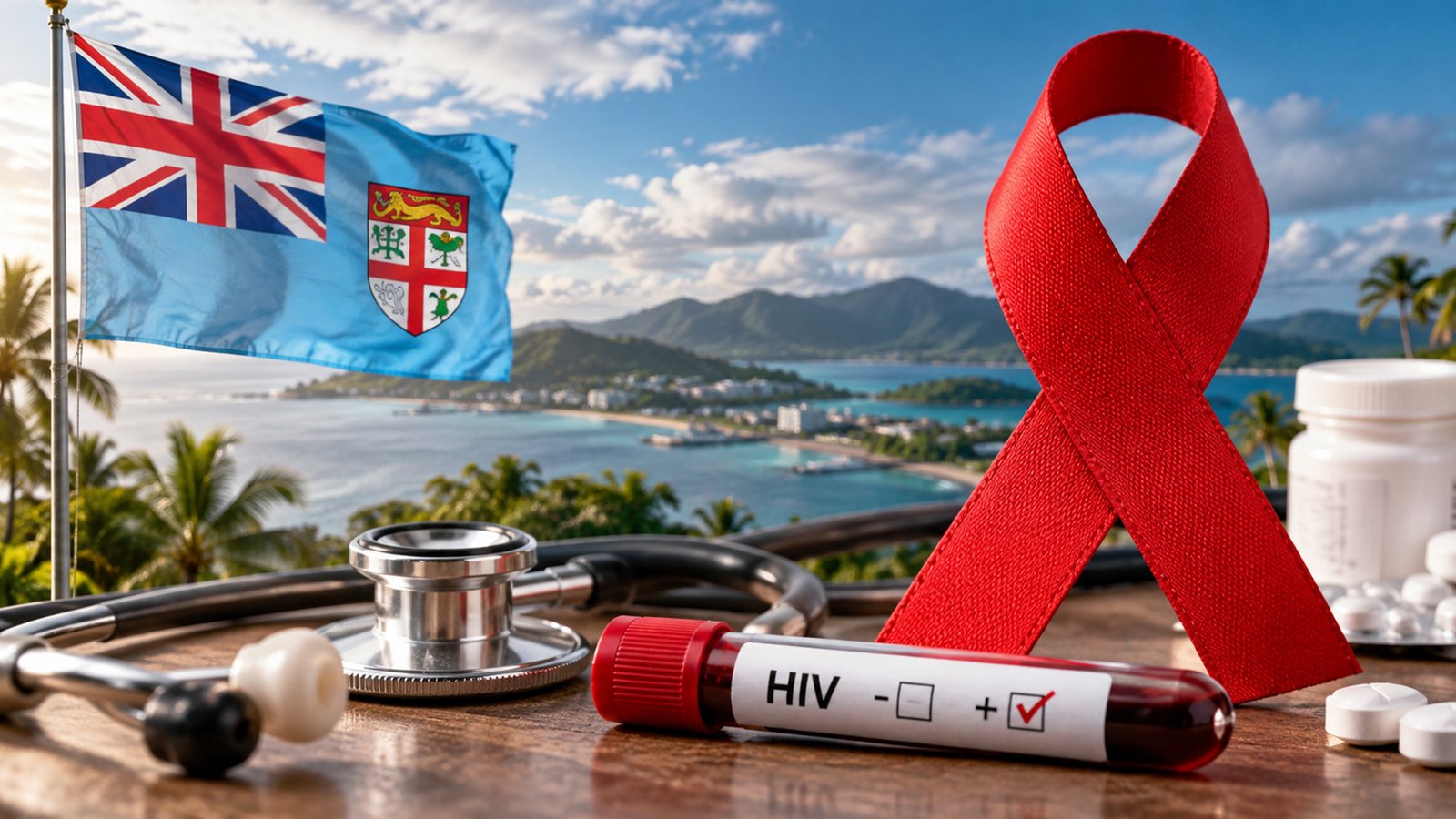
Fiji has declared a national HIV emergency after a sharp rise in infections put growing pressure on its healthcare system. The Pacific island nation recorded 2,016 new HIV diagnoses in 2025, the highest annual figure reported so far. Health authorities are now expanding testing, treatment and prevention services as they try to slow the spread of the virus.
Health Minister Ratu Atonio Lalabalavu announced the emergency this week, saying the situation required a response beyond routine outbreak measures. Fiji, a country of fewer than one million people, is estimated to have about one in 60 adults living with HIV. Five years ago, the estimate was around one in 167 adults.
The number of new diagnoses has climbed rapidly. Fiji recorded 1,583 new cases in 2024 before the figure rose to 2,016 in 2025, an increase of 27%. Health officials say the increase reflects both continuing transmission and better detection as testing and surveillance have expanded across the country.
UNAIDS estimates that about 9,100 people were living with HIV in Fiji in 2025. The agency says new HIV infections increased 12-fold between 2010 and 2025, making Fiji one of the countries experiencing the sharpest increases in new infections globally.
The figures have also exposed major gaps in diagnosis and treatment. Only 39% of people estimated to be living with HIV in Fiji knew their status in 2025. Just 22% were receiving antiretroviral treatment, according to UNAIDS.
That means thousands of people may still be unaware that they have HIV or are not receiving medicines that can control the virus. Early diagnosis and regular treatment are important because antiretroviral therapy can suppress HIV, protect the immune system and prevent sexual transmission when the virus remains undetectable.
The reasons behind Fiji’s worsening HIV situation are varied. Sexual transmission accounts for more than half of cases where the mode of transmission is known. Injecting drug use is another major factor, accounting for more than 42% of known transmission routes, according to UNAIDS.
The growing use of illicit drugs, particularly methamphetamine, has increased concern around unsafe injecting practices. Sharing needles and other injecting equipment can allow HIV to spread quickly between people.
Fiji plans to strengthen harm-reduction measures as part of the emergency response. The government is preparing to introduce a needle and syringe programme while also expanding access to HIV prevention medicines.
Pre-exposure prophylaxis, or PrEP, will be made more widely available to people at higher risk of contracting HIV. Fiji is also considering long-acting prevention options, including injections that can be given twice a year.
Testing is another major priority. The government wants more people to know their HIV status while ensuring that testing remains voluntary and confidential. Health Minister Lalabalavu has said mandatory HIV testing is not being considered under Fiji’s current legal framework.
The response is also focusing on mothers and children. Fiji reported 59 babies acquiring HIV in 2025, with 18 dying before reaching their first birthday. The figures have increased pressure on health authorities to strengthen testing and treatment during pregnancy and prevent transmission from mothers to their children.
Community organisations are expected to play an important role in the response. Outreach workers can help connect people with testing, treatment and prevention services, particularly those who may not regularly use government health facilities.
Health officials are also concerned about stigma surrounding HIV. Fear of discrimination can prevent people from getting tested or seeking treatment. UNAIDS has stressed that HIV is not spread through everyday contact and that people on effective treatment who have an undetectable viral load do not sexually transmit the virus.
Fiji has created a Cabinet subcommittee to help coordinate the national response and address policy and implementation barriers. The government is working with UNAIDS, the World Health Organization and other partners to strengthen HIV prevention, treatment and community-based services.
The country’s latest HIV surveillance report also points to the importance of improved detection. Fiji has expanded testing and reporting systems in recent years, meaning some of the rise in recorded cases reflects better identification of infections. However, health authorities say the scale and speed of the increase cannot be explained by testing alone.
The emergency declaration is therefore intended to bring HIV higher up the national health agenda. Fiji now faces the difficult task of finding people who have not been tested, ensuring diagnosed patients remain on treatment and preventing new infections among vulnerable groups.
The country has already begun strengthening its response, including investment in diagnostics and wider access to HIV services. Treatment remains available free of charge in Fiji, while the government is working to expand the number of clinics providing HIV care.
The latest figures underline why speed matters. With infections rising rapidly and treatment coverage still low, Fiji’s response will depend not only on medicines and testing but also on reaching communities, reducing stigma and making prevention services easier to access.
The national emergency declaration is ultimately a call for faster action. Fiji is seeking to bring more people into testing and treatment while tackling the factors driving new infections, particularly unsafe injecting practices and gaps in sexual-health services.