Britain and the European Union have agreed on a landmark deal to reset relations, marking a significant step towards rebuilding economic and political ties nearly a decade after the UK voted to leave the bloc.
The agreement, announced following a UK-EU summit in Brussels on Friday, November 20, covers food and agricultural trade, carbon markets and youth mobility. It also sets out closer cooperation on migration, security and defence, as both sides seek to address some of the economic and practical difficulties created by Brexit.
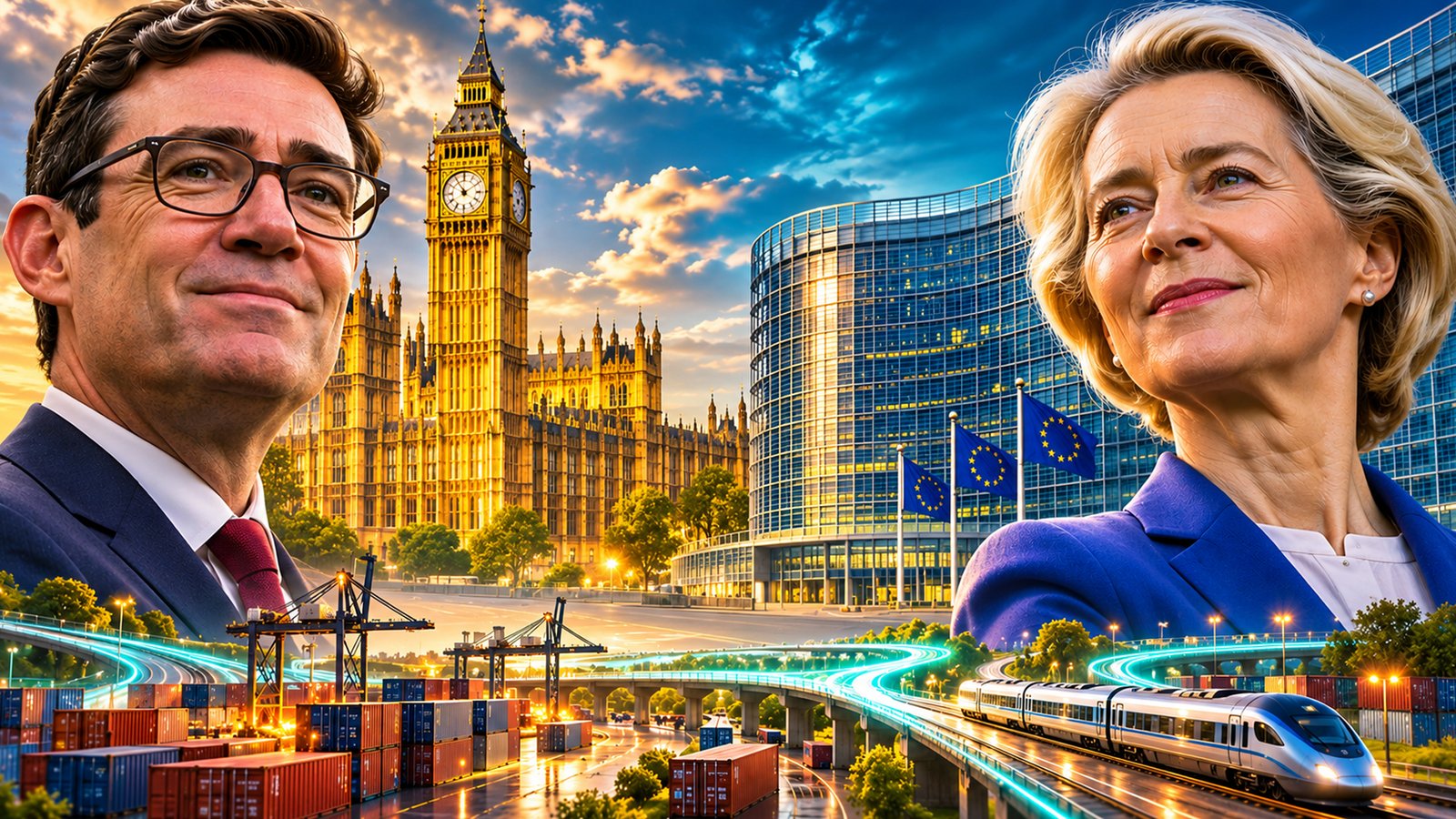
British Prime Minister Andy Burnham described the agreement as a new chapter in relations between Britain and Europe, saying it would benefit businesses, consumers and young people on both sides. European Commission President Ursula von der Leyen and European Council President Antonio Costa attended the summit.
The agreement follows months of negotiations and is aimed at reducing trade barriers, improving economic cooperation and restoring opportunities that were restricted after Britain’s departure from the EU.
According to the British government, the package could increase the country’s gross domestic product by 0.5% by 2040, equivalent to around £17 billion annually. The government believes the measures will strengthen economic growth while making trade with European countries easier.
One of the most important elements of the agreement concerns food and agricultural trade. The UK and EU have agreed to ease a large number of checks and documentation requirements on the movement of animals, plants and related products across their borders.
The arrangement is expected to reduce the additional costs and delays faced by exporters since Brexit. British producers of meat, dairy products, flowers and other agricultural goods could benefit from smoother access to European markets.
Export Health Certificates, which can cost businesses up to £200 each, are expected to be scrapped under the new arrangement. The move could also reduce food wastage and help fresh produce reach supermarket shelves more quickly.
The agreement is estimated to contribute up to £5.1 billion annually to the British economy by 2040. It is also expected to simplify the movement of food and agricultural products between Great Britain and Northern Ireland.
However, the new arrangements are not expected to take effect immediately. The food trade agreement is scheduled to become operational from March 1, 2028, subject to the completion of the necessary procedures.
The second major component involves linking the UK’s emissions trading system with that of the European Union. The move is intended to create a larger carbon market and reduce additional costs for industries operating across both economies.
Under the arrangement, British exports such as steel and aluminium will be exempt from certain EU carbon border levies. This is expected to improve the competitiveness of British manufacturers and remove an important obstacle for companies exporting industrial goods to Europe.
The British government estimates that linking the two emissions trading systems could contribute around £3.8 billion annually to the UK economy by 2040. The arrangement is expected to come into force in 2028.
Youth mobility is another significant part of the post-Brexit reset deal. The proposed Youth Experience Scheme will allow up to 100,000 young people from each side to live, work, study and travel in the UK or EU for periods of up to three years.
The programme will cover people aged between 18 and 31 and is intended to restore some of the opportunities that young Britons and Europeans enjoyed before Brexit.
Unlike conventional work visa arrangements, participants will not need a job offer or meet specific salary and language requirements. However, the scheme will be time-limited, visa-based and subject to a cap. Participants will not have access to benefits or the right to bring dependants.
The scheme is expected to become operational by January 2030 at the latest. Britain has also agreed to rejoin the EU’s Erasmus+ student exchange programme in 2027, providing additional opportunities for students to study abroad.
Despite the progress, disagreements over university tuition fees remain unresolved. The European Union wants young European students attending British universities to pay domestic tuition fees rather than the higher international rates introduced after Brexit.
The UK government has resisted the proposal, citing financial pressures on universities. Both sides have agreed to continue discussions over the next six months in an attempt to resolve the issue.
Migration and border security also feature prominently in the agreement. Britain and the EU have committed to closer cooperation to tackle illegal migration and disrupt people-smuggling networks responsible for dangerous crossings across the English Channel.
The proposed cooperation includes intelligence sharing, stronger border management and greater coordination with European agencies, including Europol and Frontex. Both sides have also agreed to work together with countries along migration routes to address the issue.
Beyond trade and mobility, the agreement outlines plans for greater cooperation in defence, cybersecurity and wider European security. The two sides intend to work together against hostile state activities, cyberattacks and Russia’s so-called shadow fleet, which has raised concerns over sanctions enforcement and maritime security.
The agreement also opens the door to further discussions on reducing restrictions faced by British musicians, performers and touring artists working in European countries. Both sides have agreed to explore ways to make cross-border touring easier.
However, the reset does not mean Britain is rejoining the European Union or reversing Brexit. The country will continue to remain outside the bloc’s political and economic structures, even as it moves towards closer cooperation in selected areas.
The arrangement also requires Britain to align with relevant EU regulations in certain sectors, particularly food standards and emissions trading. While British representatives will be permitted to attend relevant EU discussions as observers, they will not have voting rights.
Opposition to the agreement has already emerged from eurosceptic political groups. Reform UK leader Nigel Farage criticised the deal, describing Burnham’s approach as naive and accusing the European Union of using the negotiations to secure concessions from Britain.
Nevertheless, the agreement represents an important attempt to move beyond the divisions that followed the 2016 Brexit referendum. While its economic benefits will depend on implementation, the deal signals a willingness on both sides to rebuild trust and establish a more practical relationship.