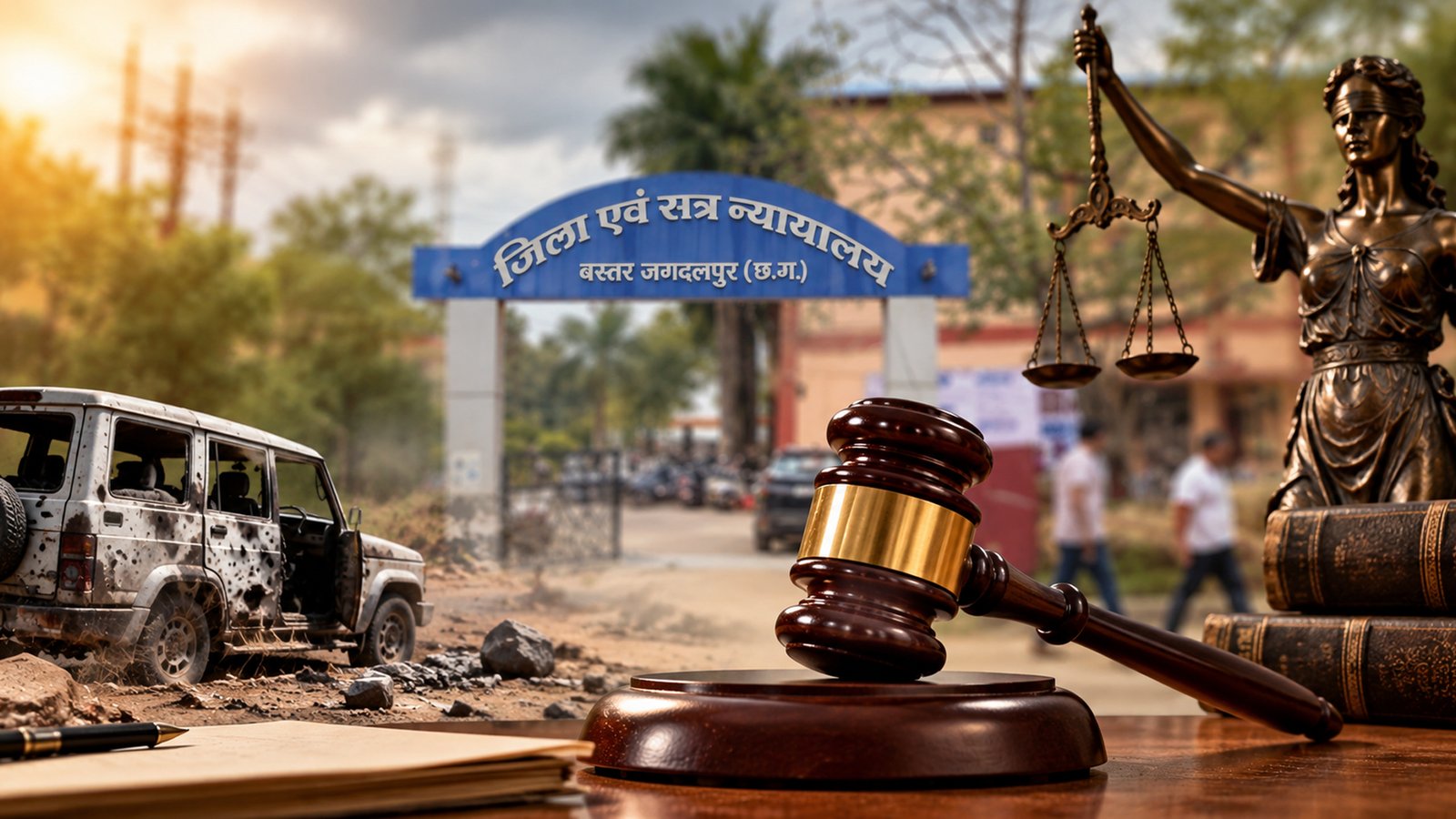
A special National Investigation Agency (NIA) court in Jagdalpur has sentenced all 10 convicts in the 2013 Jhiram Valley Maoist attack case to death, bringing a major development in one of Chhattisgarh’s most closely watched political violence cases. The sentencing came more than 13 years after the deadly ambush in Bastar claimed the lives of senior Congress leaders, civilians and security personnel.
Special Judge Ajay Singh Rajput pronounced the death sentences on September 16, days after the court convicted the 10 accused on September 5. The court found them guilty under provisions of the Indian Penal Code, Unlawful Activities (Prevention) Act, Arms Act and Explosive Substances Act.
The attack took place on May 25, 2013, in Jhiram Valley in Bastar’s Darbha area. A Congress convoy returning after a Parivartan Rally was travelling along the national highway when Maoists launched an ambush. The attack began with an improvised explosive device blast and was followed by heavy firing and grenade attacks.
The NIA has said 27 people were killed in the attack and more than 35 were injured. Some other accounts have put the death toll at 29, reflecting differences in how deaths from the incident have been counted.
Among those killed were then Chhattisgarh Congress president Nand Kumar Patel and his son Dinesh Patel, former state minister and opposition leader Mahendra Karma, former Union minister Vidya Charan Shukla, and Congress leader and former MLA Uday Mudliyar. Their deaths dealt a severe blow to the state Congress leadership ahead of the 2013 Assembly elections.
The 10 convicts sentenced to death are Pramila Modiyam alias Jyoti, Chaitu Lekam alias Munna, Sumita Punem Modiyam, Mukka Mandavi, Kosa Kawasi alias Kosaram, Aayata Markam, Madkami Deva, Joga Madkami, Banjami Sanna alias Chamru and Mahadev Nag. Two of the convicts are women.
The case has been marked by a long investigation and trial. The NIA registered an FIR against more than 150 people in connection with the attack. Eleven accused were eventually arrested, but one died during the trial. The remaining 10 faced the full proceedings that culminated in the September 5 convictions and the September 16 sentencing.
The investigation initially resulted in a chargesheet against nine accused in September 2014. A supplementary chargesheet filed a year later named 30 more accused, taking the total number of people chargesheeted to 39. The trial involving the 10 convicted accused included evidence from 101 prosecution witnesses.
Investigators have also named several senior CPI (Maoist) leaders in connection with the wider conspiracy surrounding the attack. The names included senior Maoist leader Thippiri Tirupathi alias Devuji, commander Barse Deva and Central Committee member Ganesh Uikey. Other senior leaders were also mentioned during the investigation.
The latest verdict, however, does not immediately mean that the 10 convicts will be executed. A death sentence handed down by a trial court must go through the higher judicial process. The convicts have been given 30 days to appeal against the verdict in the High Court. The defence has indicated that it will challenge the judgment.
The lengthy legal process has kept the Jhiram Valley attack in public memory. Families of the victims have continued to seek accountability for the wider network allegedly involved in the ambush, while questions remain over those named during the investigation who were not part of the present trial.
The attack remains one of the most significant Maoist strikes against political leaders in Chhattisgarh. More than a decade later, the death sentences have brought the trial against these 10 accused to a new stage, while the next legal battle will now move to the High Court.
The Jhiram Valley case has also renewed attention on the history of Maoist violence in Bastar, the security challenges faced in the region and the long judicial process involved in prosecuting major insurgency-related attacks. The September 2026 verdict marks an important point in that process, but the final outcome will depend on the appeals and subsequent judicial proceedings.