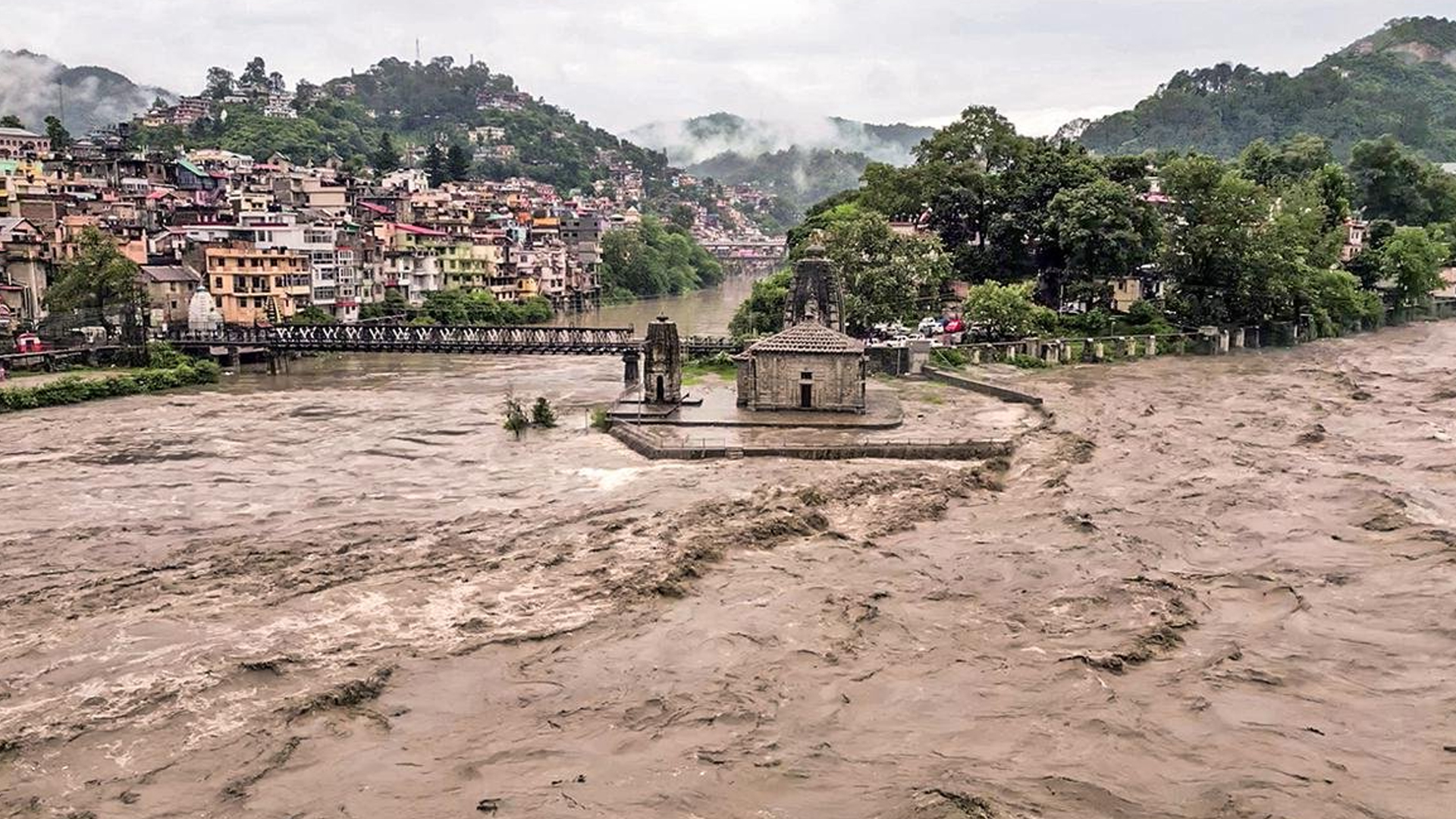
North India continues to grapple with the devastating impact of incessant monsoon rains, which have caused extensive flooding, landslides, and severe disruptions across multiple states. As of 11 am on August 28, 2025, the death toll in Jammu and Kashmir has risen to 41, with 34 casualties resulting from the Vaishno Devi landslide, one of the deadliest incidents in the region this monsoon season. The swollen Tawi River, locally known as Surya Putri, has inundated hundreds of homes, submerged farmland, destroyed livestock, and displaced more than 6,000 residents within a single day. Authorities have described the situation as “critical,” warning that continued heavy rainfall could exacerbate the crisis.
In Himachal Pradesh, the torrential downpour has triggered landslides that have damaged key infrastructure. The Chandigarh-Manali Highway remains closed following a landslide in Banala, while restoration work is underway. In Kullu district, heavy rains have washed away portions of the highway as the Beas River surged, cutting off road links between Mandi and Kullu. All vehicular traffic on this route has been suspended, and local authorities have issued travel advisories warning residents and tourists to avoid these regions. Meanwhile, the Jammu-Srinagar National Highway (NH-44) has been closed for vehicular movement from Jakeni (Udhampur) towards Srinagar due to extensive damage at several points between Jakheni and Chenani. No movement is permitted from Nagrota, affecting both passenger and goods transportation.
In Delhi, the River Yamuna has crossed the danger mark, flowing at 205.39 meters as of 9 pm on August 27, compared to the danger threshold of 205.33 meters. Authorities have set up flood relief camps in Mayur Vihar to accommodate residents living in low-lying areas near the river. Local residents have moved into these temporary shelters, with officials emphasizing the importance of evacuation to prevent casualties. The India Meteorological Department (IMD) has issued a “Thunderstorm with rain” forecast for Delhi from August 28 through August 31, indicating that the risk of further flooding remains high.
The Vaishno Devi Shrine Board has assumed responsibility for sending the bodies of landslide victims to their native places. Fourteen victims are receiving treatment at the Shri Mata Vaishno Devi Narayana Superspeciality Hospital. BJP MP Jugal Kishore Sharma confirmed that the Shrine Board has taken steps to ensure the safe return of the deceased to their families. The landslide at the pilgrimage site has compounded the region’s already challenging rescue and relief operations, with local authorities and disaster management teams working tirelessly to evacuate stranded residents and provide immediate medical assistance.
Beyond Jammu and Kashmir and Delhi, the broader northern plains, including parts of Punjab and Himachal Pradesh, have been affected by rivers overflowing due to snow-fed Himalayan tributaries and heavy upstream rainfall. Agricultural lands have been submerged, affecting thousands of farmers, while damage to rural infrastructure—including roads, bridges, and electricity networks—has disrupted daily life. Train services have been suspended along key routes in the region, and schools and universities in Kashmir and Himachal Pradesh have remained closed as a precautionary measure.
Authorities have emphasized the importance of coordinated rescue efforts, with disaster response teams deployed across multiple states. The IMD continues to monitor rainfall patterns and river levels closely, issuing warnings where necessary. The coming days are expected to be critical, as sustained rainfall may lead to further flooding and landslides, potentially endangering more lives and causing additional property damage.
Also Read: Monsoon Chaos Unfolds Across Jammu & Kashmir and Beyond