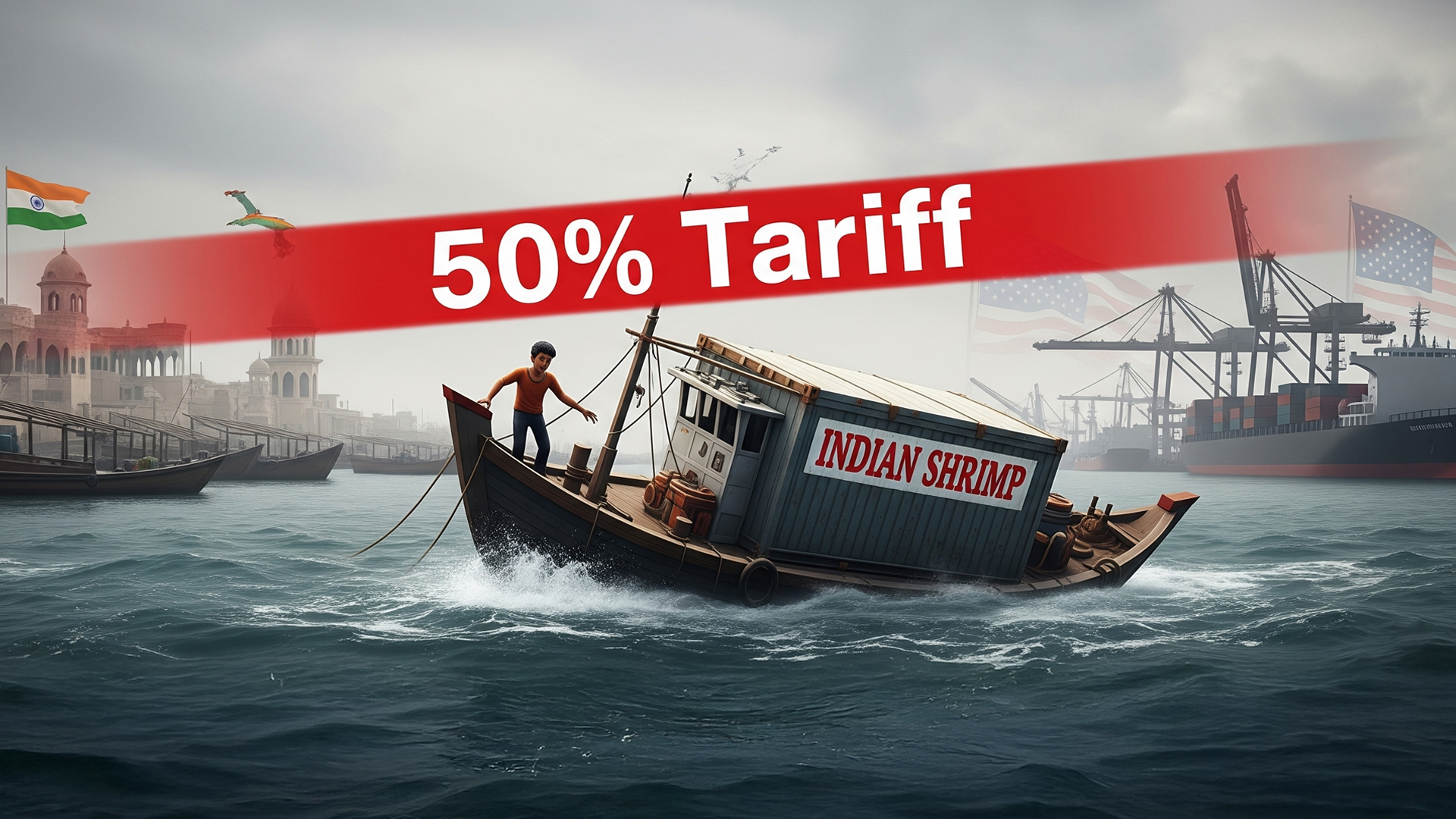
India’s shrimp industry is confronting a severe downturn following the United States’ imposition of a 50% tariff on Indian shrimp imports, effective August 27, 2025. The tariff includes a 25% reciprocal duty and a 25% penalty linked to India’s purchase of Russian oil, pushing the total burden to over 58%. The move threatens to make Indian shrimp exports to the U.S. increasingly uncompetitive, dealing a significant blow to one of the country’s key seafood sectors.
The U.S. has traditionally been the largest market for Indian shrimp, accounting for nearly half of the country’s $7 billion seafood export industry. Despite previous anti-dumping and countervailing duties, the U.S. market remained lucrative due to easy access, repeat customer approvals, and high profit margins. Many Indian exporters, including major firms in Andhra Pradesh, Odisha, and Tamil Nadu, reported a sharp decline in shipments following the tariff hike. Some processors noted that shipments in August dropped from 100 containers to fewer than 25, reflecting the immediate impact of escalating costs that could not be passed on to buyers.
CRISIL Ratings has projected an 18-20% decline in India’s shrimp export revenues this fiscal year, even after a temporary surge in shipments during the first quarter in anticipation of the tariff hike. The agency highlighted that lower revenues, combined with reduced operating margins—expected to fall to a decadal low of 5.0-5.5%—would strain the financial health of shrimp exporters. Companies heavily reliant on the U.S. market are expected to face increased credit pressure, with interest coverage likely to moderate from 4.8 times last fiscal to 3.3 times this year.
The tariff increase is likely to have broader implications for shrimp farmers as well. Many farmers, particularly in Andhra Pradesh, are reconsidering investment in shrimp culture due to higher production costs, which include land lease, seed, feed, and investments in aeration and biosecurity. Rising risks of disease, lower harvests, and unprofitable global prices have already encouraged some to diversify into alternative, lower-risk crops. The new U.S. tariffs are expected to accelerate this trend, potentially affecting long-term shrimp production and supply.
While India enjoys strong domestic infrastructure and distribution networks in the U.S., other exporting nations such as Ecuador, Vietnam, Indonesia, and Thailand now gain a competitive edge with tariffs significantly lower than India’s. This shift is expected to reduce India’s share in the U.S. shrimp market, although CRISIL notes that exports to alternative markets such as the U.K., China, and Russia may partially offset losses in the second half of the fiscal year.
The Odisha government has announced interim support measures for the seafood sector, including interest subvention on working capital for processors and potential assistance for workers in shrimp and related industries. Nevertheless, the sector faces immediate challenges, including falling volumes, shrinking sales of high-value large shrimps, and eroded profit margins, all of which threaten the sustainability of shrimp farming and export operations.
The U.S. tariff imposition has also affected market sentiment, with shares of leading exporters such as Avanti Feeds and Apex Frozen Foods declining by up to 12%. The sudden policy change underscores the vulnerability of India’s shrimp industry to global trade shifts and emphasizes the need for diversification of export markets and increased domestic consumption to sustain the sector in the long term.
Also Read: Severe Flooding Hits Punjab and North India, Displacing Thousands