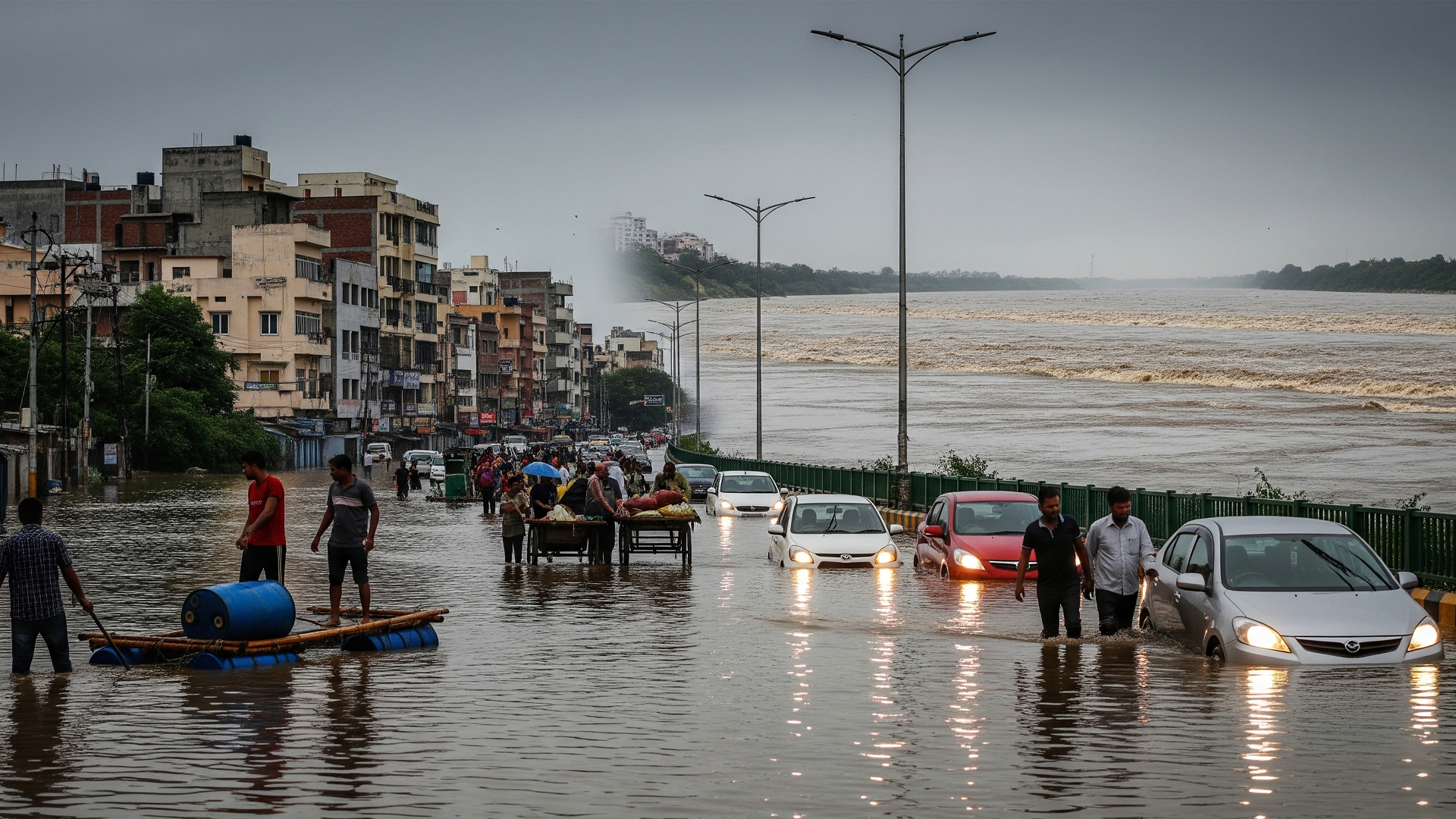
Large parts of the national capital remained underwater on Friday, even as the Yamuna River’s water level showed a marginal decline. Low-lying areas across Delhi and the NCR continued to face severe waterlogging, with residents wading through knee-deep water and using makeshift boats to navigate submerged streets.
The worst-affected localities include Kashmere Gate, Yamuna Bazaar, Monastery Market, Mayur Vihar, and Bela Road near the Vidhan Sabha, where roads remain inundated and traffic remains severely disrupted. In several places, vehicles stalled mid-route and water entered homes, forcing many families to relocate temporarily or remain stranded indoors.
At Shri Swaminarayan Temple, floodwaters breached compound walls and flowed into adjacent residential areas. In Mayur Vihar, relief camps that were previously set up for displaced residents have now begun to wind down their operations, even though accessibility to the area remains limited due to residual flooding.
Emergency teams and volunteers were seen assisting residents—some carrying essential supplies, others rescuing stranded pets—underlining the scale of disruption to both human and animal life.
“Water is receding, but very slowly,” said a Public Works Department (PWD) official. “Drainage infrastructure is under immense pressure, especially in areas close to the Yamuna. Our teams are working continuously to clear key routes and restore movement.”
Despite a slight drop in river levels, areas such as Civil Lines and Bela Road remain severely affected, with commuters reporting massive traffic jams and hazardous road conditions. Some residents turned to inflatable boats and carts to reach nearby markets or workplaces.
Government response and advisories
The Delhi government has deployed teams across multiple districts to manage the situation. Emergency drainage operations are underway, and officials have urged residents in flood-prone zones to stay indoors unless necessary.
Mobile pumps, dewatering machines, and barricades have been deployed in severely affected areas. Authorities have also issued advisories warning people to stay away from the swollen Yamuna and to avoid driving or walking through flooded roads.
Flooding triggered by relentless rains
This latest flooding episode follows days of intense monsoon rainfall across northern India. On September 4, the Yamuna breached its danger mark, prompting the closure of roads, suspension of local train services in some pockets, and evacuations around Loha Pul (Iron Bridge) and other heritage sites.
This marks the second major flood event in Delhi this monsoon season, once again highlighting the city’s vulnerable drainage systems and the lack of preparedness in river-adjacent neighbourhoods.
Urban planners and environmentalists have long warned about the need for better flood management infrastructure in the capital, especially with changing climate patterns contributing to more intense and unpredictable rainfall.