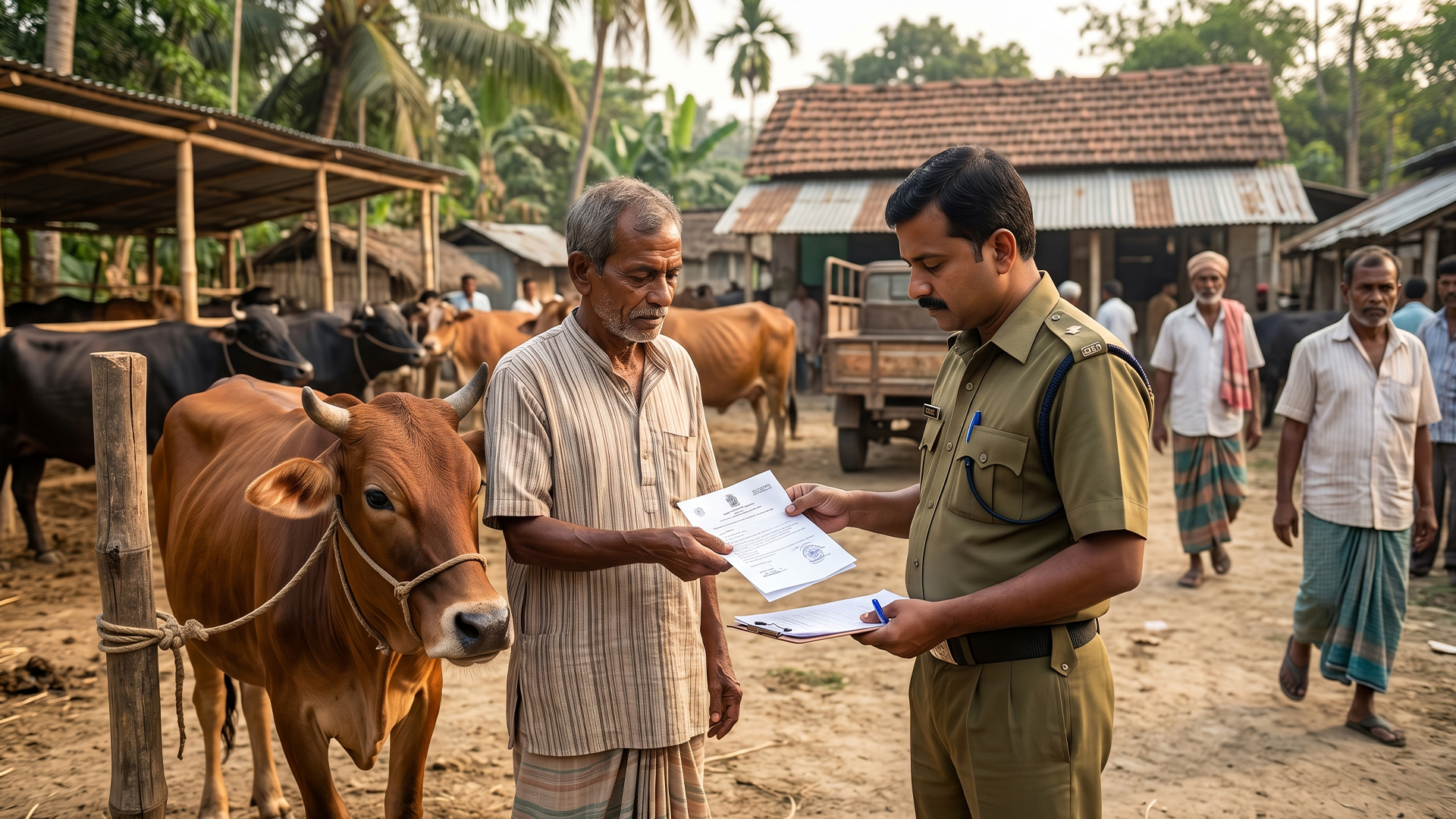
The West Bengal government has announced a ban on the public slaughter of cattle and buffaloes across the state, introducing new rules aimed at regulating animal slaughter and maintaining public order.
Under the new guidelines, cattle and buffaloes can now be slaughtered only at authorised slaughterhouses and after obtaining an official fitness certificate from a government-approved veterinary doctor. The rules are expected to apply across both urban and rural areas of the state.
The government said the decision was taken to ensure proper regulation, improve hygiene standards and prevent illegal slaughter activities in public spaces. Officials also stated that the move was intended to reduce public disturbance and maintain communal harmony.
As part of the new regulations, local authorities have been directed to closely monitor slaughter activities and ensure that only certified animals are permitted for slaughter. Animals declared unfit or illegally transported will not be allowed for slaughter under the revised system.
The state government clarified that the order does not ban the consumption or legal sale of meat. Instead, it focuses on preventing slaughter in open public areas and bringing the process under stricter administrative supervision.
The issue of cattle slaughter has often remained politically sensitive in several parts of the country. While some states have imposed strict bans on cow slaughter, West Bengal has traditionally followed more flexible laws under regulated conditions. The latest decision is being seen as an attempt to tighten enforcement without introducing a complete prohibition.
Officials said the mandatory fitness certificate system would help ensure that only healthy animals enter the food supply chain and would also improve transparency in slaughterhouse operations.
Opposition parties questioned the timing and implementation of the decision, while the government defended the new rules as an administrative and public health measure rather than a political one.