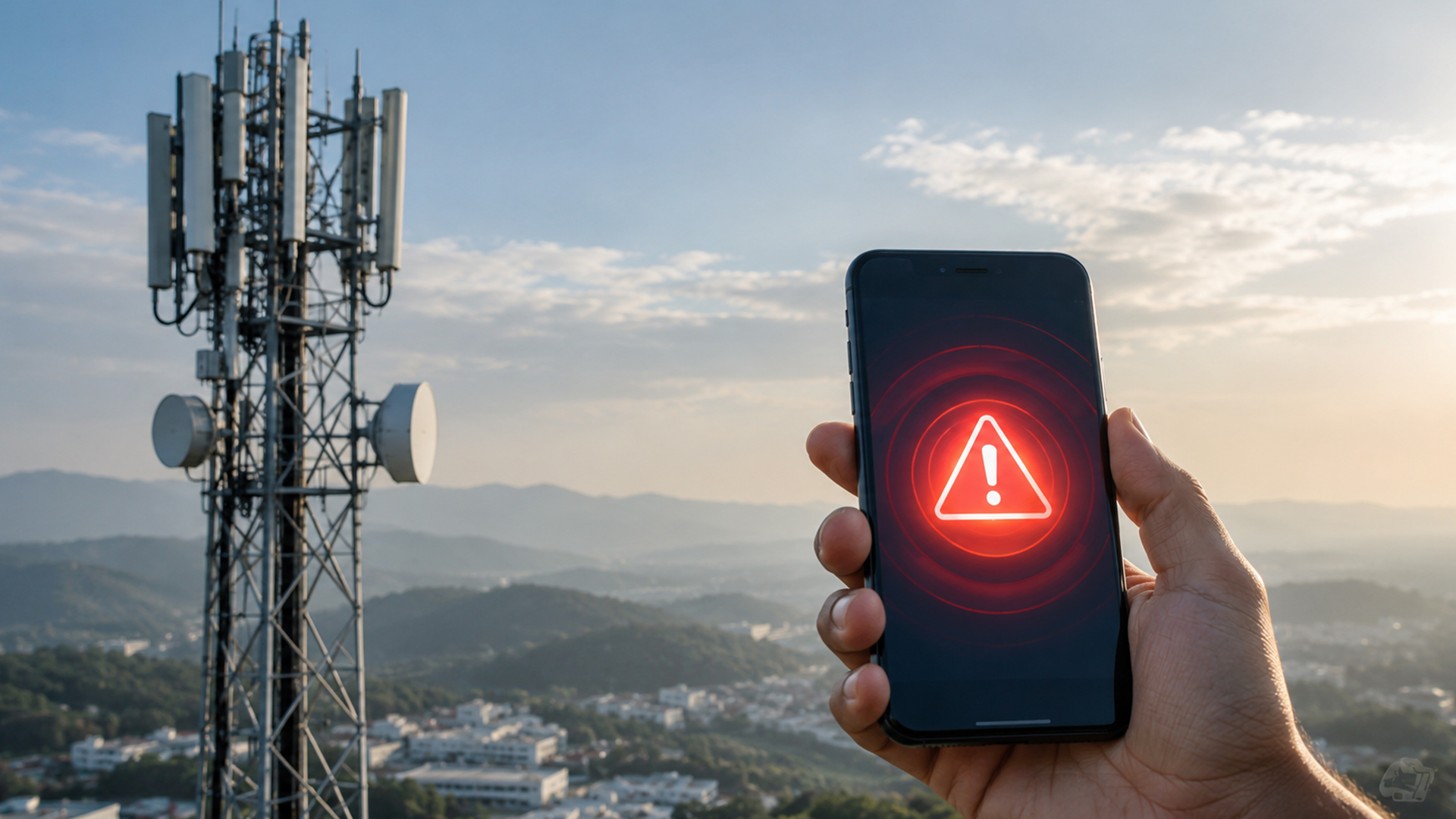
The Centre has temporarily suspended the Cell Broadcast Alert System, a service used to send emergency notifications directly to mobile phones, following concerns raised by users over the frequency of test messages.
The system, operated as part of India’s disaster warning and public safety network, has been used in recent years to deliver alerts about natural disasters, severe weather events and other emergencies. Many mobile phone users across the country had received periodic test messages and loud alert tones as authorities worked to evaluate and strengthen the service.
Officials said the suspension is temporary and has been introduced to review the system and address issues reported by users. The move comes after concerns were raised about repeated test alerts causing inconvenience, confusion and disruption, particularly in public places, schools, offices and healthcare facilities.
The Cell Broadcast Alert System enables authorities to send messages simultaneously to all compatible mobile devices within a specific geographic area, without requiring individual phone numbers. The technology is considered an important tool for disaster management as it can quickly reach large populations during emergencies such as cyclones, floods, earthquakes and other crises.
Government officials clarified that the suspension applies to routine testing and evaluation activities. The underlying infrastructure remains operational, and emergency alerts can still be issued if required during a genuine disaster or public safety situation.
For many citizens, the alerts had become a familiar feature over the past two years, often arriving with a distinctive alarm tone and vibration. While some users welcomed the system as a critical safety measure, others expressed concerns about the timing and frequency of test notifications.
Disaster management experts have emphasised the importance of maintaining effective warning systems, particularly in a country frequently affected by extreme weather events and natural disasters. They noted that periodic testing is necessary to ensure reliability but should be balanced against public convenience.
Also Read: Abhijeet Dipke slapped during NEET protest in Jaipur