The number of polluted river stretches in India has seen a slight decline, dropping from 311 in 2022 to 296 in 2023, according to a new assessment report released by the Central Pollution Control Board (CPCB) on Monday. The report, which analyzed water quality data from 2,116 locations across 32 states and Union Territories, found that these 296 stretches span 271 rivers. Maharashtra continues to lead with the highest number of polluted stretches at 54.
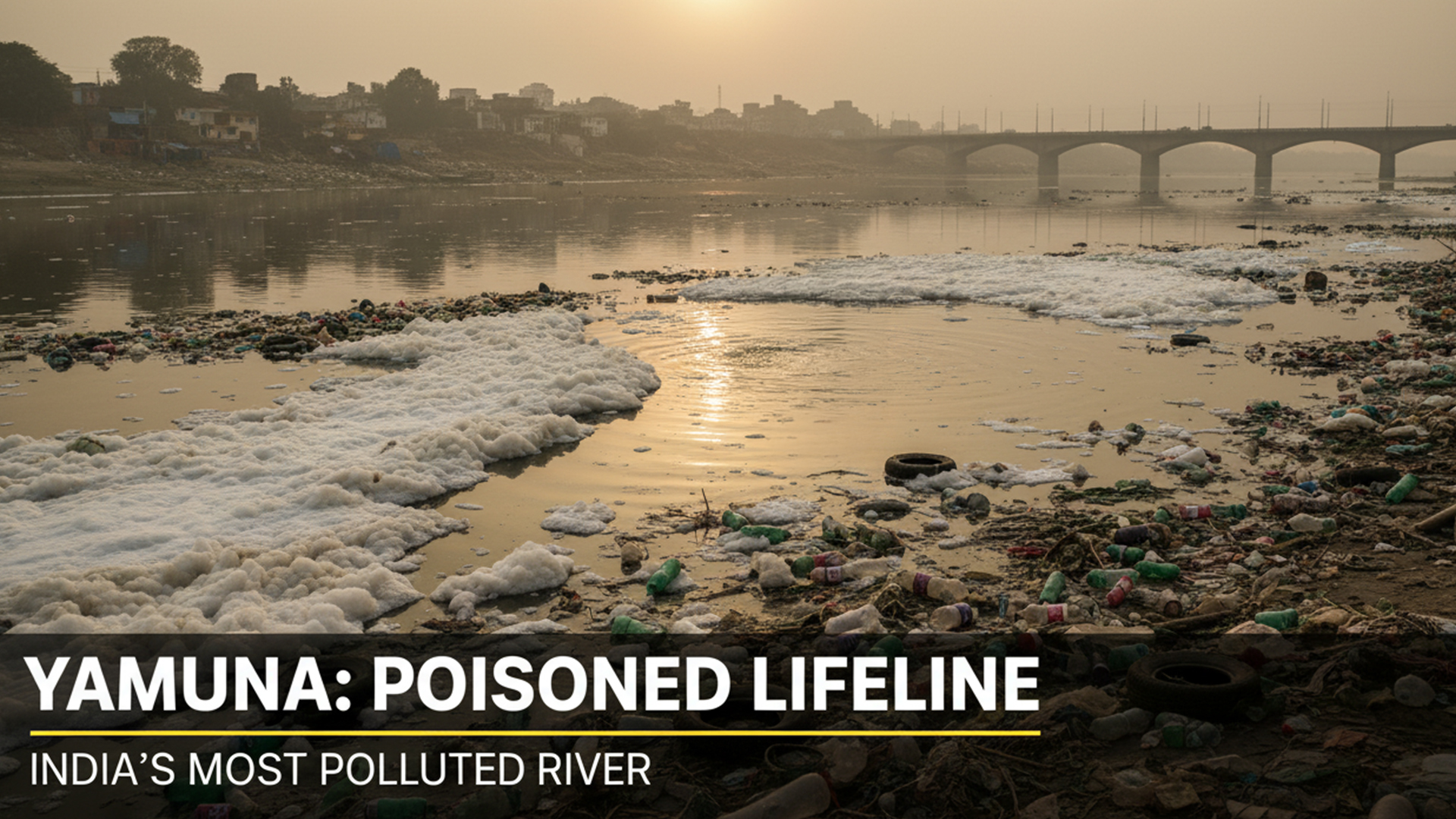
Despite the overall decline, the Yamuna river in Delhi remains one of the most polluted river stretches in the country. The CPCB’s assessment identified the stretch from Palla to Asgarpur as having exceptionally high levels of organic pollution, measured in terms of Biochemical Oxygen Demand (BOD). Monitoring at seven key locations along this stretch—including Palla, Wazirabad, ISBT Bridge, ITO Bridge, Nizamuddin, Okhla after meeting Shahdara drain, and Asgarpur village—showed that BOD levels reached up to 83 mg/L, nearly 27 times above the permissible limit of 3 mg/L. The report also highlights that water quality at all these locations failed to meet basic environmental standards, indicating an urgent need for intervention.
Other rivers across India have also recorded polluted stretches, though some have shown improvement. Priority 1 stretches—those with BOD levels exceeding 30 mg/L, indicating the highest pollution—have reduced from 46 stretches in 2022 to 37 this year. These stretches are spread across 14 states, with Tamil Nadu, Uttar Pradesh, and Uttarakhand each having five, Gujarat four, and Karnataka three. Notable examples include the Sabarmati river in Ahmedabad, the Chambal stretch from Nagda to Gandhisagar dam in Madhya Pradesh, and the Tungabhadra and Sarabanga rivers in Karnataka and Tamil Nadu, respectively.
Several other rivers showed deterioration in water quality over the year. These include the Jhelum in Jammu and Kashmir; Ganga, Ramrekha, and Sikrahna in Bihar; Hasdeo and Mahanadi in Chhattisgarh; Sal and Mapusa in Goa; Cauvery and Tungabhadra in Karnataka; Periyar in Kerala; Amba and Savitri in Maharashtra; Krishna in Telangana; and Kosi in Uttarakhand. The CPCB emphasized that river catchment and basin management, floodplain protection, and the treatment of sewage water are critical measures for reversing this trend.
The report underscores the significance of ongoing initiatives under the National Water Quality Monitoring Programme, which tracks water quality at 2,155 locations on 645 rivers in collaboration with state pollution control boards. Since 2018, following directives from the National Green Tribunal (NGT), river rejuvenation committees have been set up across states to develop action plans for reducing pollution. While the overall number of polluted stretches has marginally decreased and some stretches have moved from higher to lower priority categories, the persistence of highly polluted rivers like the Yamuna highlights the continuing challenge of river conservation in India.
The CPCB report calls for stronger interventions at local and state levels to improve water quality, particularly for rivers in urban and industrial zones. Experts emphasize that the Yamuna, as a critical lifeline for Delhi, requires immediate attention to prevent ecological collapse and safeguard public health, alongside sustained efforts for pollution control in other affected rivers nationwide.
Also Read: Super Typhoon Ragasa Slams Philippines, Heads Towards China