Japan and Australia have agreed to further strengthen their strategic partnership, signing a series of new agreements focused on energy security, defence cooperation, and critical minerals. The move comes as both countries look to protect their economies from global supply chain disruptions and rising geopolitical tensions.
Japanese Prime Minister Sanae Takaichi met Australian Prime Minister Anthony Albanese during her official visit to Canberra, where both leaders described the relationship as increasingly vital. They highlighted shared concerns over energy stability, particularly amid conflicts affecting key shipping routes and fuel supplies.
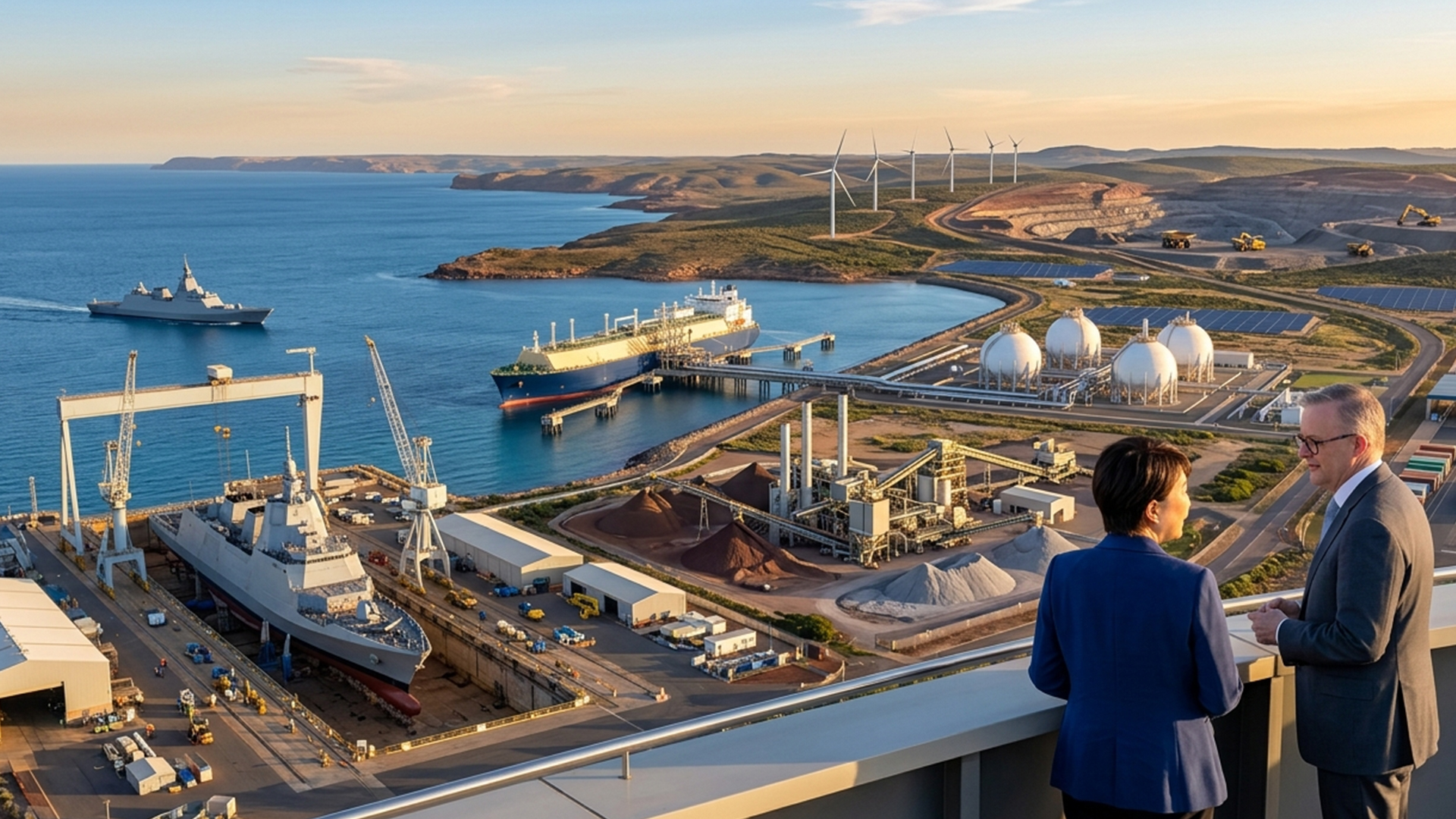
Australia remains a major energy supplier to Japan, providing a significant share of its liquefied natural gas (LNG) and other fuel resources. In return, Japan is also an important supplier of refined energy products to Australia, making the two economies closely interdependent in the energy sector.
A key outcome of the talks was a new agreement to deepen cooperation on critical minerals such as rare earths, nickel, graphite, and gallium. These materials are essential for advanced technologies, including electric vehicles, renewable energy systems, and defence equipment. Both sides also agreed to expand investment and processing capacity to reduce reliance on concentrated global supply chains.
Australia has announced financial support of up to A$1.3 billion for critical mineral projects involving Japanese partners. The aim is to develop new mining, refining, and manufacturing capabilities while ensuring more stable long-term supply.
On the defence front, the countries reaffirmed growing military cooperation, including joint exercises and equipment collaboration. The partnership also reflects shared concerns about regional security in the Indo-Pacific and broader global instability.
Also Read: Biohub funds AI human cell models