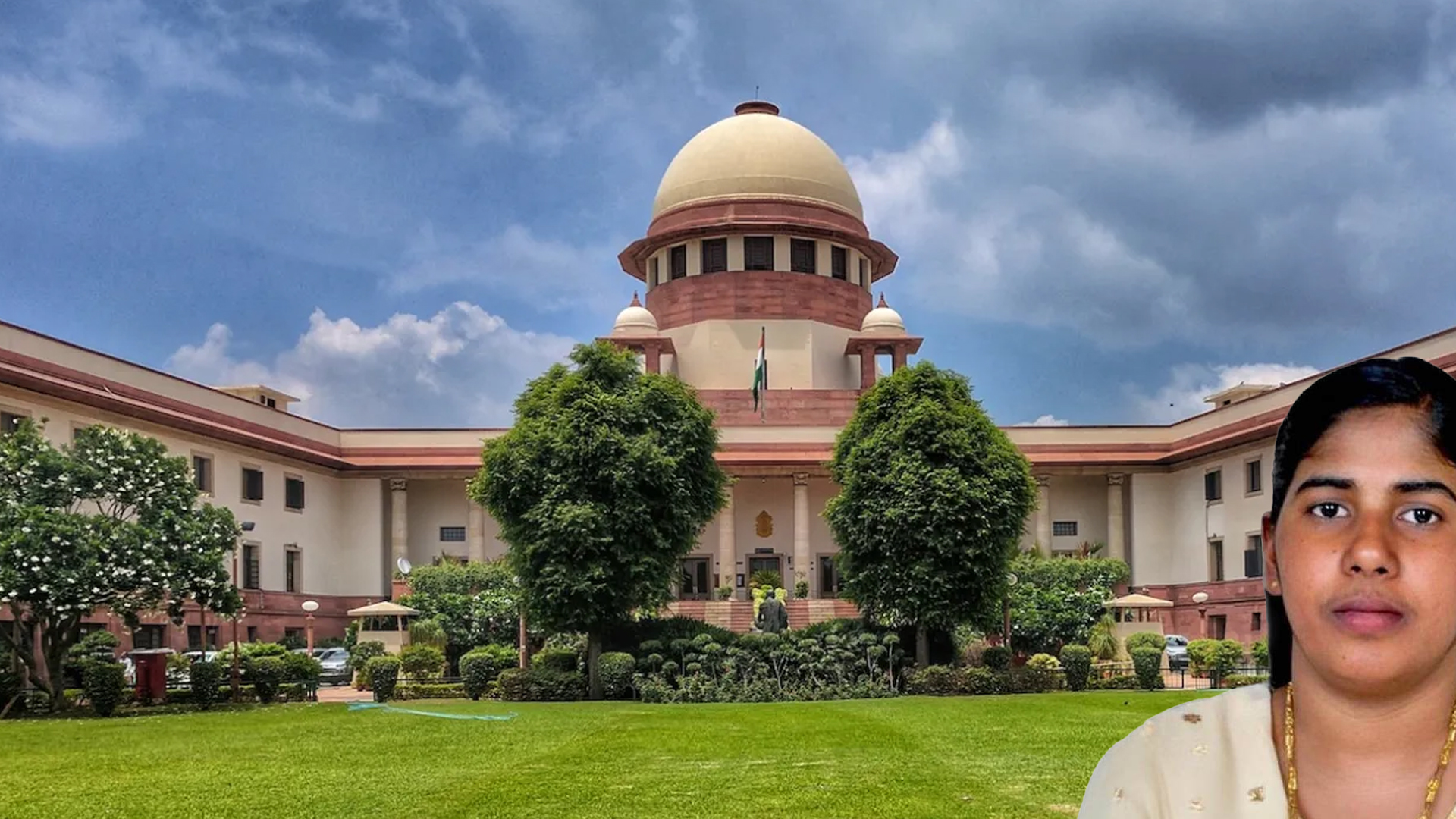
New Delhi, Aug 14: The Supreme Court was informed on Thursday that there is “no immediate threat” to Indian nurse Nimisha Priya, who is on death row in Yemen for the 2017 murder of her business partner. The apex court subsequently adjourned the case for eight weeks.
Priya, 38, hails from Palakkad in Kerala and has been imprisoned in Sana’a, the capital of Yemen, since her conviction. In 2017, a Yemeni court found her guilty of murdering her business partner, Talal Abdo Mahdi, allegedly by drugging and killing him. She was sentenced to death in 2020, and her final appeal was rejected in 2023.
The Supreme Court was hearing a plea filed by the Save Nimisha Priya International Action Council, an organisation that has been providing her with legal and diplomatic support. The petition seeks a direction to the Central government to use diplomatic channels to save Priya from execution.
Appearing before a Bench of Justices Vikram Nath and Sandeep Mehta, the petitioner’s counsel requested an adjournment, saying, “Negotiations are going on. As of now, there is no immediate threat. Kindly adjourn it by four weeks. Hopefully, everything will be over by that time.”
The Bench instead listed the matter for hearing after eight weeks. The petitioner’s counsel told the court that they would mention the case again if any urgency arose.
Last month, the apex court was informed that Priya’s execution — originally scheduled for July 16 — had been stayed. On July 18, the Centre assured the court that all possible efforts were being made to ensure Priya’s safe return, adding that diplomatic channels were being explored.
The petitioner organisation has urged the Centre to send an official delegation to Yemen to meet the victim’s family for negotiations. Under Sharia law, the victim’s family can pardon an accused in exchange for diyya or “blood money.” The petitioner’s counsel has argued that this legal provision should be explored as a means of securing Priya’s release.
The Bench noted that the petitioner could make a formal representation to the government in this regard.
Earlier this year, Priya’s mother travelled to Yemen to negotiate directly with the victim’s family. She was granted permission to travel by the Delhi High Court.
On July 17, the Ministry of External Affairs stated that India was in touch with Yemeni authorities as well as “certain friendly nations” to reach a “mutually agreeable solution.” The case, however, remains highly sensitive, given Yemen’s strict enforcement of its criminal laws and the ongoing civil conflict in the country, which complicates diplomatic efforts.
According to Yemeni court records, Priya and Mahdi had been running a medical business together. The prosecution alleged that she administered a sedative to Mahdi and subsequently caused his death. Priya has maintained that the killing was accidental and that she acted in desperation over personal and business disputes.
With negotiations ongoing, Priya’s fate now hinges on diplomatic manoeuvring and the willingness of the victim’s family to accept blood money. The Supreme Court will revisit the matter in October unless an urgent development requires earlier intervention.
Also Read: SC Reserves Interim Order on Delhi-NCR Stray Dog Issue; Divided Views Emerge in Court