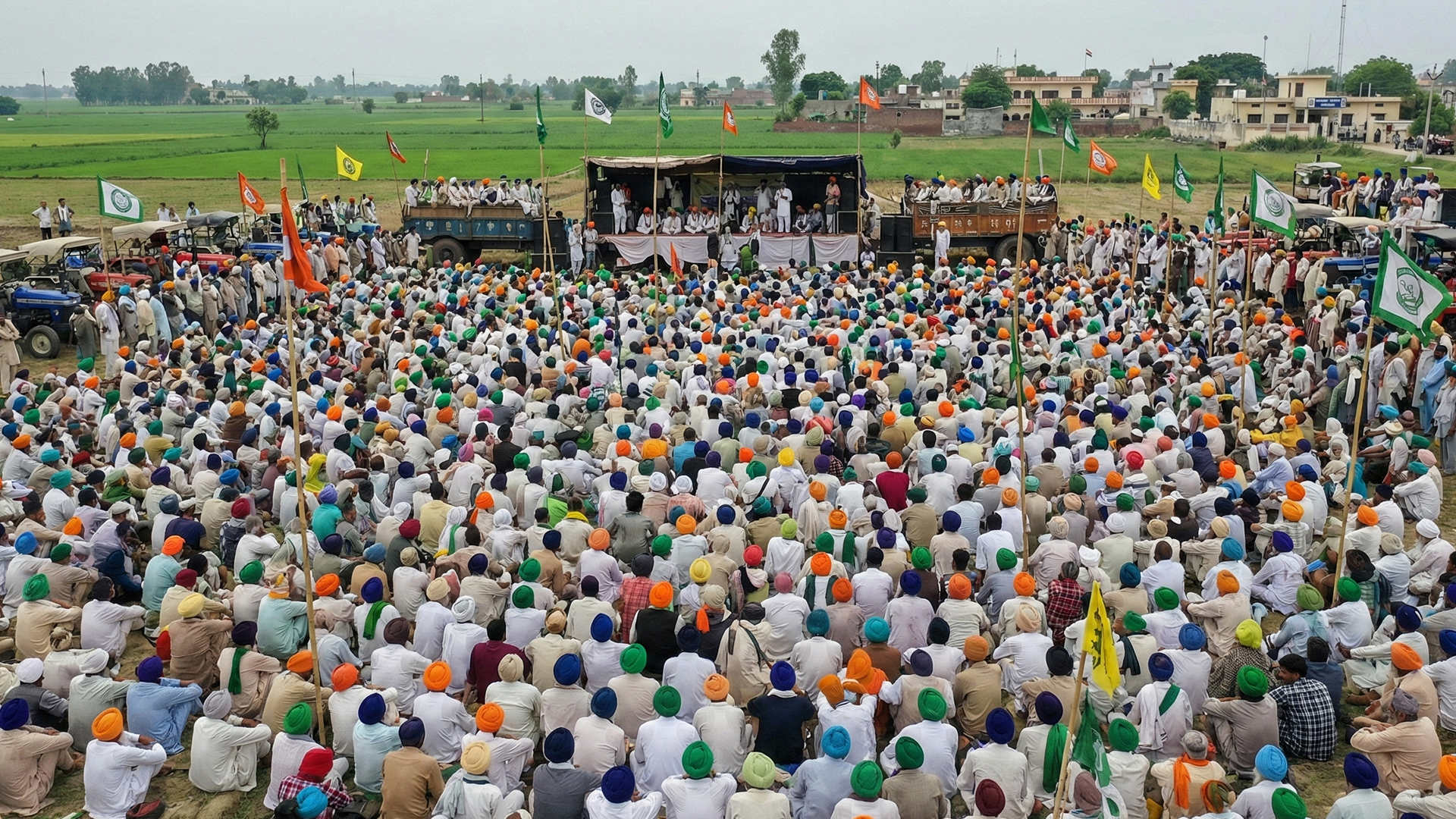
Punjab witnessed widespread farmer protests on Thursday, February 5, 2026, as groups staged sit‑ins and demonstrations outside the homes and offices of ministers and MLAs. The protests, led by the Kisan Mazdoor Morcha (KMM), highlighted farmers’ growing anxiety over the India‑US trade deal and unresolved state-level grievances.
Activists gathered at more than 28 locations across 18 districts, pressing for compensation for losses suffered during previous demonstrations at the Shambhu and Khanauri border sites, where farmers had camped for months demanding better policies. They also sought loan waivers, relief for damaged crops and homes, and support for injured farmers.
KMM leaders accused the state government of ignoring promises, dismantling protest sites, and arresting leaders, describing the administration as having shown an “anti-farmer face.” The trade deal with the US, they said, could flood local markets with cheap imports, putting Punjab farmers at risk despite government assurances that agriculture would be protected.
Political voices have also joined the debate. The Punjab Congress warned that zero-tariff US imports could hurt the state’s farmers, while the Aam Aadmi Party criticized the central government for a lack of transparency on the deal.
Besides trade concerns, protesters urged the assembly to reconsider several bills affecting agriculture, electricity, seeds, and fertilizers, which they say threaten rural livelihoods.
The KMM announced that their campaign would continue, with plans to observe the death anniversary of protester Shubhkaran Singh on February 21 as part of ongoing efforts to keep pressure on the authorities until their demands are met.
Also Read: India denies halting Russian oil