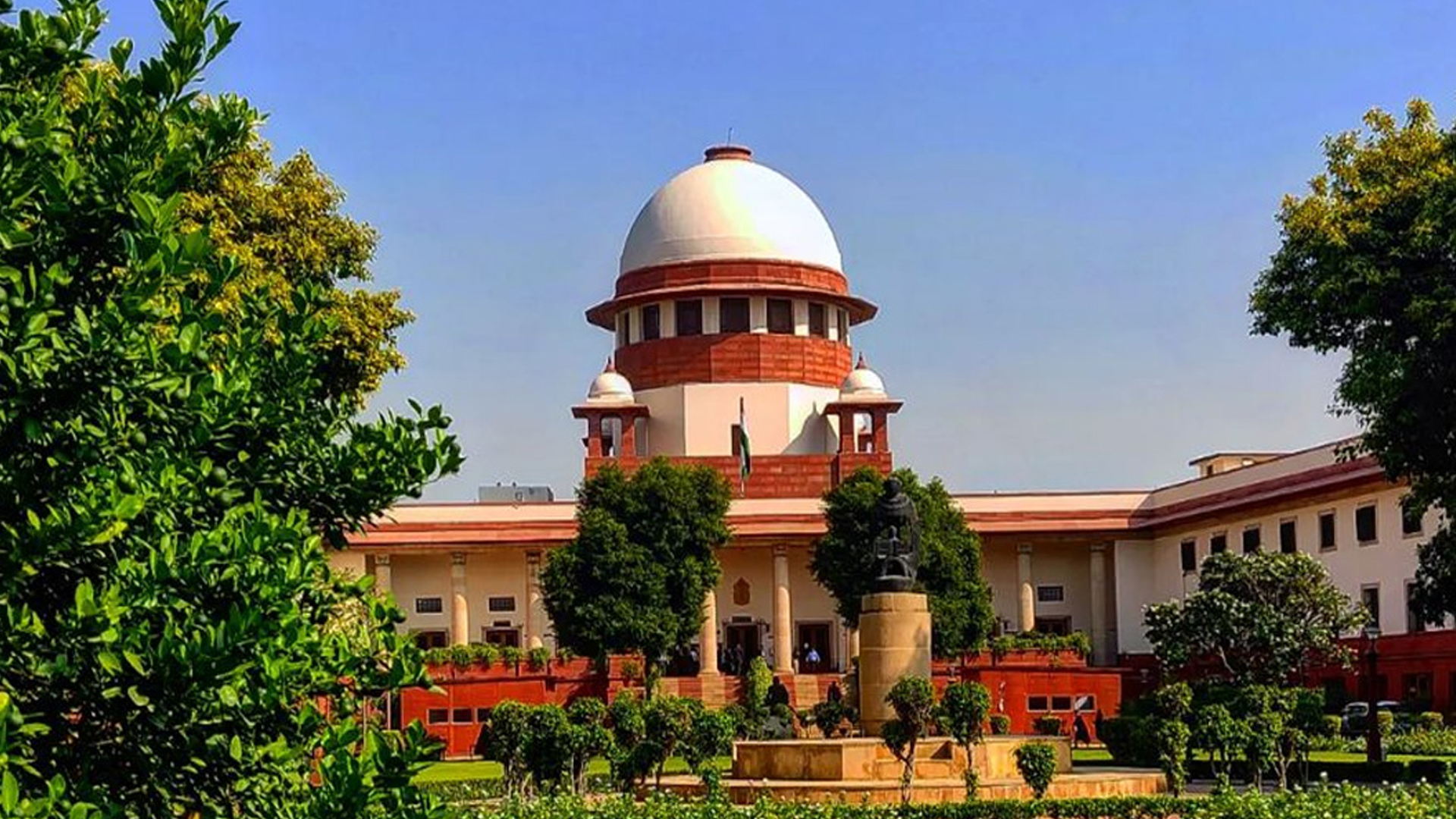
The Supreme Court on Tuesday agreed to examine a plea seeking the introduction of an income-based prioritisation system—similar to the “creamy layer” concept in Other Backward Classes (OBC)—to ensure a more equitable distribution of reservation benefits among Scheduled Castes (SC) and Scheduled Tribes (ST).
A Bench of Justices Surya Kant and Joymalya Bagchi issued notice to the Union government on a petition by Ramashankar Prajapati, who argued that the current reservation policy disproportionately benefits relatively well-off groups within the SC/ST categories while the most deprived sections remain trapped in extreme poverty.
“There is an urgent need to integrate economic criteria into the reservation policy,” Mr. Prajapati, represented by advocates Sandeep Singh and Reena N. Singh, told the court. He proposed a two-tier quota system within the SC/ST framework, prioritising individuals from economically weaker sections before extending benefits to those with greater financial stability.
The petition emphasised that this would not involve any reduction in the percentage of reservation allotted to SC/ST communities. Instead, it sought to “refine” the system to serve its intended purpose more effectively. “This reform does not aim to abolish or undermine caste-based reservations but to make them more targeted,” the counsel submitted.
Justice Kant observed that the matter revolved around the state’s capacity to assess economic conditions within these communities. Listing the case for October 10, the Bench underlined the need to proceed carefully given the sensitivity of the reservation policy and the likelihood of divergent opinions.
The petitioner cited the Supreme Court’s own seven-judge Constitution Bench verdict in State of Punjab vs. Davinder Singh (August 2024), where Justice B.R. Gavai had advocated the exclusion of the affluent “creamy layer” even among SC/ST beneficiaries to achieve true equality. Justice Gavai had noted that the criteria for exclusion in SC/ST quotas could be different from those used for OBCs, potentially factoring in economic, occupational, and geographic indicators.
Mr. Prajapati argued that a small but influential section of SC/ST families had repeatedly availed of quota benefits, securing top government positions, financial security, and elite education, thereby creating “intra-community economic stratification.” Those still facing severe economic distress, he said, were being crowded out.
While the court’s decision to examine the plea marks a new phase in the debate, the government’s position on the issue has been unequivocal.
In August 2024, the Union Cabinet categorically stated that the creamy layer principle does not apply to SC/ST reservations.
Following a Cabinet meeting, Union Minister Ashwini Vaishnaw told reporters that the decision was based on the constitutional provisions framed by B.R. Ambedkar. “There is no provision of creamy layer in Babasaheb’s Constitution. It is only as per Babasaheb’s Constitution that reservations for SC/ST should be provided,” he said. The Cabinet’s deliberations came shortly after the Supreme Court’s judgement permitting states to sub-categorise SCs and STs.
Prime Minister Narendra Modi had also personally reassured BJP MPs from SC and ST communities that the creamy layer concept would not be introduced for their quotas in jobs and education. At a meeting attended by Law Minister Arjun Ram Meghwal, Parliamentary Affairs Minister Kiren Rijiju, and others, the Prime Minister said the government would preserve the existing framework in its entirety. Mr. Meghwal later told the Lok Sabha that the ‘creamy layer’ principle was not part of the court’s sub-categorisation judgement.
The petition before the court also pointed out that while political reservations have ensured significant representation of SC/ST leaders in legislatures, this political empowerment has not necessarily translated into widespread socio-economic development for the entire community. Instead, economic and educational gains have remained concentrated in the hands of the better-off sections.